Download our SSCE Study Guide Bundle
The dramatic devices in Antony and Cleopatra include dramatic irony, foreshadowing, meta-theatre, choral commentary, asides, comic relief, ekphrasis, anti-climax, paradox, and hyperbole. These and more will be our focus in this section.
Dramatic Irony
Dramatic irony is used to amplify the tragedy of Antony’s downfall. A prime example occurs in Act 4, Scene 8, where Antony returns from a land skirmish boasting that he has “beat them to their beds” and orders a lavish, triumphant celebration for his troops. The audience, however, is fully aware that this is merely a fleeting, insignificant victory against Caesar’s far superior and calculated forces. This irony highlights Antony’s desperate denial of his declining power and impending doom.
Foreshadowing
The play is steeped in supernatural portents and structural foreshadowing that signal the lovers’ tragic ends. As the final battle approaches, Scarus observes grim signs: “Swallows have built / In Cleopatra’s sails their nests” and the augurers refuse to speak their knowledge out of fear. Earlier in the play, a Soothsayer explicitly warns Antony to keep his distance from Caesar, prophesying that Antony’s guiding spirit (“demon”) is entirely overpowered by Caesar’s. On the eve of the battle, Antony’s soldiers hear eerie “Music i’ the air” and “Under the earth,” which leads them to the conclusion that the god Hercules, whom Antony loved, is abandoning him.
Structurally, in Act 4 Scene 10, Antony positions his foot soldiers on a hill merely to “look on their endeavour” as his naval fleet engages Caesar’s. This mirrors his exact, disastrous strategy at the Battle of Actium in Act 3. It effectively foreshadows to the audience that his fleet is about to betray him again.
Theatrical Manipulation
Cleopatra constantly relies on theatrical manipulation as a device to control her environment and her lover, though it later becomes the fatal catalyst for the tragedy. When Antony flies into a homicidal rage over her fleet’s betrayal, her maid Charmian advises her to lock herself in the monument and send word that she is dead. This disastrous piece of stagecraft backfires; rather than simply curing his anger, the false news of her suicide drives a heartbroken Antony to fall upon his own sword.
Meta-theatre
The characters are aware of themselves as historical figures who might be put on display. Cleopatra’s motivation for committing suicide is her terror of being paraded in a Roman triumph. She vividly imagines the theatrical humiliation she would face; she pictures “scald rhymers” mocking them and “some squeaking Cleopatra boy my greatness / I’ the posture of a whore.” To subvert Caesar’s intended spectacle, she stages her own majestic death. She dons her crown and robes to ensure she dies as a sovereign queen rather than a captive.
Off-Stage Action
Because staging massive naval battles was impossible, Shakespeare uses off-stage sounds (“Alarum afar off, as at a sea-fight”) and the panicked commentary of observing characters to convey the action. He deliberately keeps the decisive Battle of Actium and the final fleet’s betrayal off-stage so that the dramatic focus remains intensely fixed on the psychological devastation and emotional reactions of the characters. One such reaction is Antony’s despairing realisation, “All is lost; / This foul Egyptian hath betrayed me.”
Choral Commentary
Shakespeare utilises the character of Domitius Enobarbus as a choral figure to provide the audience with objective, cynical insights that cut through the main characters’ grand illusions. Enobarbus interprets events and accurately predicts outcomes; for example, he foresees that Antony’s political marriage to Octavia will fail, stating confidently that “He will to his Egyptian dish again” and that the union will “prove the immediate author of their variance.”
Later, Enobarbus serves as the audience’s guide to Antony’s psychological decline. He notes that “men’s judgments are / A parcel of their fortunes” and observes that “when valour preys on reason, / It eats the sword it fights with.”
Asides
Asides are frequently used to reveal the hidden motives, judgments, and moral conflicts of characters, with respect to the contrast in their private thoughts with their public diplomacy. During the drunken feast on Pompey’s galley, Menas uses an aside to express his disgust at Pompey’s honourable but foolish refusal to seize absolute power. He declares, “For this, I’ll never follow thy pall’d fortunes more.”
Enobarbus also relies on asides to voice his internal debate about abandoning his doomed master (“Mine honesty and I begin to square”) and to explain Antony’s erratic behaviour to Cleopatra. He quietly notes that Antony’s morbid speech to his servants is “one of those odd tricks which sorrow shoots / Out of the mind.”
Comic Relief
To heighten the emotional impact of the play’s tragic climax, Shakespeare introduces a jarring moment of dark comedy right before Cleopatra’s suicide. A “rural fellow” or clown arrives at the monument carrying a basket of figs that conceals the deadly asp. Rather than treating the instrument of death with solemnity, the Clown engages in rambling, humorous prose about the “pretty worm of Nilus,” warning the Queen that “his biting is immortal” and joking that women are a “dish for the gods” if the devil doesn’t dress them. This brief insertion of earthy, mundane comedy starkly contrasts with Cleopatra’s elevated, mythic mindset, making her subsequent ascent to “fire and air” even more dramatic.
Ekphrasis
Shakespeare uses vivid, poetic descriptions to paint magnificent visual scenes that could not possibly be staged in a physical theatre. A prime example of this device is Enobarbus’s famous recounting of Cleopatra’s arrival on the river Cydnus. Instead of attempting to stage this grandeur, Shakespeare uses Enobarbus’s language to describe a barge that “Burn’d on the water” with a poop of “beaten gold,” purple sails so perfumed that the winds were “love-sick,” and silver oars. This verbal imagery effectively builds the mythic, overwhelming luxury of the Egyptian Queen in the minds of both the Romans and the audience.
Anti-Climax
While classical tragedy often grants its heroes a clean, dignified death, Shakespeare uses anti-climax to ground the mythic figures in harsh reality. When Mark Antony resolves to die nobly by his own hand, inspired by his servant Eros, he strikes himself but misses his heart. Instead of a swift, glorious end, Antony faces the agonising and undignified reality of a botched suicide. He cries out, “How! not dead? not dead?” and desperately begs his fleeing guards to finish him off. This subverts the expectation of Roman perfection. In the same breath, it reflects the messy and compromised nature of his entire downfall.
Paradox
Shakespeare relies on paradox to capture the mesmerising, contradictory, and logic-defying nature of Cleopatra and her Egyptian court. Enobarbus notes the paradox of her profound physical appeal, explaining that she “did make defect perfection” and uniquely “makes hungry / Where most she satisfies.” Her servant Alexas similarly describes her shifting moods as an “O heavenly mingle!” where the “violence of either” becomes her completely. This use of paradox persists until her very last breath, where she describes the lethal bite of the venomous snake as a “lover’s pinch, / Which hurts, and is desired.”
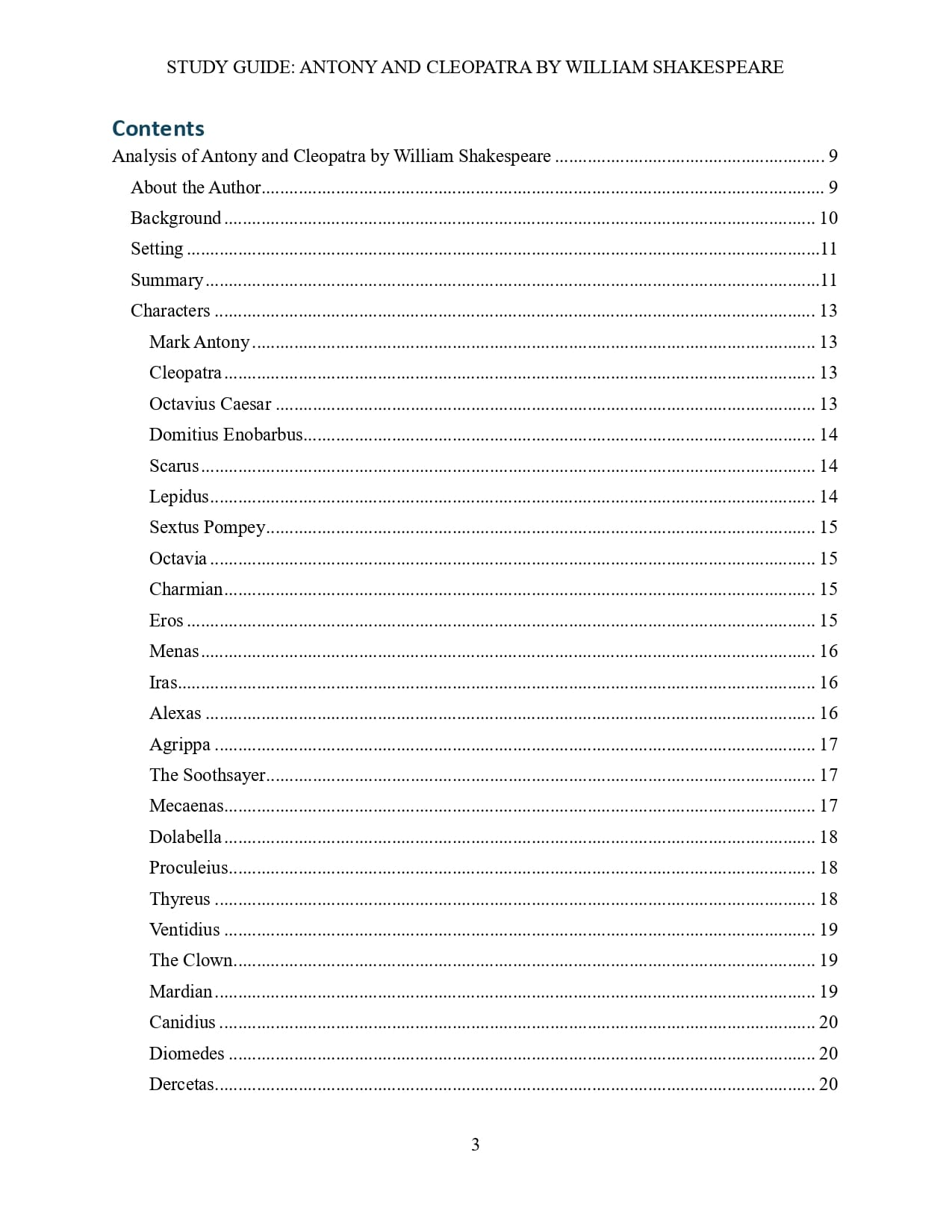
Get the Full Analysis in PDF
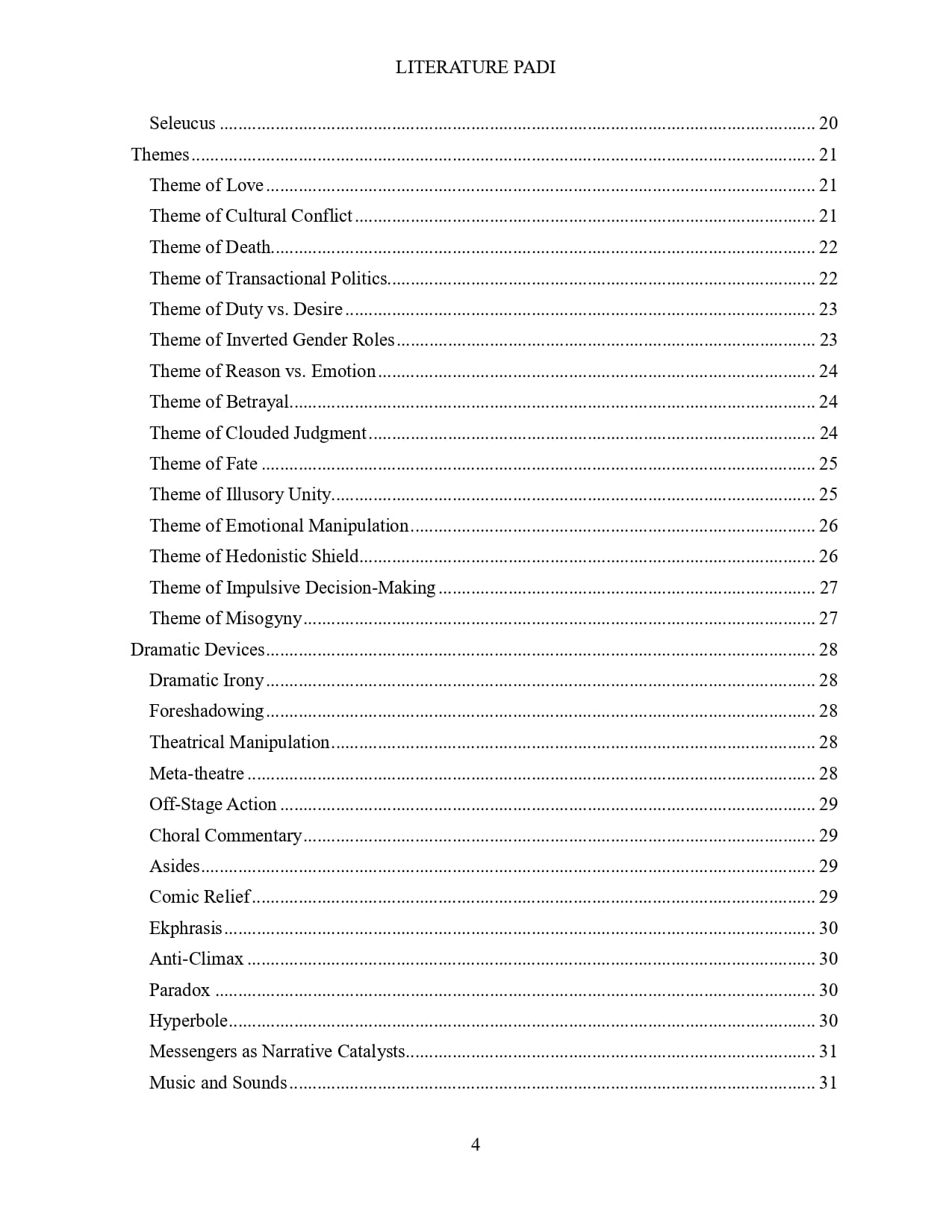
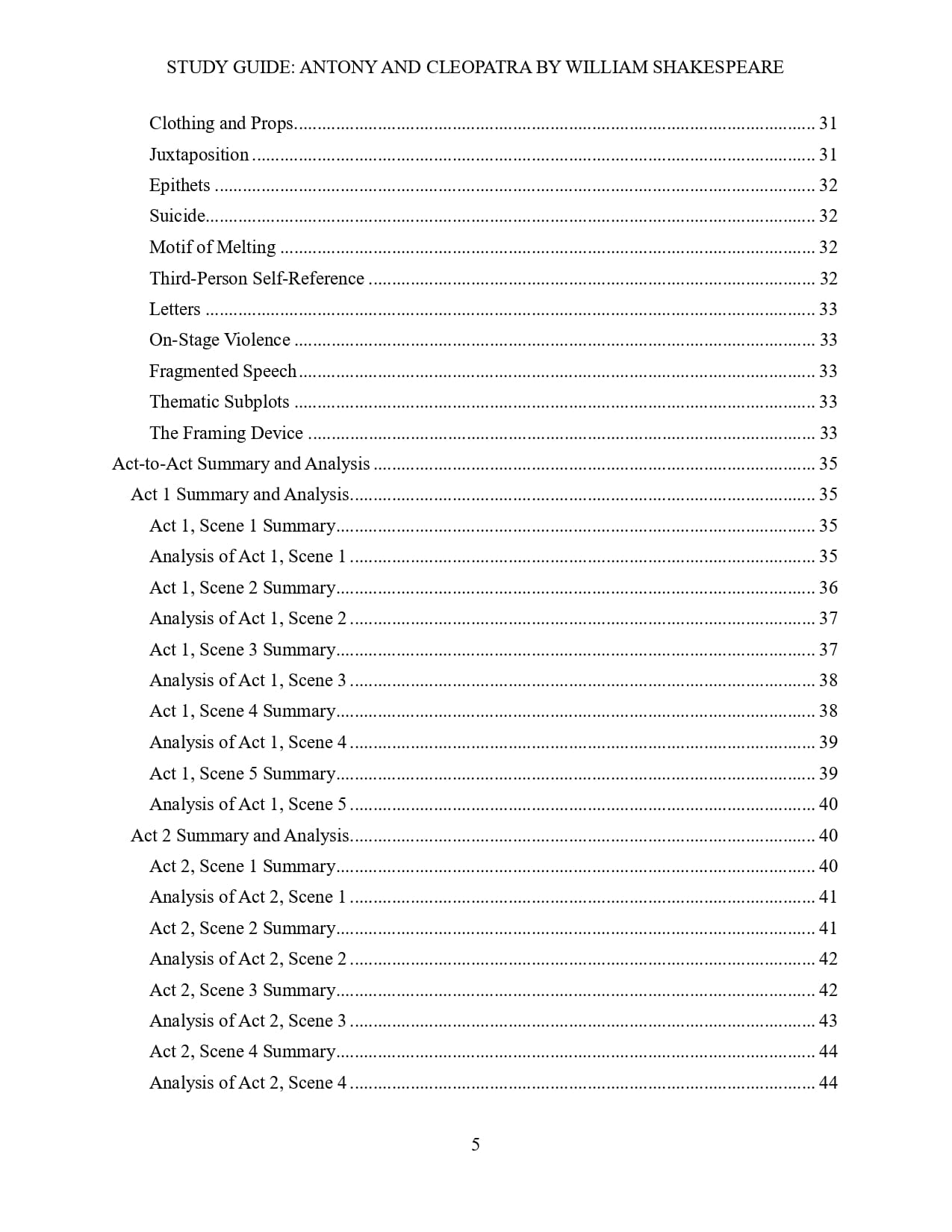
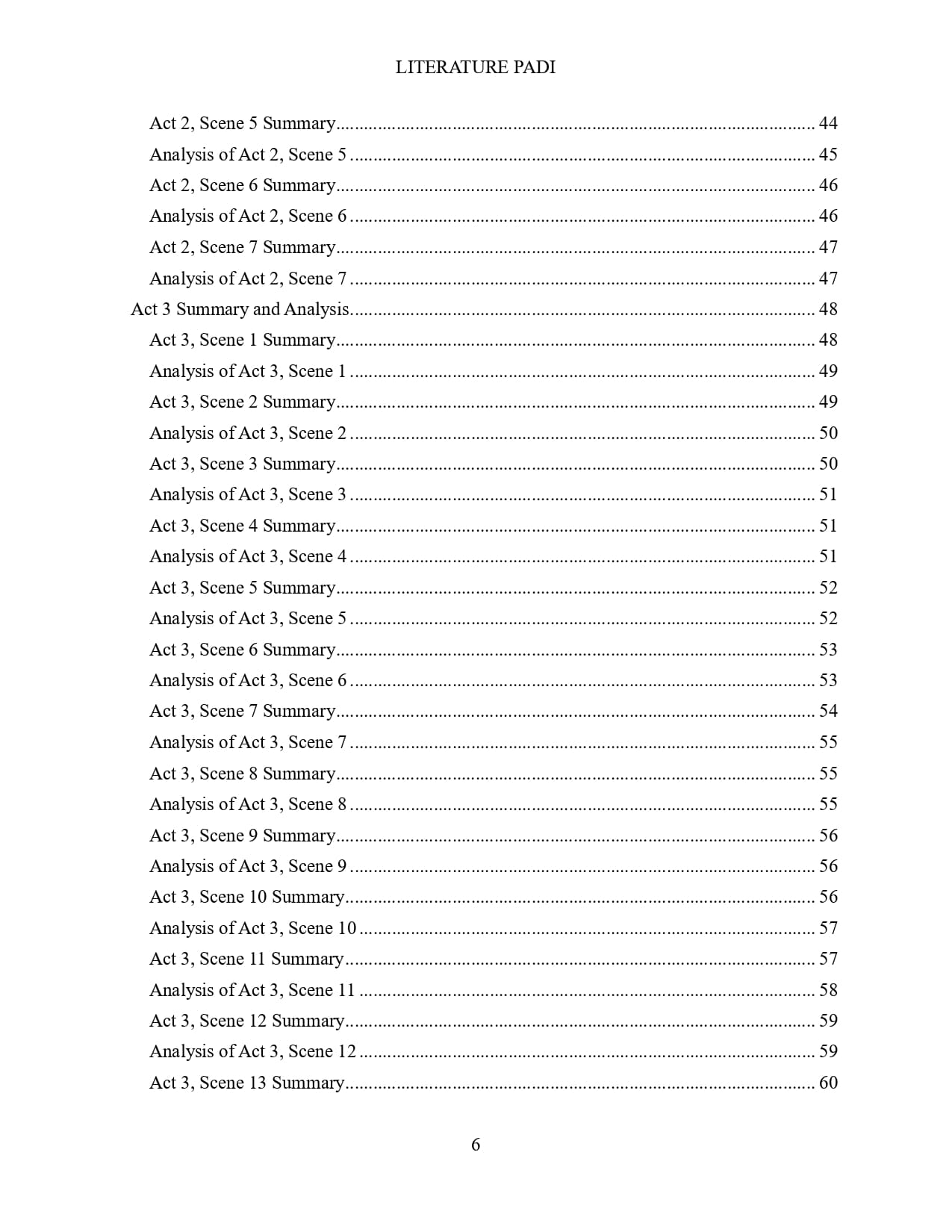
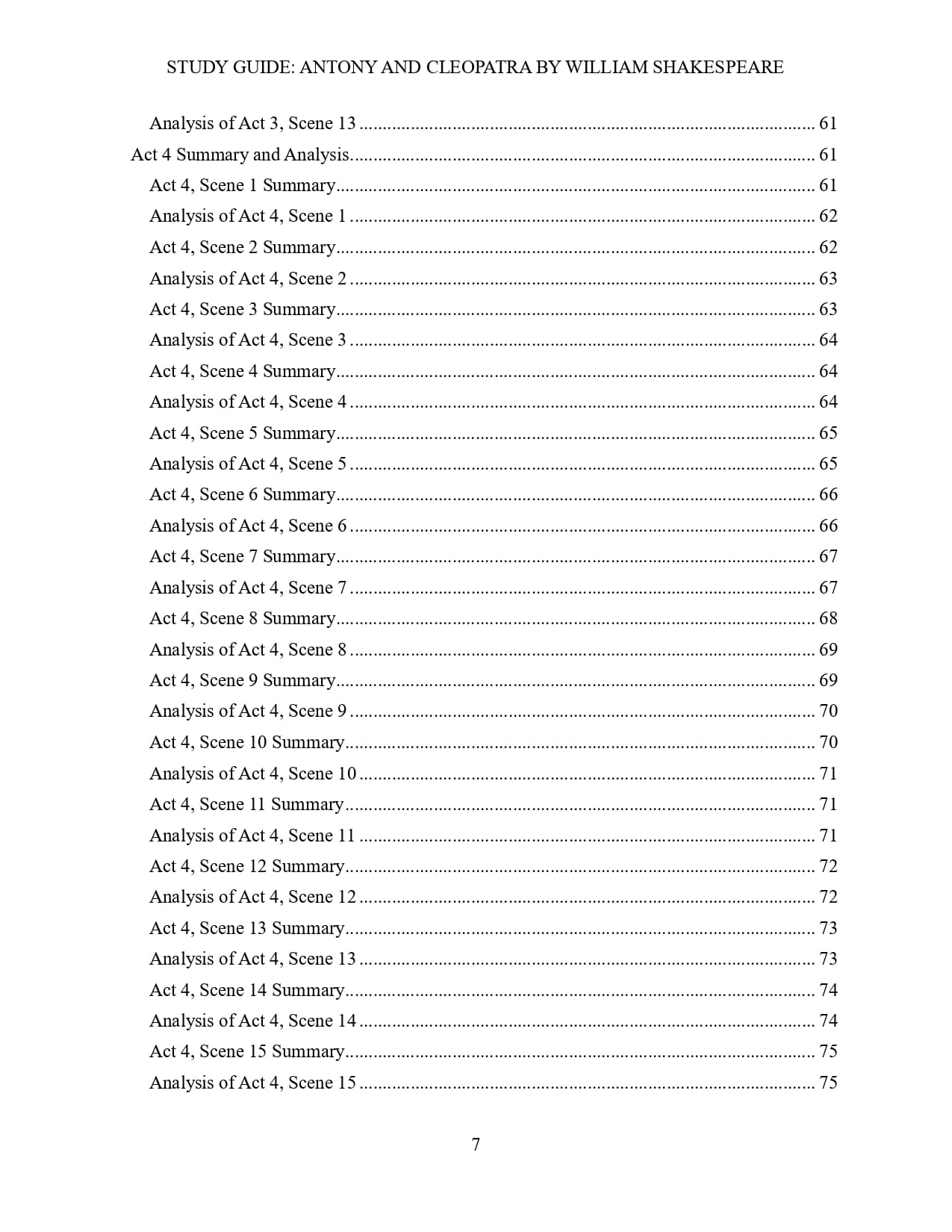
Enjoying this breakdown? What you’re reading is just part of the full experience. The premium PDF edition brings everything together in one seamless, distraction-free document that has the background, setting, plot summary, act-to-act summary and analysis, dramatic devices, characters, and themes. If you’re studying seriously, this is the version you’ll want.
Hyperbole
To elevate the lovers from mere historical figures to a mythic, larger-than-life status, Shakespeare relies on grandiose, hyperbolic language as a structural device. The characters consistently frame their emotions and actions in terms of the cosmos and the elements.
From the very first scene, Antony dismisses his geopolitical duties by declaring, “Let Rome in Tiber melt, and the wide arch / Of the ranged empire fall! Here is my space.” This device reaches its peak after Antony’s death, when Cleopatra describes him in a dream as a literal titan whose “legs bestrid the ocean” and whose “rear’d arm / Crested the world.”
Messengers as Narrative Catalysts
Because the play’s setting spans the entire Mediterranean, messengers are used as a crucial dramatic device not just to deliver exposition, but to trigger intense emotional reactions that reveal character temperaments. The way leaders treat their messengers highlights their psychological states. Antony, striving for Roman stoicism, tells a messenger bringing bad news to “mince not the general tongue” and speak plainly.
Conversely, Cleopatra’s volatile passion and lack of restraint are vividly demonstrated when she violently beats a messenger, strikes him down, and threatens him with a knife simply for delivering the news of Antony’s marriage to Octavia.
Music and Sounds
Music and sounds are employed to convey shifting atmospheres and supernatural abandonments. During the temporary truce between the triumvirs and Pompey, a loud, drunken song (“Come, thou monarch of the vine”) is used to symbolise the fragile, chaotic revelry of the Roman leaders.
More significantly, Shakespeare uses sound to mark the turning point of Antony’s fortune; on the eve of battle, soldiers hear eerie “Music i’ the air” and “Under the earth,” which they correctly interpret as a supernatural omen that “the god Hercules, whom Antony loved, / Now leaves him.”
Clothing and Props
Garments, armour, and weapons frequently function as physical manifestations of power dynamics and identity shifts. Cleopatra highlights her intoxicating control over Antony by recounting a night where she playfully subverted their gender roles; she dresses him in her “tires and mantles” while she wielded his mighty “sword Philippan.”
Later, when Antony believes he has been betrayed and that Cleopatra is dead, his total loss of purpose and identity as a military leader is symbolised by his command to Eros to “unarm” him and remove his “bruised pieces,” signaling that his “long day’s task is done”. Conversely, Cleopatra uses clothing to assert her absolute sovereignty in the face of defeat. She commands her women to fetch her “best attires,” her “robe,” and her “crown” so she can shed her mortal elements and meet death majestically.
Juxtaposition
The play utilises juxtapositions to force the audience to weigh Antony’s mythic, heroic past against his present degradation in Egypt. From the very first scene, Philo acts as a framing device; he contrasts the great Roman general whose eyes once glowed in battle like “plated Mars” with the man who has now been transformed into a “strumpet’s fool.” Philo laments that a soldier’s heart, which once burst the buckles on his chest in great fights, has now been reduced to the “bellows and the fan / To cool a gipsy’s lust.”
Epithets
The volatile emotions, racial prejudices, and political biases of the characters are conveyed through the derogatory and aggrandising titles they assign to one another. The Romans frequently reduce the Queen of Egypt to a “gipsy” and a “strumpet.”
When Antony’s naval fleet surrenders to Caesar, his obsessive love instantly turns to toxic rage, and he lashes out at Cleopatra using vicious epithets like “Triple-turn’d whore!”, “foul Egyptian,” and “spell”. Yet, in her grief, Cleopatra uses this same device to elevate Antony to cosmic proportions; she mourns him as “The crown o’ the earth” and the fallen “soldier’s pole”.
Suicide
In the final acts, suicide is employed as a dramatic resolution, which allows the defeated Egyptian faction to reclaim their honour and deny Caesar his complete political victory. Eros makes the choice to kill himself rather than commit the sacrilege of executing his master; Antony views this as a noble lesson that teaches him the bravery he must adopt. Cleopatra’s orchestrated suicide via the venomous asp is the play’s ultimate act of agency, explicitly planned to conquer Caesar’s “most absurd intents” of displaying her to the “shouting varletry” of Rome. Even the victorious Caesar is forced to recognise her suicide as a “noble weakness” that successfully allowed her to take her “own way.”
Motif of Melting
Shakespeare uses the imagery of melting, dissolving, and formlessness to symbolise the collapse of power, loyalty, and identity. Early in the play, Antony dismisses his Roman geopolitical duties by brazenly declaring, “Let Rome in Tiber melt.” However, as his power wanes and his followers defect to Caesar, this imagery turns against him; he bitterly notes that the followers who once fawned over him now “discandy, melt their sweets” on his rival.
This device reaches its psychological peak when a defeated Antony compares his fading identity to shifting clouds that become “indistinct, / As water is in water”. Upon Antony’s death, Cleopatra echoes this motif to signify the end of her world; she cries out, “The crown o’ the earth doth melt.”
Third-Person Self-Reference
The play highlights the tension between the characters’ mortal, private selves and their massive, mythic public personas by having them refer to themselves in the third person. The Romans complain that when Antony is distracted by love, “he is not Antony.” When his military authority begins to crumble and his messengers are disrespected, he desperately attempts to summon his old authority by reminding them, “I am Antony yet.”
Similarly, during a fleeting moment of military success, Cleopatra leans into this performative identity when she declares, “since my lord / Is Antony again, I will be Cleopatra.” This device underscores how the lovers view themselves as living legends who are constantly trying to live up to their own names.
Letters
In a play defined by the clash between two different worlds, written letters serve as the physical intrusion of cold, Roman political reality into the isolated, passionate bubble of Egypt. It is the arrival of letters bearing “stiff news” about his wife Fulvia’s death and Pompey’s rebellion that forces Antony to break his “strong Egyptian fetters” and return to Rome.
Conversely, Octavius Caesar uses letters and written reports to strictly calculate his political manoeuvres. He reads them aloud to his council to document Antony’s shameful “revel” in Alexandria and justify the impending war.
On-Stage Violence
The play employs sudden outbursts of direct on-stage violence to dramatically emphasise Cleopatra’s volatility and unchecked passion. When a messenger brings the news that Antony has married Octavia, stage directions dictate that Cleopatra “Strikes him down,” “Strikes him again,” and “hales him up and down” by his hair. She goes so far as to draw a knife on the innocent man. She uses shocking physical action to vividly demonstrate her absolute lack of restraint and her furious grief.
Fragmented Speech
Shakespeare breaks down the metre and rhythm of a character’s dialogue into fragmented, repetitive exclamations to illustrate their psychological collapse and deep shame. Antony’s despair, for example, is conveyed, after his shameful flight during the naval battle, through a complete loss of his normally eloquent, commanding speech. When his attendants try to comfort him, he sits down and repeatedly mutters, “No, no, no, no, no,” and “O fie, fie, fie!” as physical and verbal manifestations of his broken spirit.
Thematic Subplots
Shakespeare briefly shifts the focus away from the main characters to minor figures to illustrate the dangerous political realities of the Roman world. In Act 3, Antony’s commander Ventidius wins a great victory but deliberately halts his conquest. He explains to his officer that winning too much glory will anger his superior. This subplot acts as a thematic mirror; It demonstrates that in Caesar and Antony’s world, survival requires suppressing one’s own greatness to navigate the fragile egos of those in power.
The Framing Device
Before the audience even meets the legendary lovers, Shakespeare uses a framing device to dictate how they should be viewed. The play opens with two minor Roman soldiers, Philo and Demetrius, who act as a disgusted chorus. Philo immediately frames Antony’s romance as an unnatural “dotage” that has turned his captain’s heart into the “bellows and the fan / To cool a gipsy’s lust.” He physically directs the audience’s gaze as the lovers enter; he instructs them to “Take but good note… behold and see.” This device immediately establishes the harsh, unforgiving Roman perspective against which Antony and Cleopatra’s passion will be judged for the rest of the play.
Related:
- Study Guide: Antony and Cleopatra by William Shakespeare
- Plot Summary and Setting of Antony and Cleopatra by William Shakespeare
- Themes in Antony and Cleopatra by William Shakespeare
- Characters in Antony and Cleopatra by William Shakespeare
- Act-to-Act Summary and Analysis of Antony and Cleopatra by William Shakespeare
Receive Literary Updates through our Social Media Channels:
- WhatsApp: Literature PADI
- Telegram: Literature PADI
- YouTube: @literaturepadi
- Facebook: Literature PADI