Download our SSCE Study Guide Bundle
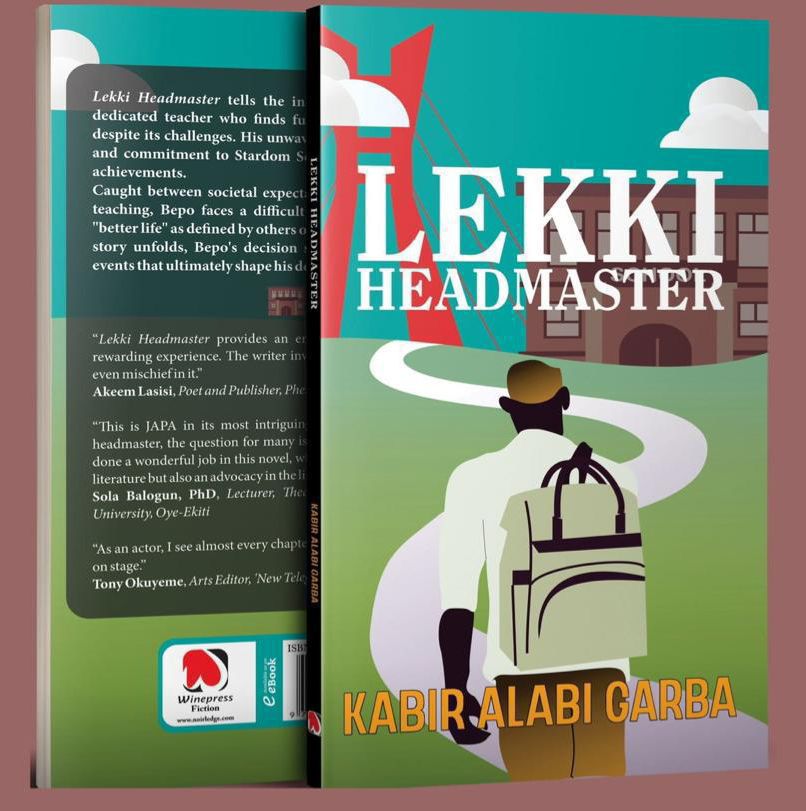
Chapter 7 Summary of The Lekki Headmaster
Chapter 7 of The Lekki Headmaster is titled “Ritualists.” The chapter opens with Mr. Bepo reminiscing about his time working at Beesway Group of School on the outskirts of Lagos, prior to joining Stardom Schools. As the Senior English Teacher, Bepo had professionally pointed out to the school’s director, Mr. Egi Meko, that the school’s name was grammatically incorrect and should be “Beesway Group of Schools” (plural). The director arrogantly dismissed the correction, mocking Bepo and claiming the flawed name was “divinely inspired.” Later, when a parent raised the exact same grammatical error during a Parent-Teacher Association meeting, an infuriated Mr. Meko accused Bepo of inciting the parent and threatened his job. He told him to choose between working there or criticising the name that pays his salary.
Bepo eventually left Beesway over a matter he considered “ungodly.” One night, unable to sleep in his room at the staff quarters, Bepo looked out of his window at 2:30 am and noticed movement in the dark. He spotted five men leading a live cow towards a grave-sized pit on the school premises. Armed with a machete and his crucifix, Bepo went downstairs to confront the intruders. To his astonishment, he recognised one of the men orchestrating the live burial of the cow as the school’s director. When Bepo protested the animalistic cruelty, a man lurking in the dark struck Bepo’s wrist with a club, knocking away his machete and overpowering him. The director ordered his men to handle Bepo gently but sternly told him to get away.
Shaken in his room, Bepo’s mind races to the eerie rituals often carried out by school owners and businessmen. He recalls his first entrepreneurial venture after his NYSC, a neighbourhood school named Fruitful Future. A parent, Mr. Ogo, had visited Bepo and offered to perform a ritual—sprinkling grains of corn around the school for N35,000—which he promised would “supernaturally flood the school with pupils.” Bepo and his co-founder firmly rejected the offer, believing that true school growth comes from good teacher welfare, inspiring curricula, and strong parent-school relationships, not ritualistic shortcuts. (The narrative briefly notes that ten years later, Bepo saw Mr. Ogo on the news, arrested for murdering a woman by dropping her in a grave-sized pit during a fake fertility ritual).
The morning after the cow incident, Bepo contemplates reporting the director to the police or animal rights organisations. However, he quickly realises he lacks the financial strength to withstand a protracted legal battle against a wealthy man, noting the corrupt realities of the Nigerian police force where he would likely be asked to pay for basic investigative tools like paper and vehicle fuel. At 9:07 am, the director calls Bepo. He apologises for the assault and attempts to gaslight him by claiming the night’s activity was “nothing dangerous or occultic,” but merely a “special prayer” for his late father. Bepo responds with silence; within two hours, he packs his belongings and abandons his job at Beesway.
Analysis of Chapter 7
This chapter delves into a dark socio-cultural reality in Nigeria: the reliance on superstition and rituals for business success. The title “Ritualists” directly confronts the desperation of entrepreneurs who seek supernatural shortcuts over ethical business practices. Bepo here is the voice of reason and professionalism. His reflections on what makes a school truly successful—experienced teachers, Saturday lessons, good housing, and retirement packages—stand in stark contrast to the morbid, “ungodly” shortcuts taken by the director of Beesway and Mr. Ogo. The narrative uses the live burial of the cow to symbolise the moral decay and literal darkness underlying some seemingly respectable institutions.
A critical theme in this chapter is the vulnerability of the ordinary citizen in the face of elite criminality. When Bepo witnesses a disturbing act, his immediate instinct is to seek justice. However, his internal monologue provides a scathing critique of the Nigerian law enforcement and judicial systems. He is paralysed by the knowledge that the police are underfunded and corrupt and that the wealthy director could easily use his resources to crush him in court. This systemic failure forces Bepo into silent resignation.
The conflict over the grammar of “Group of School” is illustrative of a culture of anti-intellectualism and authoritarianism in the workplace. Mr. Meko, despite employing Bepo specifically as an expert in English, flatly rejects his professional correction. Meko’s defense—that the grammatical error is “divinely inspired”—is a satirical take on how religious rhetoric is frequently weaponised in Nigeria to shut down logical discourse and mask incompetence. Meko’s subsequent threat to Bepo during the PTA meeting shows an employer who values absolute subservience over the actual quality of the education being provided.
Then, there is the recurring motif of the pit. Kabir Alabi Garba uses the visual of the “grave-sized pit” to connect the chapter’s subplots. It appears first as the site for burying the cow alive at the school, and later as the murder weapon used by the ritualist Mr. Ogo. This motif underscores the predatory nature of these rituals. It suggests that the greedy pursuit of wealth and enrolment requires consuming or burying something innocent—be it an animal or a human life.
Chapter 8 Summary of The Lekki Headmaster
Chapter 8 of The Lekki Headmaster is titled “Missions Unaccomplished.” As Bepo prepares for his departure from Nigeria, he reflects on the unresolved issues he is leaving behind. Chief among these is a bitter, three-year-long legal feud between the families of two students. The conflict erupted during Stardom Schools’ prefect election process, which the management designed to introduce students to “democratic culture.” The process is highly monetised: intent forms for Head Boy and Head Girl cost N50,000, while other positions cost between N25,000 and N40,000. Additionally, candidates must be debt-free, a policy justified by the Managing Director’s quip: “If you want a debtor to lead fee payers, ask a tenant to lead the landlord.”
During the highly anticipated Speech Day, a candidate for Social Prefect, Banky, deviates from his approved speech to viciously attack his opponent, Tosh. In a shocking moment, Banky tells the audience, “Instead of voting for the son of an ex-convict, cast your vote for me.” The vulgar outburst causes chaos in the hall, prompting Bepo to publicly reprimand Banky for his moral failing.
The narrative reveals that the animosity between the boys is actually an extension of their parents’ toxic rivalry. The feud began years earlier when Tosh defeated Banky 3-2 in a Best Dancer competition. Banky’s mother felt slighted, protested the results, and later clashed with Tosh’s mother during the school’s PTA elections. Furthermore, the fathers of both boys are wealthy politicians belonging to rival parties: the Progressives All Congress and the Democratic People’s Party.
Tosh’s father, Chief Didi Ogba, is a top lawyer and technically not an ex-convict, though he did spend 36 months in detention during a trial for the alleged misappropriation of a N2.5 billion government contract. Although the court ordered his company to refund the money, he was not found “directly guilty.” Outraged by the public defamation, Chief Ogba demands written apologies published in the school magazine and initiates a lawsuit when Banky’s parents refuse and claim victimisation. Bepo has tried his best efforts to mediate an out-of-court settlement to no avail. Now, Bepo is leaving the school with the legal battle still raging.
The second mission Bepo regrets leaving unaccomplished is his involvement with the “Invention Club.” Even though he is an Arts and English teacher, Bepo is also an active patron for the club, which has been working on the “Breath Project”—a five-year initiative to manufacture a phone using recycled panels and chips. The project has gained significant traction; it has attracted media attention and funding from an NGO called Life Grid. Bepo worries that his departure might derail the students’ progress, but he vows to fly back from London to attend the product launch if the students successfully complete the phone.
Analysis of Chapter 8
The chapter provides a sharp, satirical look at how elite institutions mirror the corrupt political systems of the wider society. Stardom Schools claims to teach “democratic culture,” but the steep financial cost to simply run for office (N50,000 for a prefect form) ensures that leadership is exclusively reserved for the wealthiest students. The MD’s elitist analogy—comparing indebted students to “tenants” who shouldn’t lead “landlords”—openly reinforces classism. It teaches the youth that financial dominance is a prerequisite for leadership, stripping away the meritocratic ideals of democracy.
In the same vein, the feud between Banky and Tosh is a microcosm of Nigerian partisan politics. The boys’ conflict is not inherently their own; it is inherited from their parents. The mothers’ inability to accept a simple dance competition loss, combined with the fathers’ political affiliations, poisons the children’s relationship. Banky’s decision to weaponise a criminal allegation during a school speech highlights how children absorb and replicate the ruthless, “do-or-die” political tactics modelled by adults in their society.
Besides, the backstory of Tosh’s father, Chief Ogba, is a subtle critique of the Nigerian judicial system. Chief Ogba managed to escape a direct criminal conviction despite his company being ordered to refund a staggering N2.5 billion in misappropriated government funds. His status as a “top lawyer” and wealthy politician clearly shielded him from the full consequences of his actions. The irony is that Banky’s insult—calling him an ex-convict—is legally false but morally adjacent to the truth. This illustrates how the elite manipulate the law to maintain their respectable facades.
The chapter also spotlights Bepo’s deep attachment to the Invention Club’s “Breath Project.” As an English and History teacher, he has no professional obligation to mentor a science and technology club. Yet, his belief that “invention was not necessarily limited by discipline” shows his holistic approach to education. His vow to return from London for the project’s launch underscores the fact that teaching, for him, is not just a job but a lifelong emotional investment in the success of his students.
Chapter 9 Summary of The Lekki Headmaster
Chapter 9 of The Lekki Headmaster is titled “Laughing Waterfalls.” The chapter takes a break from the immediate tension of Bepo’s impending relocation to explore his profound impact on the school’s culture through his robust excursion policy. Over his two decades at Stardom Schools, Bepo successfully implemented a system where students went on one local excursion per term and one international trip annually. His primary motivation was deeply patriotic: knowing that many of his elite students would eventually be sent abroad for university and might never return to Nigeria, he wanted to ensure they had a thorough grasp and intimacy with their fatherland before they left.
The narrative recounts the various breathtaking natural sites the students visited, heavily focusing on Nigeria’s waterfalls. They toured the Ikogosi Warm Springs in Ekiti, Erin Ijesha Waterfalls in Osun, Gurara Falls in Niger State, and the Owu Waterfalls in Kwara State, which is the highest in West Africa. The chapter highlights the rich folklore and history behind these sites, such as the discovery of Ikogosi by Rev. John S. McGee in 1852, and the founding of Erin-Ijesha by Akinla, a granddaughter of Oduduwa. Beyond natural wonders, Bepo led the students to cultural and historical landmarks across the country, including the Yankari Games Reserve, the National War Museum, the Ooni of Ife’s Palace, and major festivals like the Calabar Carnival and the Osun Osogbo Festival.
Bepo also used local Lagos excursions to teach crucial sociological lessons. To show the students that “life is a potpourri of opposites,” he contrasted visits to affluent areas like Banana Island and corporate headquarters with trips to derided slums like Ajegunle, Mushin, and charity homes. During a visit to Ajegunle, Bepo delivered a powerful lesson to his privileged students. He explained that being born in a slum does not condemn one to penury. He reminded them that stars like Odion Ighalo and Victor Osimhen rose from these low ends of Lagos. He taught the students that talent and determination can move anyone from the slum to the limelight.
The emotional climax of the chapter occurs during an excursion to Badagry, a historic town deeply scarred by its role in the Trans-Atlantic Slave Trade. The students visit the palace of the Akran of Badagry, the First Storey Building (where the Yoruba Bible was translated), and the Point of No Return.
At the Black Heritage Museum, Bepo is intensely moved by the relics of slavery and the stories of inhumane torture inflicted on Africans by white masters. However, this historical reflection triggers a painful realisation about the present. Bepo draws a direct, bitter comparison between the forced enslavement of the past and the modern Japa (migration) wave. He is bewildered by how Nigerians are now “voluntarily and desperately walking into the workforce of who seemed to be the yester masters.” He laments that people are praying, fasting, selling their properties, and abandoning their families and professions to escape the harsh Nigerian environment, only to take up odd jobs and become an “ever-weeping race” in Europe and America. The chapter concludes with Bepo feeling a deep swell of resentment as he pictures himself soon joining this wave of modern servitude on the streets of Europe.
Analysis of Chapter 9
Chapter 9 of The Lekki Headmaster beautifully illustrates Bepo’s core philosophy as an educator. He views teaching as an opportunity to build a national identity. With his aggressive advocacy for domestic tourism, Bepo fights against the elite tendency to completely Westernise their children. He wants his students to carry a mental archive of Nigeria’s “acrobatic beauty” and rich history so that their national identity remains intact even if they eventually migrate.
The contrast between Banana Island and Ajegunle highlights Bepo’s commitment to social consciousness. Students at elite private schools like Stardom are often insulated from the harsh realities of their own country. Bepo physically takes them to slums and charity homes in bid to force them to confront wealth disparity and dismantle their inherent class prejudices. He uses the success stories of athletes from Ajegunle to teach his privileged students humility and the universal value of hard work.
The thematic core of the chapter is the provocative parallel the author draws between the historical Trans-Atlantic Slave Trade and the contemporary Nigerian brain drain. Centuries ago, Africans were taken in chains against their will to build Western economies. Today, Bepo observes that Nigerians are willingly selling their assets and begging for visas to do the exact same thing. They trade their respected professional careers at home for menial, degrading labour abroad. The author highlights the tragic irony that modern Nigerians are desperately “praying and fasting” to enter systems controlled by the descendants of those who once enslaved them. Bepo’s emotional reaction at the museum underscores the profound loss of national dignity that accompanies the Japa syndrome, framing his own impending relocation as a tragic capitulation to this “new slavery.”
Related:
- Chapter 1 to 3 Summary and Analysis of The Lekki Headmaster by Kabir Alabi Garba
- Chapter 4 to 6 Summary and Analysis of The Lekki Headmaster by Kabir Alabi Garba
- Chapter 10 to 12 Summary and Analysis of The Lekki Headmaster by Kabir Alabi Garba
Receive Literary Updates through our Social Media Channels:
- WhatsApp: Literature PADI
- Telegram: Literature PADI
- YouTube: @literaturepadi
- Facebook: Literature PADI