Download our SSCE Study Guide Bundle
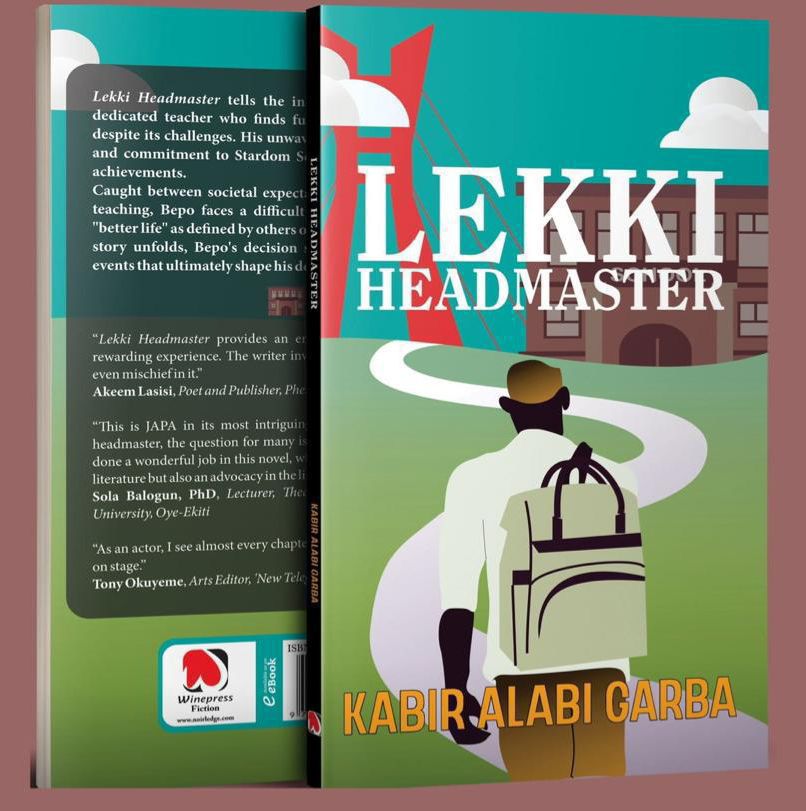
Chapter 4 Summary of The Lekki Headmaster
Chapter 4 of The Lekki Headmaster is titled “A Case of Visa Denied.” The chapter opens near midnight with Mr. Bepo about to say his night prayers when he receives a call from a Stardom school parent, Mrs. Ignatius. Bepo is frustrated by the late-night intrusion. Mrs. Ignatius is calling in absolute distress over a devastating family crisis triggered by their plans to relocate to London.
Her husband, Mr. Ibe, a manager at an oil firm, had bought into the Japa (migration) philosophy. He desired to move his children to a “sane environment” where they wouldn’t eventually be subordinated by youths returning from the West. The family was heavily invested in the move; Mr. Ibe had wound down his side businesses, and Mrs. Ignatius had strategically learned traditional Yoruba hairdressing (suku, kojusoko, and onilegogoro) because she discovered such skills could fetch high prices in the UK.
However, their plans are entirely derailed during the advanced stages of their visa processing. A mandatory DNA test required by the embassy reveals that Mr. Ibe is not the biological father of their 15-year-old daughter, Favour. The embassy subsequently denies their visas. Over the phone, Mrs. Ignatius laments that her husband has left the house, cynically declaring that they “should go and stay with Favour’s father.” Bepo has no answers for her, only feeling relief that his impending move to the UK will at least save him from having to manage such messy parental dramas.
The bizarre call prompts Bepo to reminisce about other major, absurd incidents he has had to handle at Stardom Schools, which he hopes to detail in a professional biography someday. He specifically recalls the unfair removal of Mr. Ayesoro, a Government teacher.
Mr. Ayesoro had deep, prominent traditional Yoruba facial marks, which led the students to give him the derogatory nickname “Mr. Owala” (or “Mr. Wala”). The narrative shifts to the home of a wealthy parent, Mrs. Mary Ladele. While staying up late to watch a Nollywood movie, her youngest daughter, Bibi, wakes up screaming from a nightmare because “Mr Wala” appeared in her dream. Bibi had previously been frightened by the teacher’s facial marks during a basketball practice.
Furious and unsettled, Mrs. Ladele refuses to sleep and waits for daybreak to launch a formal complaint at the school. Terrified of losing Bibi and her two siblings to a rival private school, the Stardom management immediately bows to the parent’s pressure. They remove Mr. Ayesoro from the classroom and transfer him to Stardom Hub, the property management wing of the company, effectively ending his teaching role at the school.
Analysis of Chapter 4
This chapter reveals the unforeseen, destructive consequences of the intense rush to migrate. The Ignatius family’s story illustrates how the stringent, clinical requirements of Western immigration systems (like DNA testing) are inadvertently unearthing deeply buried family secrets. The pursuit of a better life and foreign currency ultimately destroys the very family unit it was meant to benefit. The author uses this subplot to show that the Japa wave is also a sociological earthquake that is exposing moral failings and shattering homes.
Mrs. Ignatius’s preparation for migration highlights the pragmatic, survivalist mindset of Nigerians moving abroad. Knowing that white-collar jobs might be difficult to secure or insufficient, she learns artisanal skills like traditional hair braiding (irun didi). This underscores a fascinating dynamic of modern migration: while Africans are moving to the West for superior infrastructure and economic stability, they are simultaneously commodifying and exporting their cultural skills to survive in those capitalist systems.
Also, in this chapter, we witness the depiction of elite entitlement and the commodification of education. Both incidents narrated in the chapter sharply critique the dynamics within elite Nigerian private schools. One, Mrs. Ignatius feels entirely entitled to call the principal at midnight to discuss her marital infidelity. This shows how wealth and elite status blur the lines of professional boundaries, turning school administrators into on-call therapists for the rich. Two, the tragedy of Mr. Ayesoro (Mr. Wala) perfectly encapsulates the extreme commodification of private education. A qualified teacher is professionally sidelined not for incompetence, abuse, or negligence, but simply because a student had a bad dream about his traditional facial marks. The school prioritises the retention of the parents’ tuition fees over the dignity, career, and cultural identity of its staff.
The treatment of Mr. Ayesoro also highlights a painful internal prejudice. His traditional tribal marks—a symbol of indigenous heritage—are viewed as monstrous and terrifying by the Westernised, elite students of Lekki, who mock him with derogatory nicknames. The school management’s decision to hide him away in a property management office rather than educate the students about cultural differences reflects an environment that actively marginalises traditional African identity in favour of an elite, sanitised image.
Chapter 5 Summary of The Lekki Headmaster
Chapter 5 of The Lekki Headmaster is titled “Snake in the Roof.” The chapter begins during the school’s long break. Mrs. Ibidun Gloss, the Managing Director (MD), retreats to a secret room within her spacious office to rest. The narrator reveals that she suffers from a chronic, undiagnosed condition that causes severe “peppery pain” in her buttocks whenever she sits for too long—a secret she keeps from the 1,500-strong academic community. After resting, she decides to take a walk and inspects a piece of land Stardom acquired two years prior, located five minutes from the school’s back gate.
To her profound shock, she finds the fenced plot half-filled with various cars, including models like Toyota, Hyundai, Venza, Mazda, and even two commercial buses. A security guard informs her that this is the “staff park.” The MD is bewildered because there is already an official staff car park on the school premises; she quickly realises that the teachers and staff are intentionally hiding their vehicles from the management.
Seeing the sheer number of cars, the MD panics, assuming the school is being robbed. She immediately summons Principal Bepo and the school accountant, Jeremi Amos, demanding to know: “How safe is our money? … Where are teachers and storekeepers and every gardener getting the money to buy these cars?”
The principal and the accountant assure her that the school’s finances are perfectly intact. They explain that the staff purchased the vehicles through personal means, primarily by taking loans from the school’s staff cooperative society, which are then safely deducted directly from their salaries. While this explanation calms her fear of theft, it ignites a new anxiety. She asks how the cooperative could possibly have enough money to buy “every fool” a car.
The following day, the MD convenes an emergency meeting with the board of directors, which consists entirely of her family members, including the chairman, Chief Mrs. Solape Bayo (the MD’s mother). They demand to know the financial status of the cooperative society and are stunned to learn that the purse holds N95 million, with over N50 million actively loaned out to staff.
Viewing this immense financial independence as a severe threat, Chief Bayo likens the situation to “hanging a snake in the roof and going to bed.” She expresses a paranoid fear that the financially empowered staff might rebel and start a rival school using the cooperative’s funds. Consequently, the board unanimously passes draconian measures to cripple the cooperative: they cap all staff loans at a mere N250,000, mandate that the MD must personally approve every loan request, and demand management oversight of all cooperative elections.
Analysis of Chapter 5
The core theme of this chapter is the extreme class divide and the paranoia of the elite ruling class. The management does not view the financial progress of their staff as a positive reflection of the school’s ecosystem. Instead, the MD is horrified that “every Tom, Dick and Harry” or “every fool” can afford a choice car. The board views the teachers’ collective financial empowerment as an existential threat—the titular “snake in the roof.” This perfectly illustrates how capitalist structures in elite private institutions rely on keeping the working class economically subjugated.
The chapter highlights a deeply toxic, adversarial relationship between the Stardom management and its staff. The fact that the teachers deliberately parked their cars in a distant, hidden lot proves they anticipated the management’s vindictive reaction. They knew that displaying even modest signs of wealth would invite scrutiny or sabotage. Unfortunately, their fears are entirely validated by the end of the chapter.
The staff cooperative society is a successful model of grassroots financial independence. Through disciplined savings and internal loans, the teachers managed to bypass traditional, exploitative banking systems to improve their lives. The board’s immediate reaction to seize control of the cooperative, cap loans at an unhelpful N250,000, and strip away its democratic elections is a classic union-busting tactic. It is designed to strip the teachers of their financial safety net, ensuring they remain dependent on their monthly salaries and subservient to the management’s whims.
Kabir Alabi Garba provides a brilliant contrast at the beginning of the chapter by exposing the MD’s hidden, embarrassing physical pain. Despite her immense wealth, power, and the aggressive control she exerts over the school, she is secretly plagued by an incurable ailment. This physical vulnerability mirrors her psychological vulnerability: her absolute terror that her subordinates might become successful enough to challenge her family’s empire.
Chapter 6 Summary of The Lekki Headmaster
Chapter 6 of The Lekki Headmaster is titled “Ade as Well as Jide COMES vs. COME.” The chapter revolves around the events of Open Day at Stardom Schools, a significant day when parents visit to review academic progress, bring gifts, or deliver “trailer-loads of complaints.” The school’s Managing Director (MD), Mrs. Ibidun Gloss, urgently summons the principal, Mr. Bepo, to her office. Inside, she is seated with a calm but stern parent, Mr. Guta. Skipping any pleasantries, the MD immediately orders Bepo to fetch Mr. Fafore, the senior English teacher, and process his sack letter.
Bepo deeply hates issuing sack letters, as he often feels a void in his heart when colleagues lose their jobs. The situation triggers a painful flashback to his own days of joblessness and poverty, specifically a humiliating incident where an angry landlady (Iya Mathew) poured cassava powder on his head and sang mocking songs because he had secretly spent the N2,500 he collected for the house’s electricity bill.
Bepo pulls Fafore out of his SSS 2 class and questions him to see if he had any recent altercations with parents or management, but Fafore is entirely oblivious to any wrongdoing. As Fafore returns to the staff room to pack his desk, his colleagues quickly figure out what is happening. The teachers lament the lack of job security, with Mr. Audu and Mr. Obi bitterly noting that they are working in a “one-man business” where the employer’s mood dictates their survival.
The narrative provides a poignant look into Fafore’s life to emphasise the tragedy of his impending termination: despite being a university graduate for 22 years, his salary is a mere N175,000. Unable to afford the exorbitant rent in the Lekki area or his own school’s tuition fees, Fafore built an unplastered house in a distant part of neighbouring Ogun State. To keep his job, he wakes up at 4:00 am daily, arriving at school by 6:00 am to sleep on his desk, an intense dedication that has won him the Most Punctual Teacher Award twice.
The MD summons all the teachers to an emergency meeting. Agitated and squirming from a chronic pain condition in her buttocks, she publicly berates the staff for their incompetence and illiteracy. She reveals Fafore’s “atrocity”: Mr. Guta had found a note in his son’s book where Fafore wrote, “Ade as well as Jide comes early.” Mr. Guta threatened to withdraw his children from the school, believing the sentence should read “Ade as well as Jide come.” The MD agreed with the parent and was ready to sacrifice the teacher’s career to keep the tuition fees.
At this critical moment, Bepo boldly intervenes. He informs the MD that Fafore’s sentence is a piece of flawless Standard English. Bepo explains the grammatical rule: when nouns are joined by phrases like ‘as well as,’ ‘together with,’ or ‘alongside,’ the verb must remain singular to agree with the first noun (hence, “comes”).
The MD directs everyone to check their smartphones to investigate the claim, only to discover that Bepo and Fafore are absolutely right, while Mr. Guta and the MD are wrong. A heavy, embarrassed silence falls over the room as the MD realises she almost fired an innocent, hardworking man over a non-existent error. The tension is brilliantly broken by Mr. Audu, the school’s clownish teacher, who gives the MD a dramatic Japanese bow and demands his own sack letter for collecting it from the “great teacher” Fafore. The room erupts in laughter, and the MD playfully dismisses him, dissolving the crisis.
Analysis of Chapter 6
Chapter 6 of The Lekki Headmaster actively engages the precarity of teaching and class divide. Fafore is portrayed therein as a tragic symbol of the socio-economic struggles faced by Nigerian private school teachers. Despite teaching the children of the elite, he cannot afford to live near the school or pay for his own children to attend it. His daily 4:00 am commute and uncompleted home highlight a severe wealth disparity. The fact that he was almost fired in an instant over a perceived mistake underscores the absolute precarity and lack of basic labour protections for teachers in these “one-man” private businesses.
The chapter offers a biting critique of how private schools prioritise financial gain over academic integrity. The MD’s immediate reaction to Mr. Guta’s complaint is not to investigate the academic merit of the English sentence, but to instantly fire the teacher to appease the paying customer. It highlights a dangerous environment where wealthy parents feel entitled to police the curriculum and staff based on their financial leverage, even when they are factually ignorant.
On the flipside, this chapter perfectly encapsulates why Bepo is so beloved by his staff. His deep empathy is rooted in his own humiliating past experiences with poverty, which prevents him from casually destroying another man’s livelihood. Furthermore, Bepo demonstrates immense moral and intellectual courage. He is willing to publicly correct his powerful boss and risk her wrath to defend an innocent subordinate, proving that his loyalty lies with truth and justice rather than blind obedience.
The author deploys comic relief to ease the tension caused by the MD’s poor judgement. He masterfully uses Mr Audu’s character to balance the harsh realities of the workplace. When the MD’s unjust witch-hunt collapses and leaves her deeply humiliated, the power dynamics in the room become uncomfortably tense. Audu’s comedic intervention is a crucial social lubricant, saving the MD from losing face entirely while allowing the staff to celebrate their quiet victory through laughter.
Related:
- Chapter 1 to 3 Summary and Analysis of The Lekki Headmaster by Kabir Alabi Garba
- Chapter 7 to 9 Summary and Analysis of The Lekki Headmaster by Kabir Alabi Garba
- Chapter 10 to 12 Summary and Analysis of The Lekki Headmaster by Kabir Alabi Garba
Receive Literary Updates through our Social Media Channels:
- WhatsApp: Literature PADI
- Telegram: Literature PADI
- YouTube: @literaturepadi
- Facebook: Literature PADI