Download our SSCE Study Guide Bundle
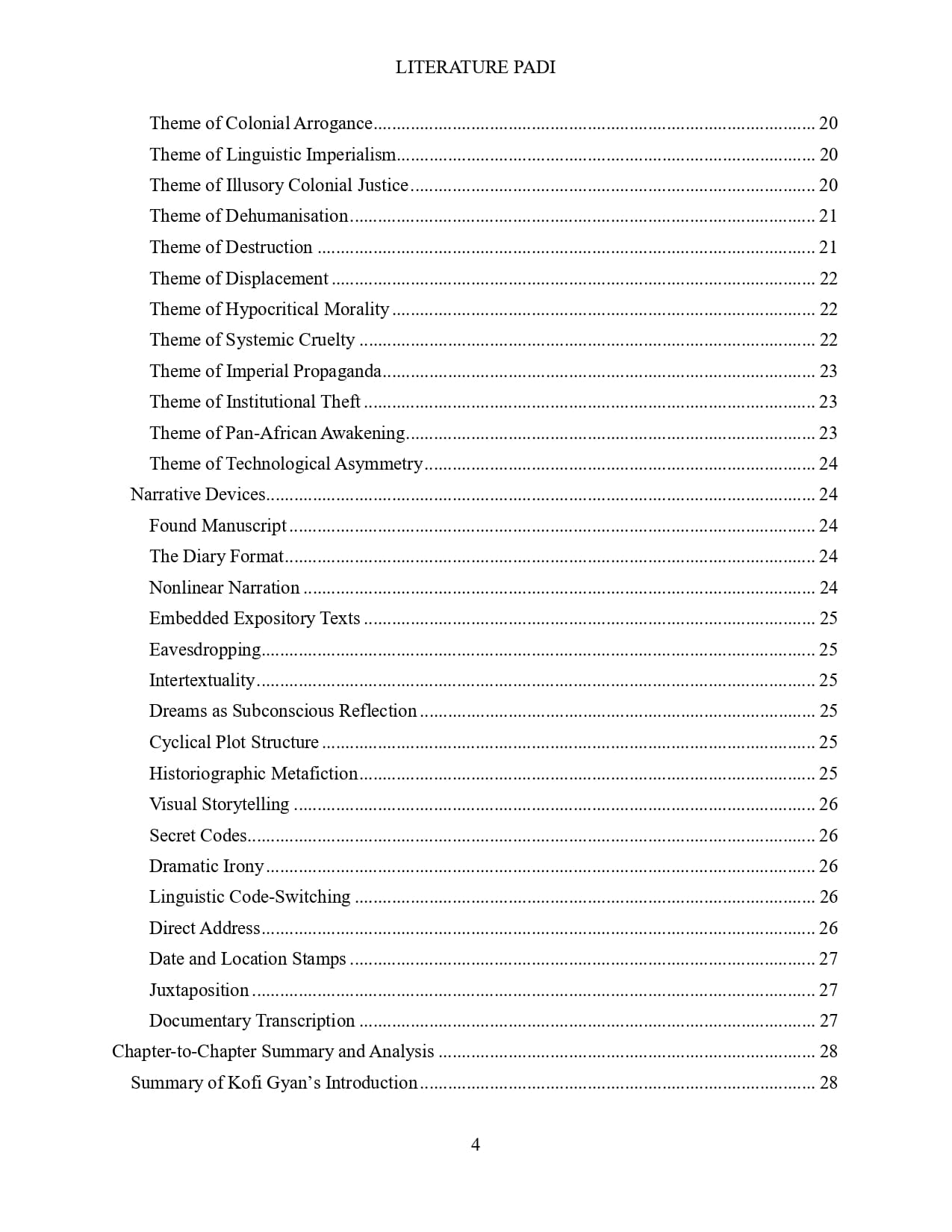
Some of the themes in The Boy Who Spat in Sargrenti’s Eye by Manu Herbstein are the themes of racial prejudice, African resistance, colonial arrogance, linguistic imperialism, illusory colonial justice, dehumanisation, destruction, displacement, hypocritical morality, systemic cruelty, imperial propaganda, institutionalised theft, pan-African awakening, and technological asymmetry.
In this section, we are going to examine these themes of The Boy Who Spat in Sargrenti’s Eye.
Theme of Racial Prejudice
Racial prejudice is presented as a foundational element of the British worldview in the novel, primarily through the unguarded conversations of the white war correspondents and military officers. Characters like George Henty and Henry Morton Stanley openly assert that the intelligence of an average African is equal only to that of a ten-year-old European child. They characterise Africans as totally lacking in originality and invention.
The colonisers view the local population not as human equals but as beasts of burden. When Fante labourers resist, Stanley ruthlessly advocates binding them in slave chains and controlling them with long whips. This pervasive bigotry enables casual cruelty, such as when Stanley enthusiastically volunteers to administer a severe beating to an African cook, sadistically delivering forty-one lashes instead of the ordered thirty-six.
The British consistently underestimate the Africans around them. They arrogantly assume that Africans are entirely ignorant of English, which blinds them to the intelligence and agency of the people they are subjugating.
Theme of African Resistance
Resistance to the imperial invasion takes both overt and highly subversive forms. Overtly, political defiance is embodied by Nana Kobena Gyan, the Ohin of Elmina, who vehemently refuses to swear an oath of allegiance to Queen Victoria or surrender his people’s sovereignty, accepting exile to Sierra Leone rather than submitting. On the battlefield, the Asante warriors display immense courage, confronting the rapid-firing Snider rifles and terrifying Gatling guns of the British with only ancient, slow-loading flintlocks loaded with stones.
Covertly, the resistance weaponises the colonisers’ own racial prejudice against them. The Asante spy Ababio recruits young Kofi Gyan to work closely with the British, correctly predicting that the whites’ assumption of African stupidity will allow Kofi to gather vital military intelligence undetected. This espionage network utilises traditional talking drums alongside clever English anagrams to communicate.
The ultimate act of resistance is Kofi’s deeply personal rebellion; completely unarmed, he publicly accuses the British commander of theft and murder, proudly declares his name to be “Kofi Africa,” and spits directly into his eyes.
Get the Full Analysis in PDF
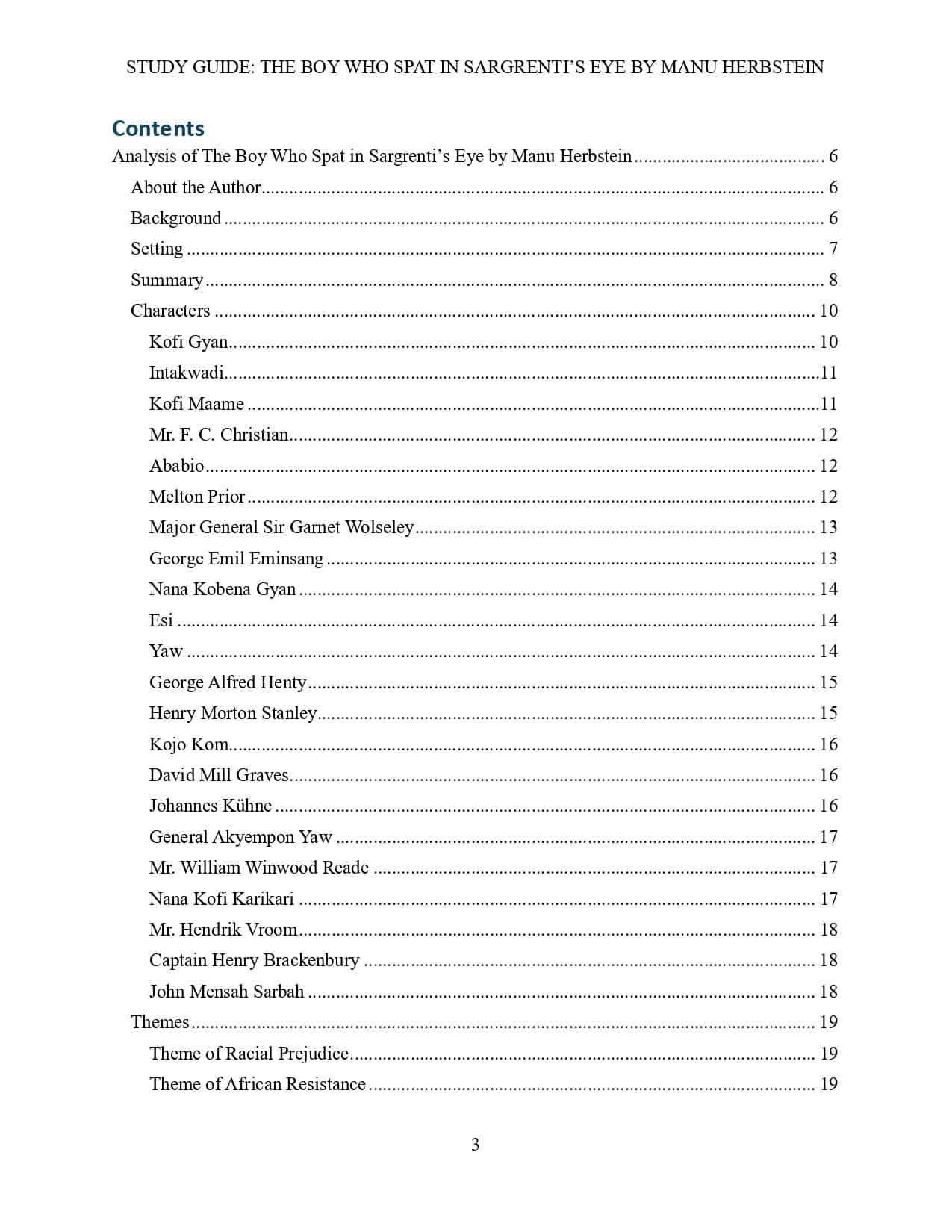
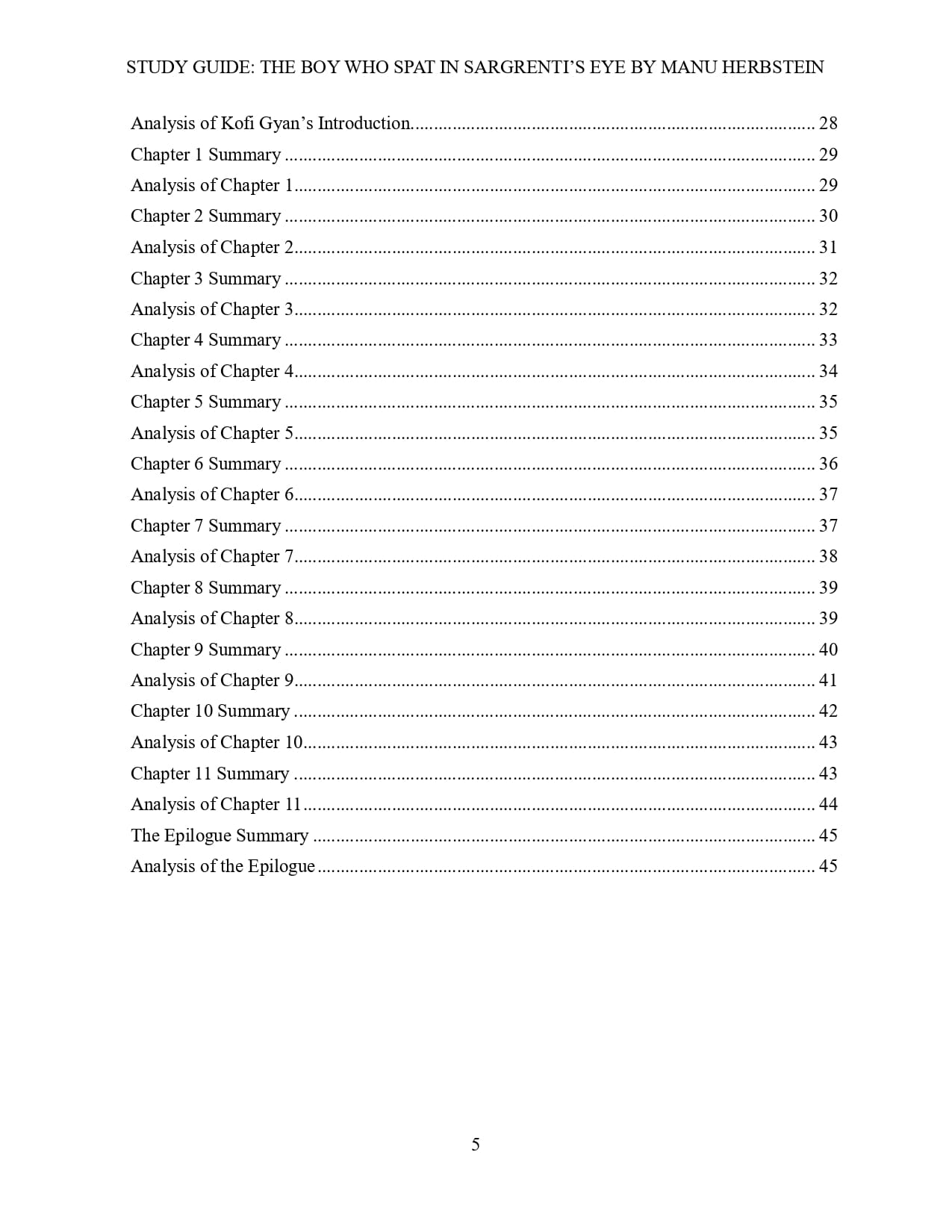
Enjoying this breakdown? What you’re reading is just part of the full experience. The premium PDF edition brings everything together in one seamless, distraction-free document that has the background, setting, plot summary, chapter-to-chapter summary and analysis, narrative devices, characters, and themes. If you’re studying seriously, this is the version you’ll want.
Theme of Colonial Arrogance
The colonisers operate with a profound sense of arrogance, convinced they have a divine and moral mandate to conquer. A British military chaplain explicitly frames the invasion of Kumase as a holy mission orchestrated by “Divine Providence.” He compares the campaign to the biblical destruction of Jericho and justifies the impending violence as a necessary step to bring the “light of civilisation” to “savage pagans.”
This arrogance breeds extreme hypocrisy regarding justice. The British commander ruthlessly hangs a young Fante policeman without a trial for stealing a small scrap of cloth; yet mere days later, the British officers and correspondents enthusiastically engage in the systematic, wholesale looting of priceless gold masks, jewellery, and royal stools from the Asantehene’s palace.
Furthermore, the British feel entitled to completely dismiss African political rights. They trade coastal forts amongst European nations without ever consulting the African rulers who own the land. They are also arrogant enough to deliberately censor reality to protect their self-image, such as when Mr. Prior refuses to draw the brutal flogging of a Fante labourer so as not to give “ammunition” to critics of the empire back in London.
Theme of Linguistic Imperialism
In the novel, the English language operates as a tool of colonial dominance and a metric by which the British judge African worth. Grandfather Christian explicitly recognises this power dynamic, which is why he advised Kofi to master English because the British are conquering the world and English is the only language they respect or understand.
Conversely, the colonisers view the lack of English fluency among the locals as evidence of their inferiority. The journalist Henry Morton Stanley complains that after two hundred years of European presence, barely a thousand Fante understand English. He uses this to argue that the people are “barbarous, untutored, and superstitious.”
However, the novel also demonstrates how Africans subvert this linguistic imperialism. The British arrogantly assume that the African population is entirely ignorant of their language, which blinds them to the intelligence of those around them. Kofi and his father actively weaponise this assumption; by pretending the father speaks no English, they force the correspondent Melton Prior to use Kofi as an interpreter, allowing father and son to secretly strategise in Fante right in front of the Englishman to secure a higher wage. Furthermore, Kofi uses his English literacy to gather crucial military intelligence for the Asante resistance.
Theme of Illusory Colonial Justice
The narrative exposes the British legal and disciplinary system as a hypocritical framework designed to subjugate the colonised while granting impunity to the colonisers. Colonial justice is frequently summary and brutal. Early in the novel, the British orchestrate a rigged show trial for three Elmina men, denying them legal representation before executing them publicly to assert dominance. This arbitrary justice is further highlighted when the British commander summarily hangs a young Fante policeman without a trial for stealing a small scrap of cloth.
In stark contrast, the British forces face no legal consequences for their own massive acts of theft and violence. While executing Africans for petty theft, the British officers and correspondents systematically loot the Asantehene’s palace of its priceless gold masks, jewellery, and royal artefacts. Mr. Prior personally steals gold shoe buckles to make a brooch for his wife and successfully smuggles his plunder past British guards by faking a severe case of dysentery. The British even hold a polite, formal auction in Cape Coast to sell off the stolen heritage, fully institutionalising their plunder.
Theme of Dehumanisation
To justify their violent conquest and forced labour practices, the colonisers continuously strip the African population of their human dignity. The British war correspondents explicitly articulate this dehumanisation: George Henty claims that “the intelligence of an average negro is about equal to that of a European child of ten years old” and that Africans are totally lacking in originality. Henry Morton Stanley describes the local people as wild and filthy. He advocates that reluctant African labourers should be bound in “slave chains” and controlled with a ‘long whip.”
This ideological dehumanisation enables extreme physical cruelty. Because the British need “beasts of burden” to transport their supplies, they force Fante men into unpaid labour, brutally flogging those who drop their loads at designated “whipping-trees.” Mr. Stanley demonstrates this sadism personally by eagerly administering forty-one lashes to an African cook.
The historical reality of this dehumanisation is validated by an editorial from The Gold Coast Times, which documents that the British treated African carriers “little better than dogs” and that “negro blood was held cheaper than water.” On the battlefield, this absolute disregard for African life is shown when British troops casually execute wounded, groaning Asante warriors as they lie on the ground.
There are 1,156 words waiting beyond this point.
You’ve just read part of the themes/analysis. What follows is a further 1,156 words that complete this segment. If this portion has been useful so far, the continuation delivers the full themes/analysis. Continue reading to unlock the remaining 1,156 words.
Related:
- Plot Summary and Setting of The Boy Who Spat in Sargrenti’s Eye by Manu Herbstein
- Characters in The Boy Who Spat in Sargrenti’s Eye by Manu Herbstein
- Study Guide: The Boy Who Spat in Sargrenti’s Eye by Manu Herbstein
Receive Literary Updates through our Social Media Channels:
- WhatsApp: Literature PADI
- Telegram: Literature PADI
- YouTube: @literaturepadi
- Facebook: Literature PADI