Download our SSCE Study Guide Bundle
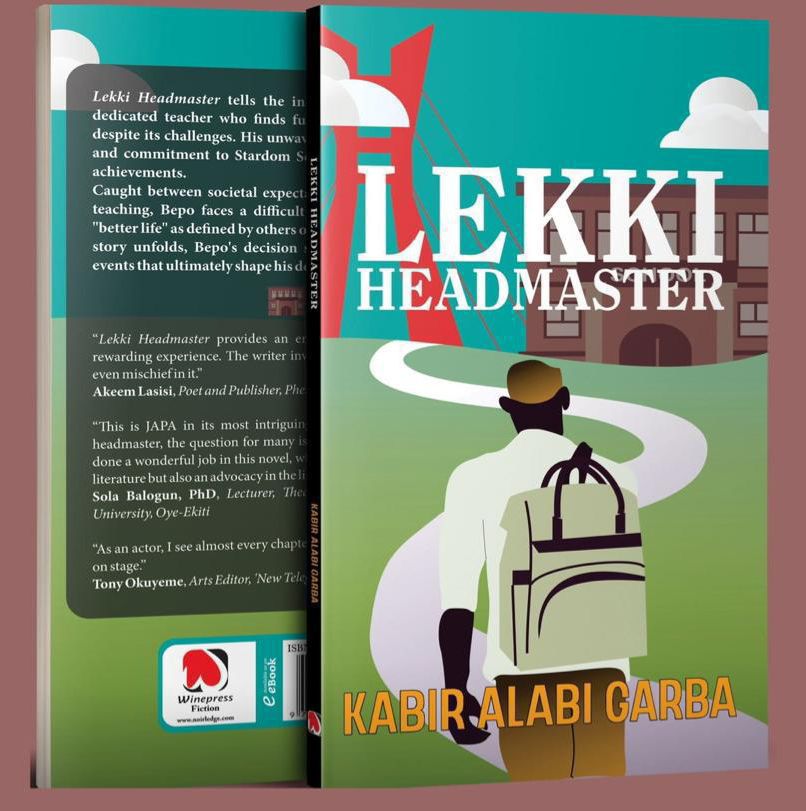
Chapter 1 Summary of The Lekki Headmaster
Chapter 1 of The Lekki Headmaster is titled “Dusk.” This chapter opens dramatically during the morning assembly at Stardom Schools. The usually charismatic and cheerful principal, Mr. Bepo Adewale, approaches the podium but is unable to deliver his customary pep talk. Instead of speaking, he stares blankly, drops the microphone, and begins to weep uncontrollably in front of the bewildered staff and students. Unable to utter a word, he is escorted back to his office by concerned staff members, including the Vice Principal, Mrs. Grace Apeh, and the school nurse.
Before the principal’s breakdown, the morning had been proceeding exceptionally well. The narrator reveals that the school management had recently introduced a shrewd policy: they lowered the boarding fees from N250,000 to N165,000, which successfully prompted 80 percent of parents to move their children to the boarding house and significantly reduced student lateness. To offset this, the school quietly hiked the “Excursion and Other Items” fee to N93,000, a move that amused some staff members, with one teacher jokingly calling the Managing Director a “witch and wizard rolled into one” for her business acumen.
The assembly also featured an engaging presentation by an SSS 1 student, Ikenna Egbu, who recounted a recent school excursion to Jos. Ikenna passionately praised the “acrobatic beauty” and cool weather of Jos, declaring that he would rather settle there in the future than join the wave of Nigerians “japa-ing to Canada or London.” Normally, Mr. Bepo—who had been a foundational pillar at Stardom for 24 years and was fondly nicknamed “The Lekki Headmaster” and “Principo”—would have followed up with an inspiring commentary. This makes his sudden breakdown all the more shocking to the students.
The school’s Managing Director (MD), Mrs. Ibidun Gloss, rushes to the school after being alerted to the situation. The timing is particularly jarring because the school had just celebrated a 90 percent success rate in the recent WASSCE exams the day before, rewarding top-performing teachers with cash prizes. In the office, the MD finds Mr. Bepo distraught and unable to articulate his problem. She enlists the help of Mr. Ope Wande, a Physics teacher and pastor, to speak with him. During their conversation, it is revealed that Mr. Bepo’s wife currently lives in London, prompting the MD to wonder if missing his family is the cause of his distress. Viewing the weeping principal as a potential liability to the school’s image, the pragmatic MD decides to send him home immediately, reasoning that the school is “not a rehabilitation centre but a place for learning and earning money.”
Analysis of Chapter 1
The primary thematic undercurrent introduced in this chapter is the psychological and emotional impact of the Nigerian migration wave, colloquially known as Japa (fleeing the country for better opportunities abroad). This theme is cleverly juxtaposed in two ways. The first is Ikenna’s speech which celebrates the beauty of Nigeria (specifically Jos) and rejects the idea of migrating to Canada or London. In stark contrast to the student’s innocent patriotism, Mr. Bepo’s total emotional collapse is strongly linked to the fact that his wife has already relocated to London. His breakdown represents the silent, sometimes devastating emotional sacrifices made by families separated by economic migration.
The chapter also offers a sharp critique and realistic portrayal of the business of private education in Nigeria. Stardom Schools is depicted not just as an educational institution, but as a heavily monetised enterprise. The management’s clever manipulation of school fees highlights the commodification of learning. This is further reinforced by the MD’s internal monologue at the end of the chapter, where she prioritises the school’s reputation and financial stability over the principal’s mental health, bluntly framing the school as a place for “earning money” rather than a centre for emotional rehabilitation.
Kabir Alabi Garba contrasts two characters in this chapter vis-a-vis institutional pressure. The first is Mr Bepo (The Lekki Headmaster) while the other is Mrs. Ibidun Gloss (The MD). Mr. Bepo is established as an overwhelmingly positive, dedicated, and humorous figure who has given 24 years of his life to building the school. His nicknames and his habit of imitating old TV characters show he is deeply woven into the fabric of the institution. His public breakdown strips away his authoritative persona, highlighting the immense private pressures faced by public figures. On the other side, Mrs. Ibidun Gloss represents the relentless machinery of the private sector. While she is not outright malicious, her immediate reaction to Bepo’s crisis is one of frustration and damage control. She is quick to dismiss his emotional needs in favour of removing the “drama” from the premises to protect the school’s elite image.
Chapter 2 Summary of The Lekki Headmaster
Chapter 2 of The Lekki Headmaster is titled “The Enticement.” It probes further into the reason behind Mr. Bepo’s emotional breakdown in the previous chapter. After five days, the root of his breakdown is revealed: he has finally agreed to leave Nigeria and relocate to the United Kingdom. Bepo is incredibly reluctant to go, philosophically believing it makes no sense to abandon a developing nation to help build an already developed one. However, his wife, Seri, who already lives in the UK with their two daughters (Nike and Kike), has pushed their marriage to the breaking point over the issue, forcing his hand. Fortunately, Bepo has already secured a teaching job in the UK.
Chapter 2 takes a brief retrospective look at Bepo’s early years at the school. Having served as the headmaster of the primary arm (Stardom Kiddies) for four years, he gained a reputation for his humanistic and empathetic approach to resolving staff conflicts. A clownish Fine Arts teacher, Mr. Audu, joked that Bepo settled quarrels just like the character “King Oloja” from the old Nigerian TV drama Village Headmaster. The label stuck, and he was forever dubbed “The Lekki Headmaster.”
When Bepo’s colleagues discover the reason for his sadness, they find it “extremely funny” and secretly think it is stupid. To them, Bepo is living a dream that thousands of Nigerians are sacrificing everything for. He is escaping the dreaded realities of migration: he doesn’t need to arrange a fake marriage, and he already has a professional job waiting, sparing him from menial work like washing corpses.
The staff room erupts into a debate over the economics of his move. Seri, a nurse, is rumoured to earn up to £10,000 a month (converted by the staff to a staggering N17 million), while Bepo’s promised teaching salary is £3,600. Compared to his current principal salary of N400,000, the financial upgrade is monumental. When one teacher argues that the cost of living in the UK will consume those pounds, Mr. Audu dismisses it, calculating that even a fraction of savings sent back to Nigeria would dwarf Bepo’s current income. Audu jokingly declares that Stardom management must have “jazzed” (bewitched) Bepo to make him hesitate, and humorously threatens to find Bepo’s wife so she can “adopt” him as a husband.
The chapter concludes by exploring the entrepreneurial dreams Bepo must sacrifice for this relocation. Now 51, he had planned to retire at 55 and become a businessman who creates jobs for others. He had considered opening his own school, though he was wary after his first post-NYSC venture—a school named “Fruitful Future”—collapsed due to the socio-economic decline of its neighbourhood. He also heavily researched the commercial transportation business, contemplating buying and leasing buses, but was deterred by the untrustworthiness of local drivers. Bepo shelves these dreams, as he steels himself for his new life in the UK and prepares to face potential culture shocks, such as insubordinate British students.
Analysis of Chapter 2
This chapter dives deep into the ideological conflict surrounding the Japa (migration) syndrome. Bepo is depicted as the voice of idealism and patriotism; he actively wishes to stay and develop his own country rather than lend his talents to a foreign nation that is already prosperous. His inner turmoil highlights the tragedy of brain drain: Nigeria is losing its most dedicated, experienced, and principled professionals not always because they want to leave, but because systemic pressures—and in Bepo’s case, family ultimatums—force them out.
The staffroom debate provides a striking commentary on how the Nigerian working class views success. To Bepo’s colleagues, his hesitation is incomprehensible because they view the situation entirely through the lens of currency exchange rates. The juxtaposition of Bepo’s “feeble naira” against the “heavy British pounds” underscores a societal desperation where financial escape is the ultimate goal, overriding any notions of national loyalty or personal comfort. Mr. Audu’s comedic desperation to be “adopted” by Bepo’s wife reflects a very real socio-economic anxiety.
The author paints a bleak picture of the entrepreneurial landscape in Nigeria through Bepo’s reflections on his retirement plans. Bepo is full of ambition to create jobs and boost the economy. Yet, his past failure with “Fruitful Future” illustrates how bad infrastructure and socio-economic decay can ruin good initiatives. Furthermore, his hesitation to enter the transport business highlights a severe crisis of trust and ethics in the Nigerian informal sector, where mechanics and drivers routinely collude to defraud vehicle owners. These environmental failures subtly reinforce why migration becomes the only viable option for many.
Finally, Bepo’s character is defined by his sense of duty. He is deeply empathetic, taking on the emotional burdens of his quarrelling staff to keep the peace. At the end of the day, his decision to abandon his own dreams of entrepreneurship and relocate to the UK is not an act of self-interest, but a surrender to his duty as a father and husband. He trades his hard-earned status as “The Lekki Headmaster” to start from the bottom in a foreign land simply to keep his family intact.
Chapter 3 Summary of The Lekki Headmaster
Chapter 3 of The Lekki Headmaster is titled “Migration Tales.” Having finally made the difficult decision to relocate to the United Kingdom, Mr. Bepo begins to pay closer attention to the stories and realities of those who have migrated to countries like Canada, the UK, and the USA. He is immediately struck by the differences in the labour system, particularly the concept of hourly wages. He learns that Nigerians abroad can earn substantial amounts—such as a former driver making $500 daily doing maintenance work—which translates to staggering wealth when converted to Naira. Because of this, intending migrants are often advised to learn practical skills, like barbing or painting, before leaving. However, Bepo notes that many back home forget that these migrants also have to pay hefty rents, taxes, and maintenance fees in the same foreign currency.
The chapter highlights the absolute desperation of the “Japa” (migration) wave. To afford visa requirements and travel costs, Nigerians are selling their properties, taking loans, and sometimes resorting to criminal acts. Bepo recalls incidents at Stardom Schools where a teacher took a N2 million cooperative loan and vanished abroad, and a driver attempted to steal a school bus to fund his son’s overseas education.
Seeking perspective, Bepo speaks with Sola, a former Stardom Home Economics teacher who recently relocated to the UK with her husband. Bepo had previously saved Sola from being fired when she was caught running an unauthorised creche near the school. Sola reassures Bepo that his transition will be relatively smooth because his wife is already established as a nurse in the UK, meaning he won’t face the crushing burden of working multiple jobs just to pay international school fees. Sola admits that she and her husband sold everything and still had to borrow N4 million to relocate, living in a cramped, unfurnished apartment in Manchester. Yet, they have no regrets, largely due to the systemic benefits they now enjoy.
Sola highlights the stark contrast between Nigeria and the UK, focusing heavily on free education and healthcare. She shares an emotional story about her asthmatic three-year-old daughter having a seizure; within five minutes of calling 911, two ambulances arrived at her home, and her daughter received unprecedented care and gifts from the hospital staff. Bepo contrasts this reliable welfare system with the fragile reality in Nigeria, remembering a wealthy Stardom parent, Chief Waliem, whose sudden death left his family in such debt that his children were forced to drop out of school.
Despite these success stories, the chapter also exposes the dark, humbling side of migration. Bepo reflects on tales of professionals suffering a severe loss of status, such as a former banker who broke down in tears over the reality of having to care for an elderly couple in London. Migration also takes a heavy toll on marriages; the narrative shares the story of an accountant named Hope, whose wife abandoned him financially shortly after they arrived in the UK. The chapter concludes with the story of Akindele, a 55-year-old who migrated to the US. Akindele ended up doing gruelling physical labour like freight loading. The chapter thus warns that the Western system is ruthless; it extracts labour for every dime regardless of a person’s age or former senior status in Nigeria.
Analysis of Chapter 3
Chapter 3 of the Lekki Headmaster brilliantly dissects the financial motivations driving the Nigerian brain drain. The allure of migration is heavily driven by currency exchange rates, where a daily wage in dollars or pounds sounds like a fortune when converted to the “feeble naira.” However, the author is careful to point out the illusion of this wealth, reminding the reader of the high cost of living, taxes, and relentless bills that migrants face in Western countries.
The intense desire to escape Nigeria’s economic hardship is shown to be eroding moral boundaries. The narrative uses the examples of the fleeing teacher and the thieving driver to illustrate how the pressure to migrate turns ordinary, respectable citizens into “classical rogues.” The pursuit of a better life abroad has become so desperate that people are willing to destroy their integrity and the institutions they leave behind to achieve it.
A central theme of the chapter is the comparison between the broken Nigerian state and the functional infrastructure of developed nations. Sola’s deeply moving story about the rapid ambulance response is an indictment of the Nigerian healthcare system. Furthermore, the juxtaposition of the UK’s free education with the plight of the late Chief Waliem’s children highlights a tragic reality: in Nigeria, even immense private wealth cannot guarantee long-term security, making the institutional safety nets of the West incredibly attractive.
The chapter strips away the glamorous facade of living abroad by focusing on the loss of dignity many migrants endure. White-collar professionals—bankers, media executives, and senior secretaries—are reduced to menial, physical labour. Akindele’s poignant observation that the “Oyinbo man” does not care about your age or previous status emphasises the unforgiving, hyper-capitalist nature of Western societies. Migrants trade their social standing in Nigeria for basic financial security abroad, often at a great psychological cost.
Finally, the chapter examines how the pressures of migration fracture families. From marriages crumbling under the weight of financial survival (like Hope and his wife) to older men starting over entirely (like Akindele), the narrative shows that Japa is not just an economic journey, but an emotional gauntlet that permanently alters the fabric of families.
Related:
- Chapter 4 to 6 Summary and Analysis of The Lekki Headmaster by Kabir Alabi Garba
- Chapter 7 to 9 Summary and Analysis of The Lekki Headmaster by Kabir Alabi Garba
- Chapter 10 to 12 Summary and Analysis of The Lekki Headmaster by Kabir Alabi Garba
Receive Literary Updates through our Social Media Channels:
- WhatsApp: Literature PADI
- Telegram: Literature PADI
- YouTube: @literaturepadi
- Facebook: Literature PADI


when well your jabm
Abdullahi abdulhamid