Download our SSCE Study Guide Bundle
Act 3, Scene 13 Summary of Antony and Cleopatra
Act 3, Scene 13 of Antony and Cleopatra takes place in Alexandria at Cleopatra’s palace. It is a long, emotionally volatile scene that showcases the rapid deterioration of Antony’s judgment and his political alliances following the disaster at Actium. The scene opens with Cleopatra asking Domitius Enobarbus what they should do now, to which he bluntly replies, “Think, and die.” When she asks if the defeat was her fault or Antony’s, Enobarbus places the blame entirely on Antony for letting the “itch of his affection” override his military reason and captainship.
Antony enters with the ambassador Euphronius, who reports Caesar’s harsh terms: Caesar will only show Cleopatra courtesy if she yields Antony up. In a desperate and irrational response, Antony tells the ambassador to deliver a challenge to the “boy Caesar,” daring him to lay aside his armies and fight him in a single combat, “sword against sword.” Observing this, Enobarbus secretly realises that Caesar has subdued Antony’s judgment, and he begins to seriously contemplate abandoning his “fall’n lord”.
Thyreus, a messenger from Caesar, is admitted to see Cleopatra. Thyreus tells her that Caesar knows she embraced Antony out of fear, not love, and pities her “scars upon your honour.” Cleopatra plays along with this diplomatic fiction; she agrees that her honour was “not yielded, / But conquer’d merely,” and she offers her hand for Thyreus to kiss in submission to Caesar. At this exact moment, Antony re-enters and catches Thyreus kissing Cleopatra’s hand. He flies into a violent, jealous rage, screaming that his authority is melting away. He orders his attendants to drag Thyreus away and whip him. Antony then turns his fury on Cleopatra. He calls her a “boggler” and cruelly reminds her that she was merely a “morsel cold upon / Dead Caesar’s trencher” and a fragment of Pompey’s before him.
When the attendants return with the severely whipped Thyreus, Antony sends him back to Caesar with a defiant message to report his anger. Cleopatra waits for his rage to subside and gently reaffirms her deep loyalty to him. Reassured, Antony experiences a sudden, manic surge of confidence. He declares that his land forces are still intact, his navy is knitting back together, and he will fight “maliciously” against the enemy. He calls for all his sad captains to join him to “mock the midnight bell” and have “one other gaudy night.” Cleopatra rejoices. She says it is her birthday and she will celebrate since her lord is “Antony again.”
After they exit, Enobarbus is left alone on stage. He recognises that Antony’s sudden furious bravery is just the panic of a frightened man. Concluding that “when valour preys on reason, / It eats the sword it fights with,” Enobarbus makes the final decision to seek a way to leave Antony.
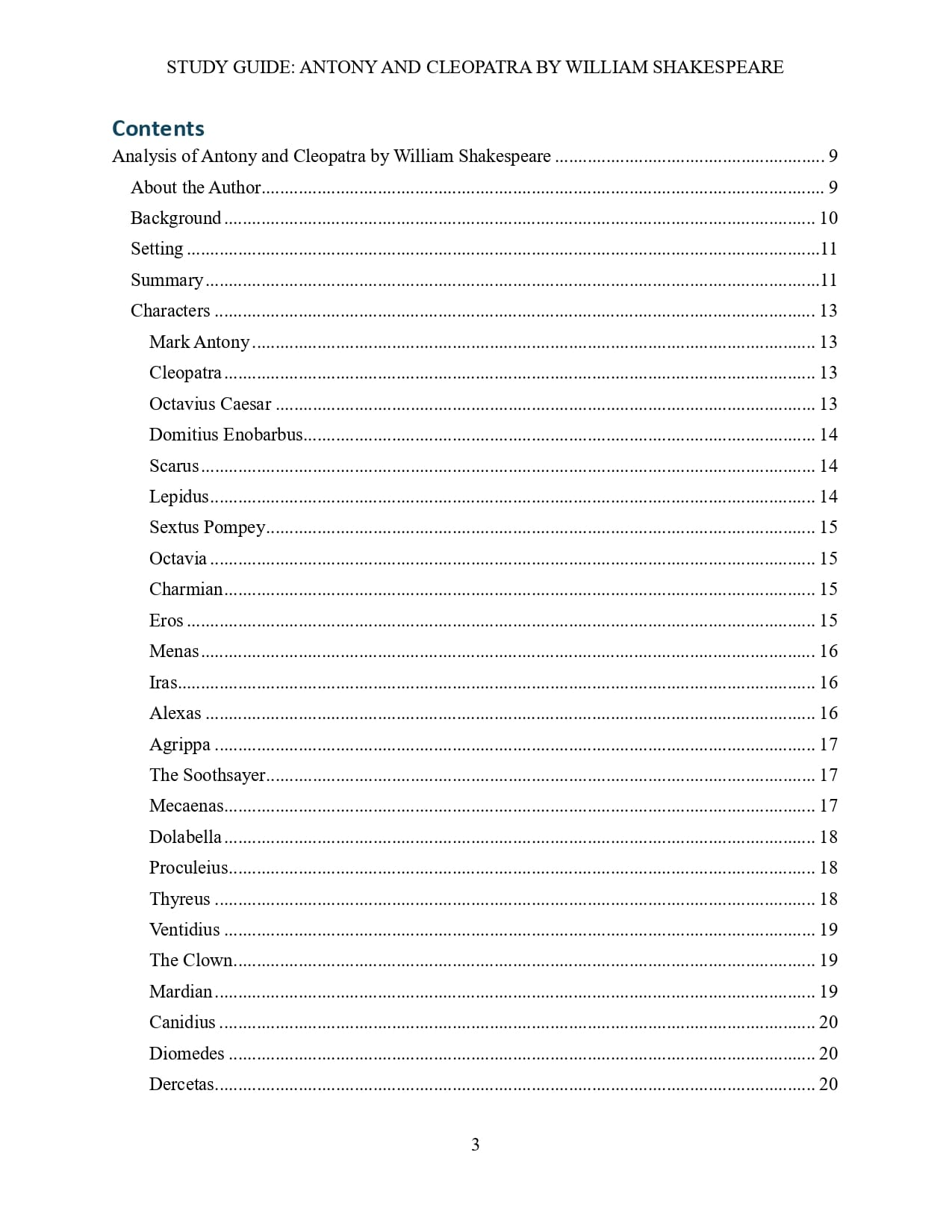
Get the Full Analysis in PDF
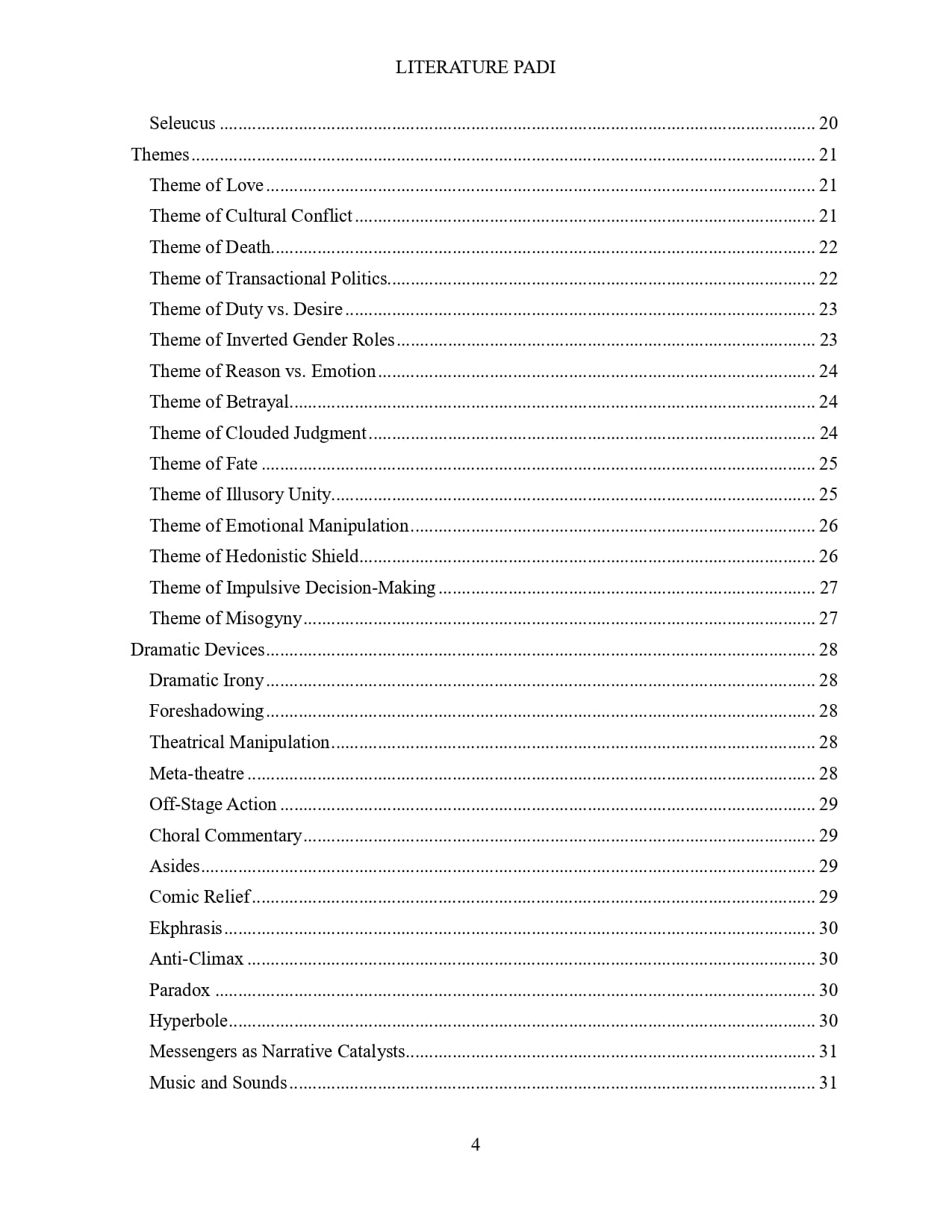
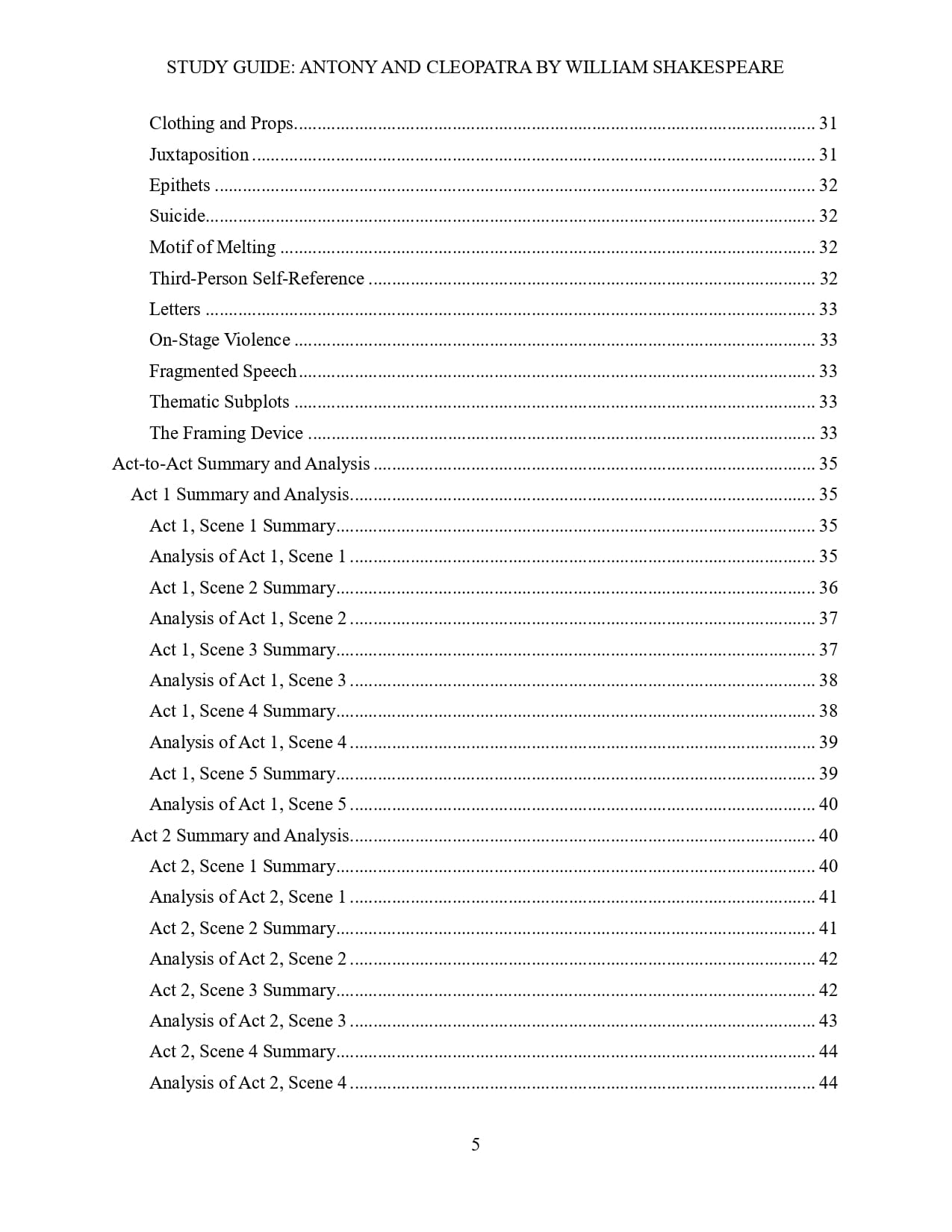
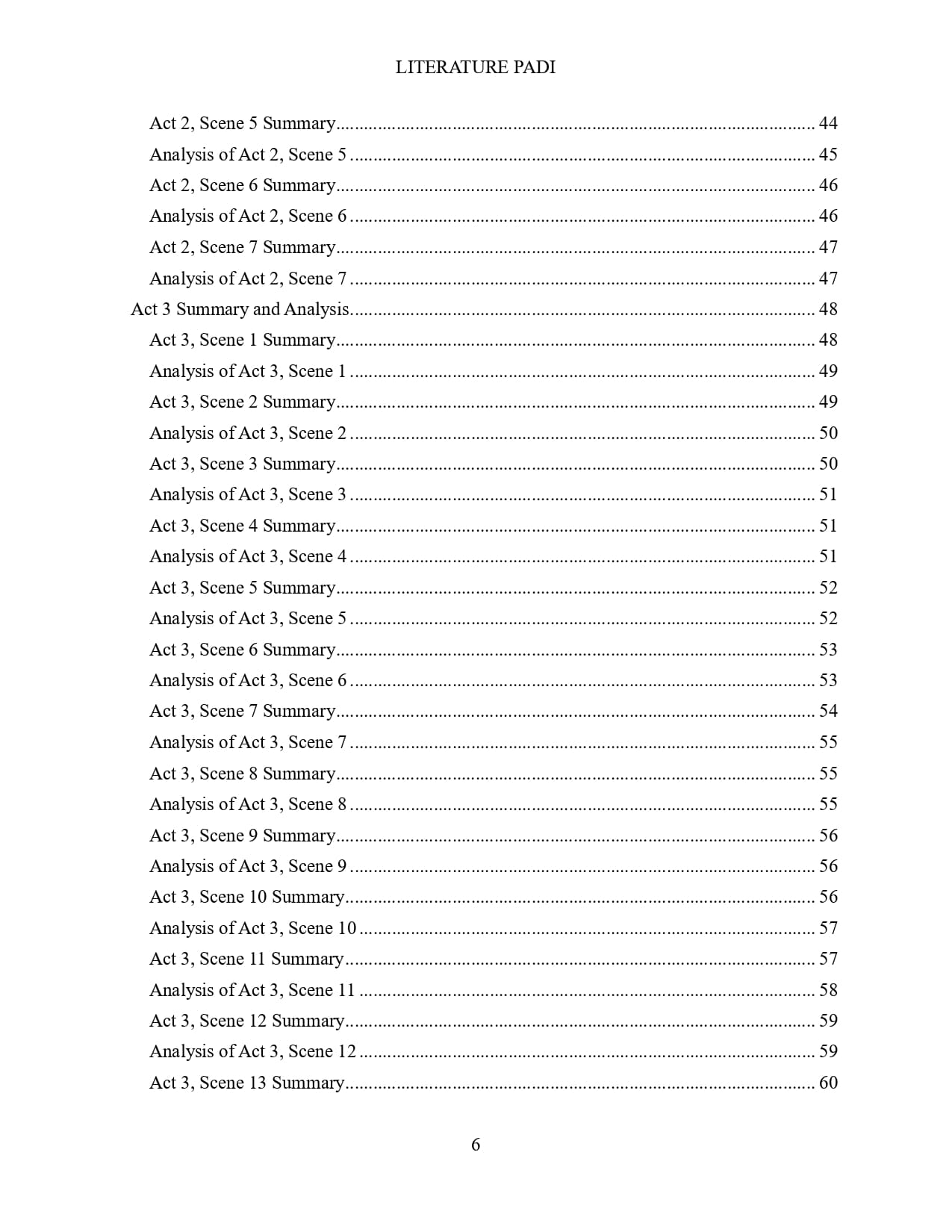
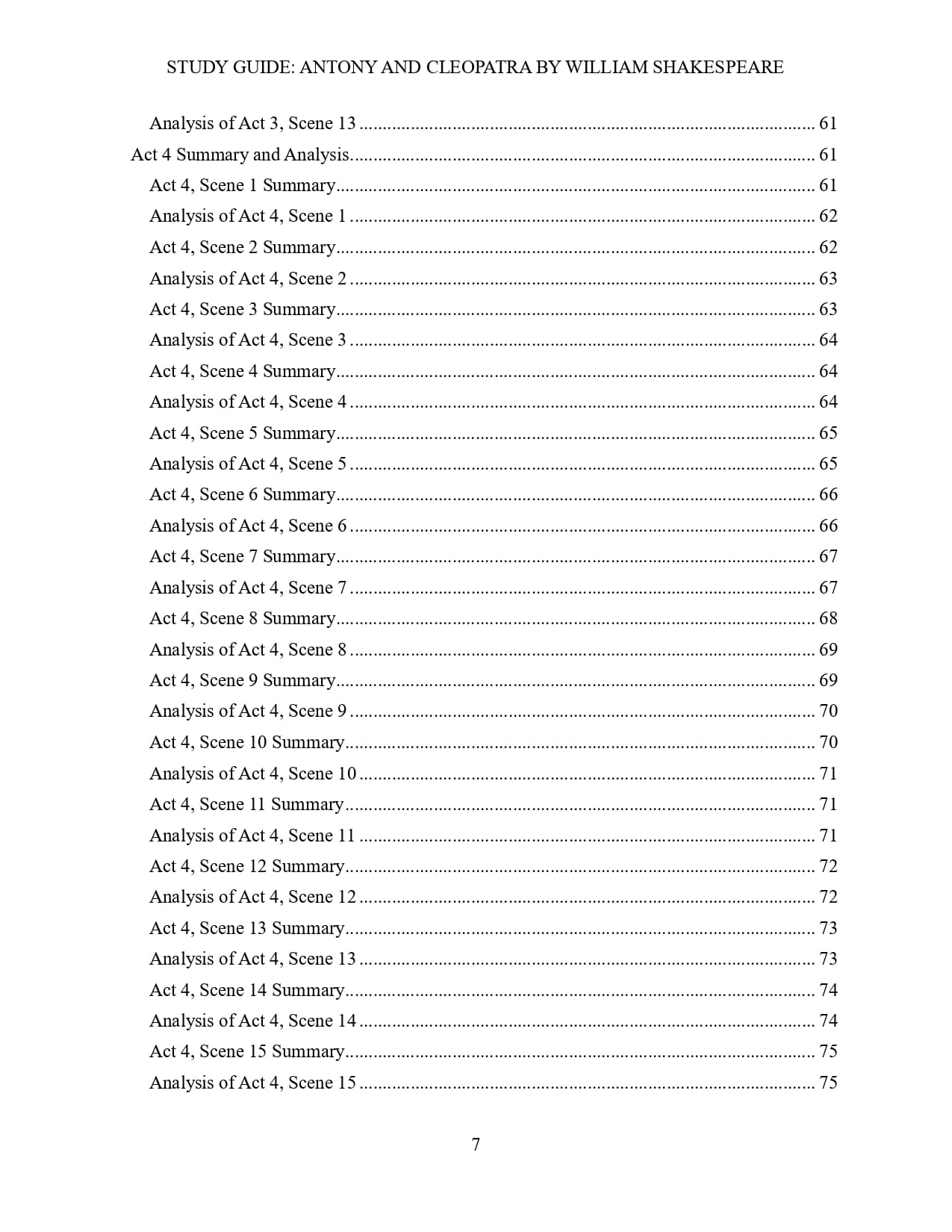
Enjoying this breakdown? What you’re reading is just part of the full experience. The premium PDF edition brings everything together in one seamless, distraction-free document that has the background, setting, plot summary, act-to-act summary and analysis, dramatic devices, characters, and themes. If you’re studying seriously, this is the version you’ll want.
Analysis of Act 3, Scene 13
Antony’s decision to brutally whip an official diplomatic envoy is a shocking breach of Roman protocol. It stems directly from his profound insecurity. He explicitly laments that “authority melts from me”; he realises that kings no longer jump at his command. Punishing the helpless messenger is a pathetic, desperate attempt to physically reassert the dominance he has lost on the world stage.
Cleopatra’s interaction with Thyreus is highly ambiguous. When offered a lifeline by Caesar, she immediately flatters the messenger and claims she only yielded to Antony by force. This demonstrates her brilliant political pragmatism; however, the audience is left to wonder if she is genuinely preparing to betray Antony to save her kingdom, or simply stalling for time and playing the diplomatic game.
Antony’s reaction to the kiss highlights his fragile masculinity. In his humiliated state, he hurls vicious, degrading insults at Cleopatra. He reduces her legendary allure to mere table scraps left over by Julius Caesar and Pompey. His jealousy reveals how quickly his obsessive love can curdle into venomous hatred when he feels his ownership of her is threatened. His rapid swing from suicidal despair to violent rage, and finally to manic optimism, shows a deeply unmoored mind. His vow to fight “treble-sinew’d” and his call for “one other gaudy night” is a tragic attempt to artificially resurrect his past glory. It is forced, theatrical bravado designed to mask his impending doom.
This scene marks the tragic breaking point for the loyal Enobarbus. Throughout the play, he has been the voice of reason. Here, he realises that loyalty to a man who has lost his reason is “mere folly.” His final observation that Antony’s frantic courage is actually just fear masquerading as valour cements his heartbreaking decision to finally desert his beloved general.
Related:
- Act 3, Scene 1 Summary and Analysis of Antony and Cleopatra
- Act 3, Scene 2 Summary and Analysis of Antony and Cleopatra
- Act 3, Scene 3 Summary and Analysis of Antony and Cleopatra
- Act 3, Scene 4 Summary and Analysis of Antony and Cleopatra
- Act 3, Scene 5 Summary and Analysis of Antony and Cleopatra
- Act 3, Scene 6 Summary and Analysis of Antony and Cleopatra
- Act 3, Scene 7 Summary and Analysis of Antony and Cleopatra
- Act 3, Scene 8 Summary and Analysis of Antony and Cleopatra
- Act 3, Scene 9 Summary and Analysis of Antony and Cleopatra
- Act 3, Scene 10 Summary and Analysis of Antony and Cleopatra
- Act 3, Scene 11 Summary and Analysis of Antony and Cleopatra
- Act 3, Scene 12 Summary and Analysis of Antony and Cleopatra
Receive Literary Updates through our Social Media Channels:
- WhatsApp: Literature PADI
- Telegram: Literature PADI
- YouTube: @literaturepadi
- Facebook: Literature PADI