Download our SSCE Study Guide Bundle
Act 3, Scene 11 Summary of Antony and Cleopatra
Act 3, Scene 11 of Antony and Cleopatra takes place in Alexandria at Cleopatra’s palace. It deals with the immediate and devastating fallout of the catastrophic defeat at the Battle of Actium. The scene opens with a crushed and deeply ashamed Mark Antony. Feeling that the very land is “ashamed to bear” him, he tells his loyal friends and attendants that he is “so lated in the world” that he has lost his way forever. He urges his followers to take a ship laden with his gold, divide the treasure among themselves, and flee to make peace with Octavius Caesar. When they refuse to abandon him, Antony insists, bitterly confessing that he himself has fled and “instructed cowards / To run.” Noting that his very hairs mutiny against him, he admits he has “lost command” and begs them to leave him alone.
Cleopatra then enters, led by her attendants who urge her to comfort the devastated general. Antony, lost in self-reproach, mutters in despair and bitterly recalls the Battle of Philippi. He remembers how he was the one who actually defeated Brutus and Cassius, while the young Octavius Caesar merely kept his sword “e’en like a dancer” and had no true practice in the “brave squares of war.”
Cleopatra approaches and begs for his pardon for her “fearful sails.” She claims she never thought he would actually follow her fleeing ships. Antony responds that she knew perfectly well that his heart was to her rudder “tied by the strings,” and that she had full supremacy over his spirit. He laments the humiliating reality that he, who once played with “half the bulk o’ the world,” must now send “humble treaties” to the young Caesar. He confesses that his sword was made weak by his affection, which forced him to obey her above all else.
However, when Cleopatra continues to beg for forgiveness, Antony cannot bear to see her cry. He tells her to stop weeping, declaring that a single tear is worth “All that is won and lost.” He asks for a kiss; he claims it entirely repays his losses. He then quickly calls for wine and food. The scene ends with a defiant Antony declaring, “Fortune knows / We scorn her most when most she offers blows.”
Get the Full Analysis in PDF
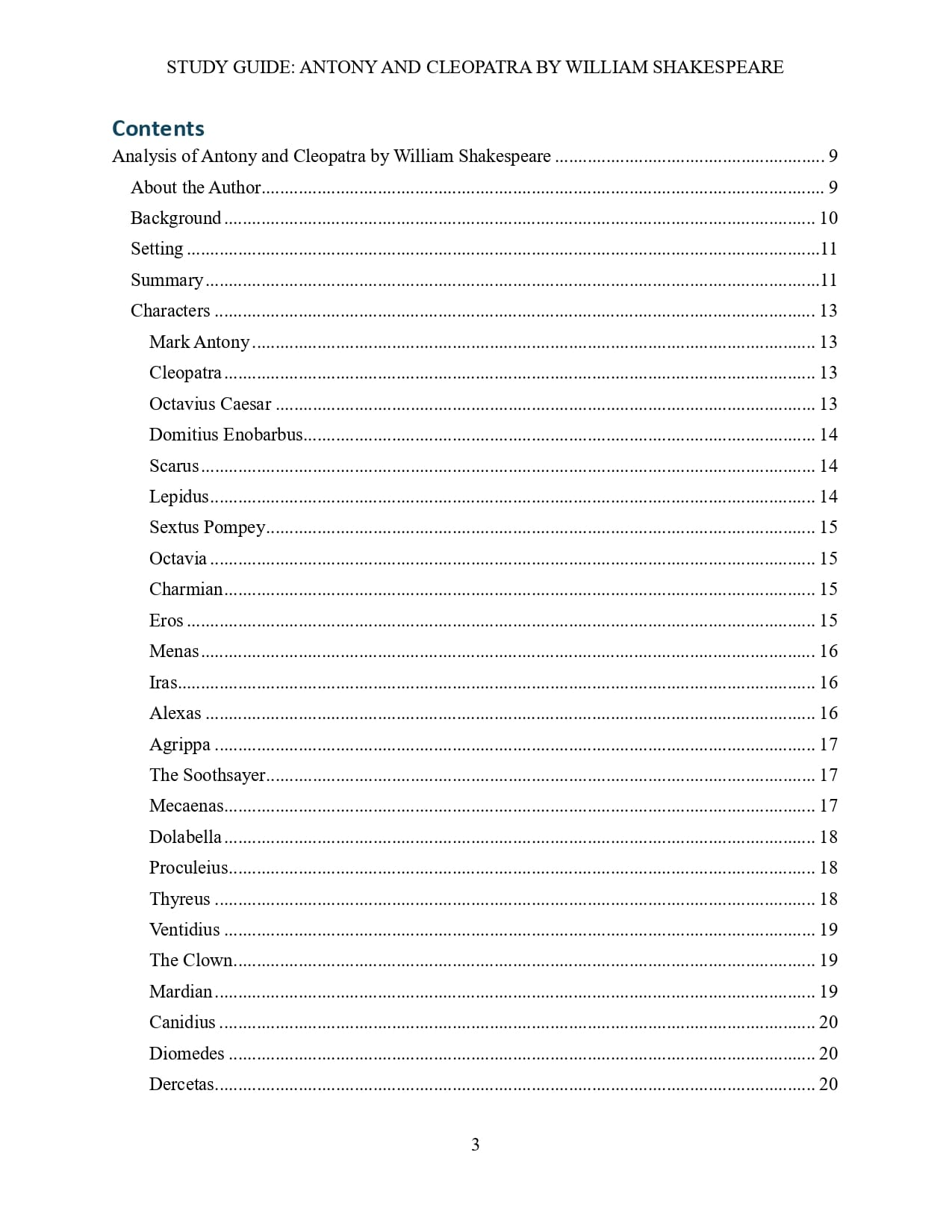
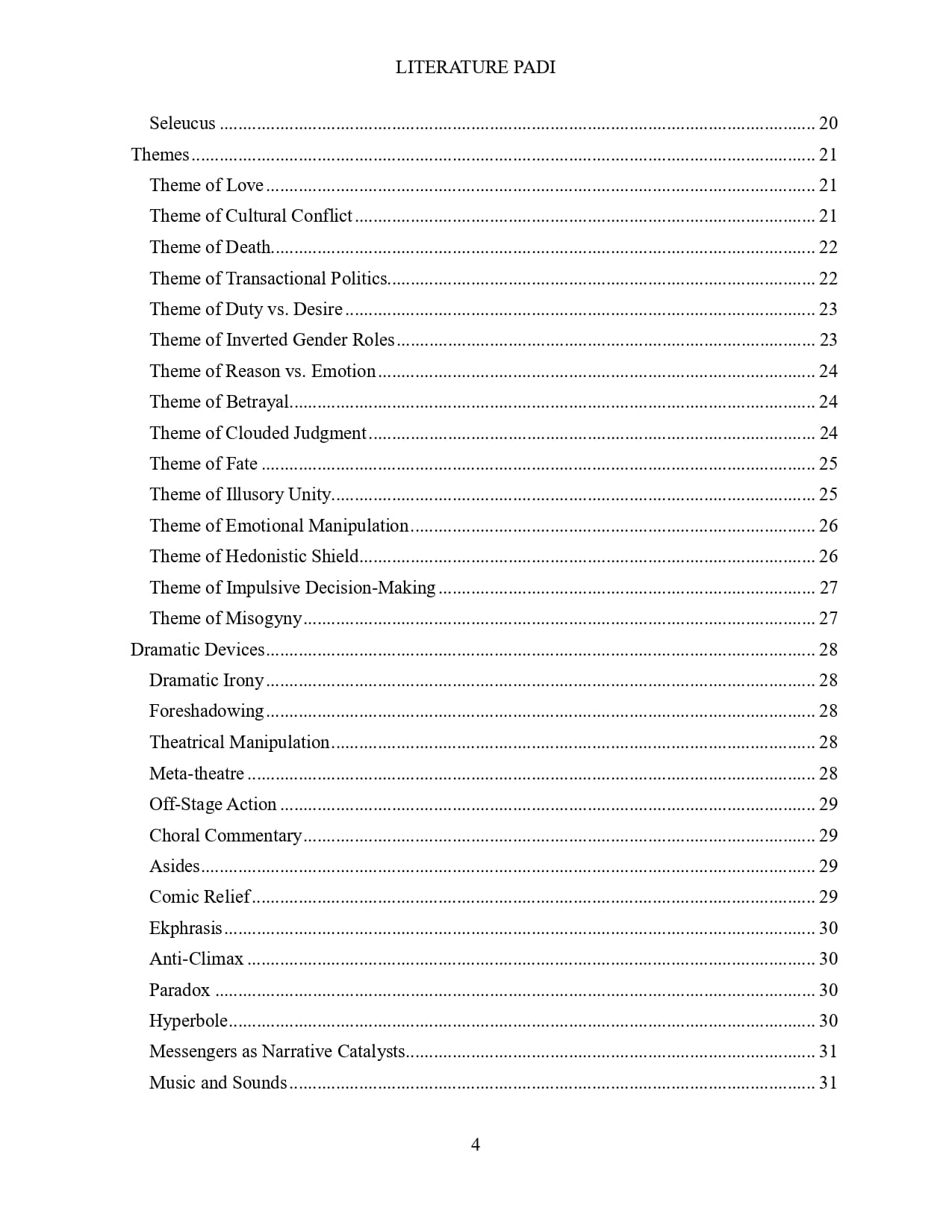
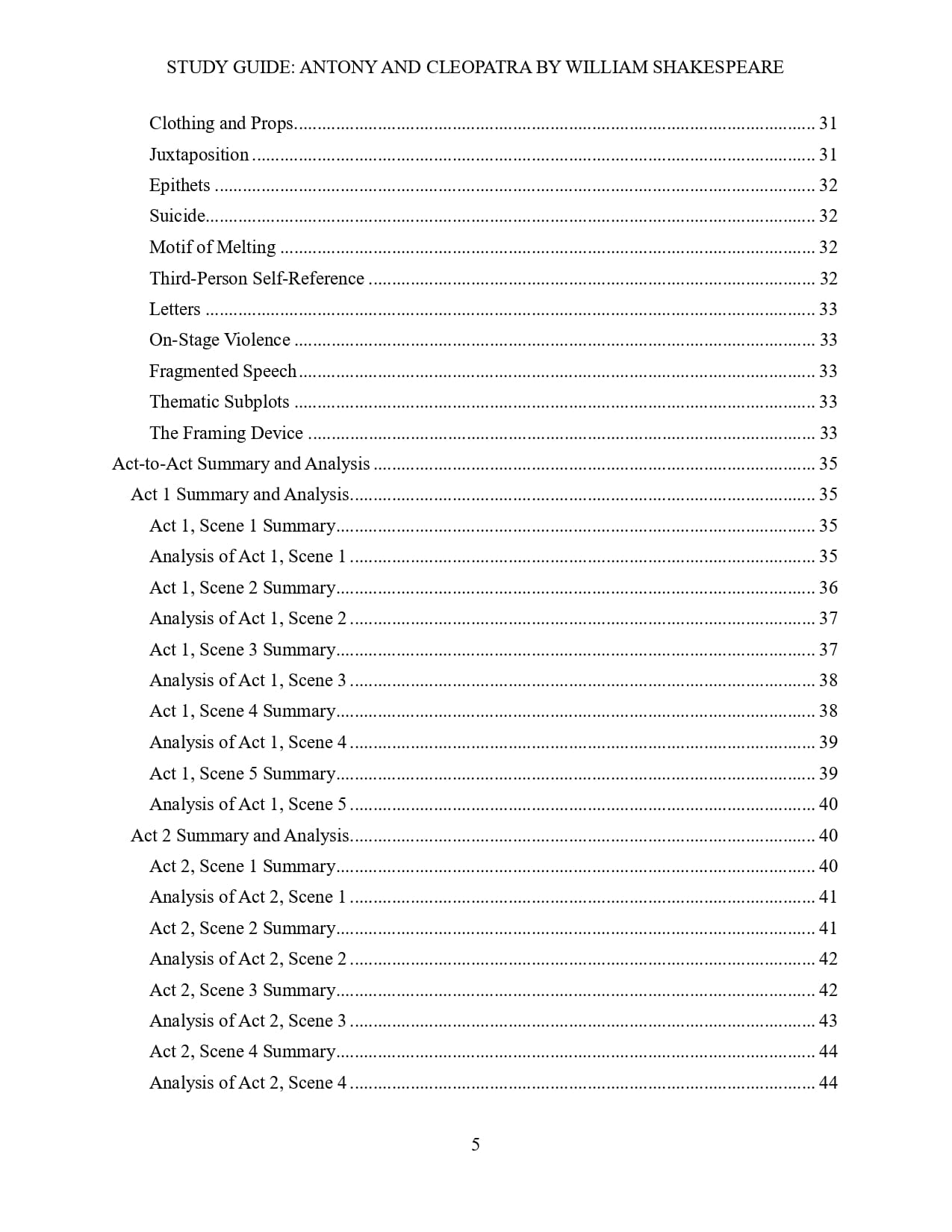
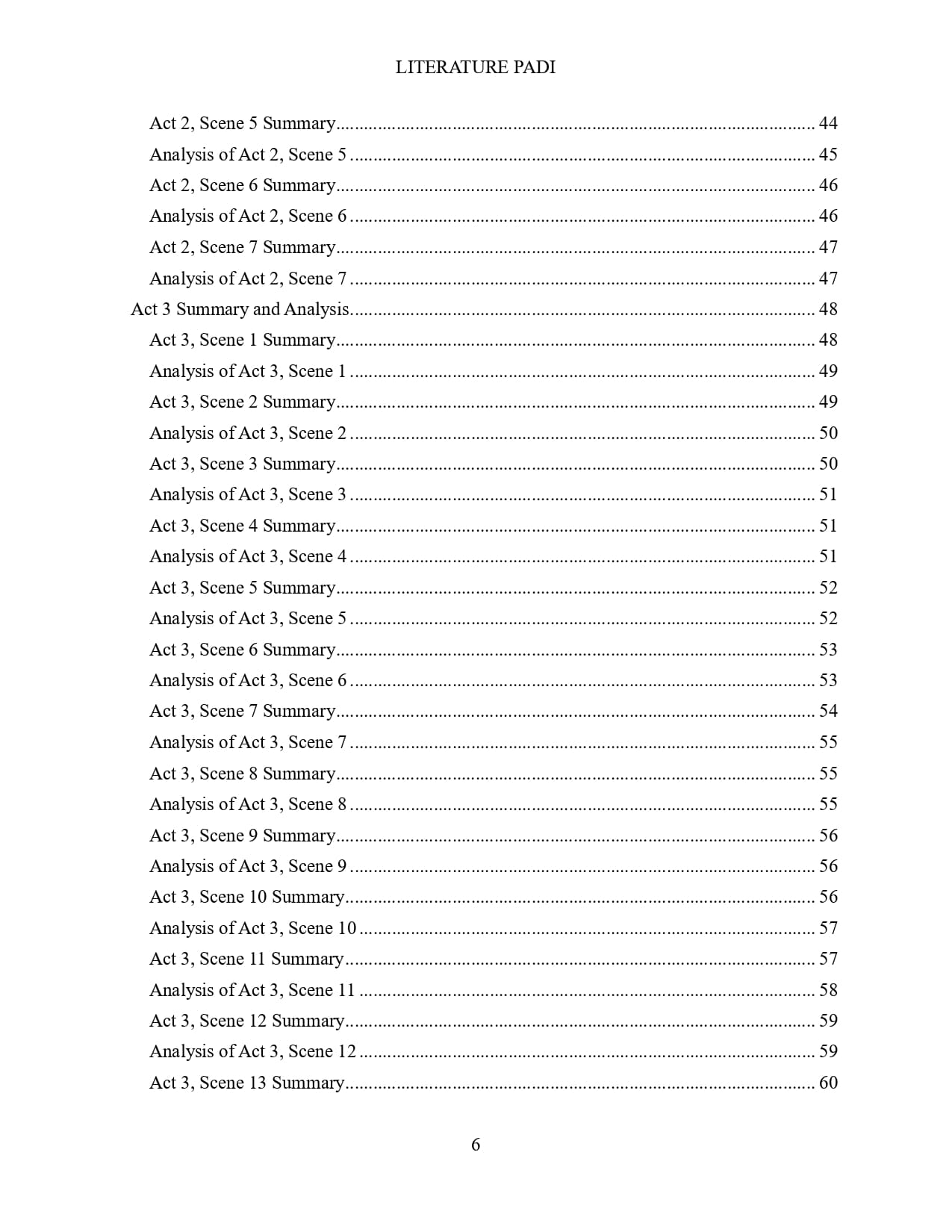
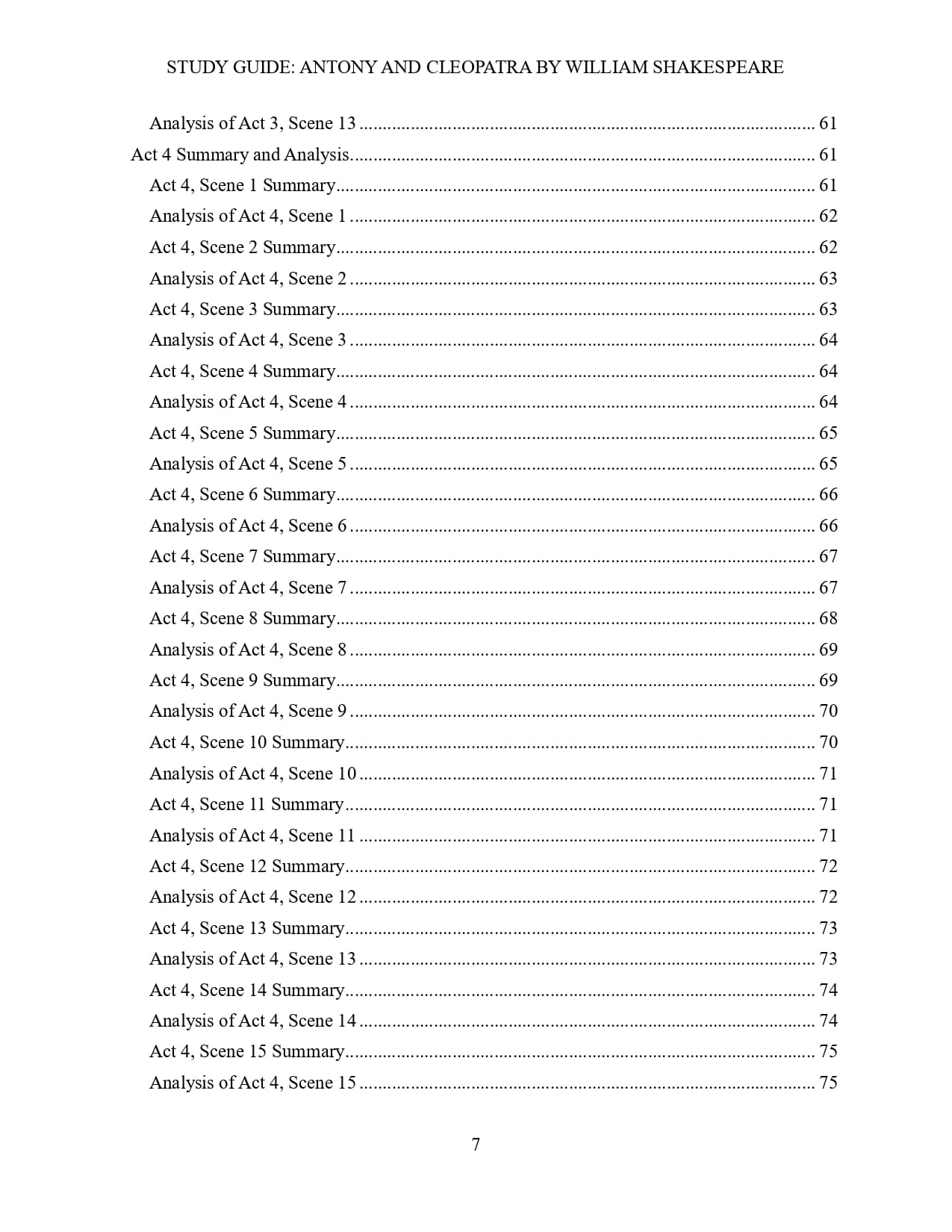
Enjoying this breakdown? What you’re reading is just part of the full experience. The premium PDF edition brings everything together in one seamless, distraction-free document that has the background, setting, plot summary, act-to-act summary and analysis, dramatic devices, characters, and themes. If you’re studying seriously, this is the version you’ll want.
Analysis of Act 3, Scene 11
This scene captures the absolute nadir of Antony’s military and public identity. His admission that he is “lated in the world” and has “lost command” underscores his profound self-awareness. He recognises that his cowardly flight at Actium has completely shattered his legendary reputation; that it has reduced him to a man who must urge his own loyal soldiers to abandon him. His resentment is magnified by the fact that he is losing his empire to Octavius, a man he views as an inferior soldier. By recalling his past victory at Philippi, Antony reminds the audience (and himself) that he is the true, battle-hardened warrior. He characterises Caesar as a boy who wore his sword merely as a decorative accessory (“like a dancer”). This makes his current state of submission all the more agonising.
The scene dramatically illustrates the total surrender of Antony’s will to Cleopatra. His metaphor of his heart being tied to her ship’s rudder “by the strings” proves that his political and military judgment has been completely overridden by his passion. He has ceased to be an autonomous Roman leader and is entirely towed by his desires. Even though he has realised that Cleopatra’s influence has destroyed his life’s work, his anger evaporates the moment he sees her distress. His declaration that a single tear from her equates to the value of the lost world is all the confirmation we need that he values his romance above the entire Roman Empire.
Faced with total ruin, Antony’s final reaction is to retreat into the sensual comforts of Egypt. He calls for wine, a kiss, and a feast to spite “Fortune”. Apparently, this is coping mechanism. When he can no longer win as a disciplined Roman soldier, he attempts to triumph over his despair by embracing the chaotic, pleasure-driven defiance of his Egyptian lifestyle.
Related:
- Act 3, Scene 1 Summary and Analysis of Antony and Cleopatra
- Act 3, Scene 2 Summary and Analysis of Antony and Cleopatra
- Act 3, Scene 3 Summary and Analysis of Antony and Cleopatra
- Act 3, Scene 4 Summary and Analysis of Antony and Cleopatra
- Act 3, Scene 5 Summary and Analysis of Antony and Cleopatra
- Act 3, Scene 6 Summary and Analysis of Antony and Cleopatra
- Act 3, Scene 7 Summary and Analysis of Antony and Cleopatra
- Act 3, Scene 8 Summary and Analysis of Antony and Cleopatra
- Act 3, Scene 9 Summary and Analysis of Antony and Cleopatra
- Act 3, Scene 10 Summary and Analysis of Antony and Cleopatra
- Act 3, Scene 12 Summary and Analysis of Antony and Cleopatra
- Act 3, Scene 13 Summary and Analysis of Antony and Cleopatra
Receive Literary Updates through our Social Media Channels:
- WhatsApp: Literature PADI
- Telegram: Literature PADI
- YouTube: @literaturepadi
- Facebook: Literature PADI