Download our SSCE Study Guide Bundle
Act 2, Scene 6 Summary of Antony and Cleopatra
Act 2, Scene 6 of Antony and Cleopatra takes place near Misenum, where the forces of the Roman Triumvirate (Octavius Caesar, Mark Antony, and Lepidus) meet face-to-face with the rebel Sextus Pompey to negotiate terms of peace rather than engage in battle. The scene begins with the rival leaders confronting each other. Caesar urges Pompey to consider the written peace terms they have sent him. Pompey recounts the offer: he will be granted rule over Sicily and Sardinia, and in exchange, he must rid the sea of pirates and send measures of wheat to Rome.
Pompey admits he came prepared to accept this offer, but he cannot resist airing some personal grievances. He reminds Antony that when Antony’s brother and Caesar were at war, Pompey provided a friendly haven for Antony’s mother in Sicily. Antony acknowledges this debt and offers his “liberal thanks.” He says that he didn’t expect to meet Pompey here because the “beds i’ the east are soft.”
The leaders officially agree to the treaty and decide to celebrate by feasting together. They draw lots to see who will host first. Antony wins the lot, but Pompey playfully jabs at him by mentioning his “fine Egyptian cookery” and recalling that Julius Caesar grew fat feasting there. This prompts Enobarbus to chime in with a bawdy reminder of the time Cleopatra was smuggled to Julius Caesar inside a mattress. Pompey recognises Enobarbus, praises his bluntness as a soldier, and invites the leaders aboard his galley for the first feast.
After the leaders exit, Enobarbus and Menas (Pompey’s lieutenant) are left alone. Menas expresses his disappointment in the treaty. He says that “Pompey doth this day laugh away his fortune.” Menas then asks Enobarbus if it is true that Antony is married to Cleopatra, but Enobarbus corrects him with the revelation that Antony has just married Caesar’s sister, Octavia.
Hearing this, Menas concludes that Caesar and Antony are now “for ever knit together.” Enobarbus, however, bluntly prophesies the exact opposite. He argues that the marriage was a product of political policy rather than love. He notes that Octavia is of a “holy, cold, and still conversation.” Because Antony is a man of passion, Enobarbus predicts that “he will to his Egyptian dish again,” and that the very marriage intended to bind Antony and Caesar together will ultimately be the “strangler of their amity.” Menas agrees that this may be the case, and they head off to drink together.
Get the Full Analysis in PDF
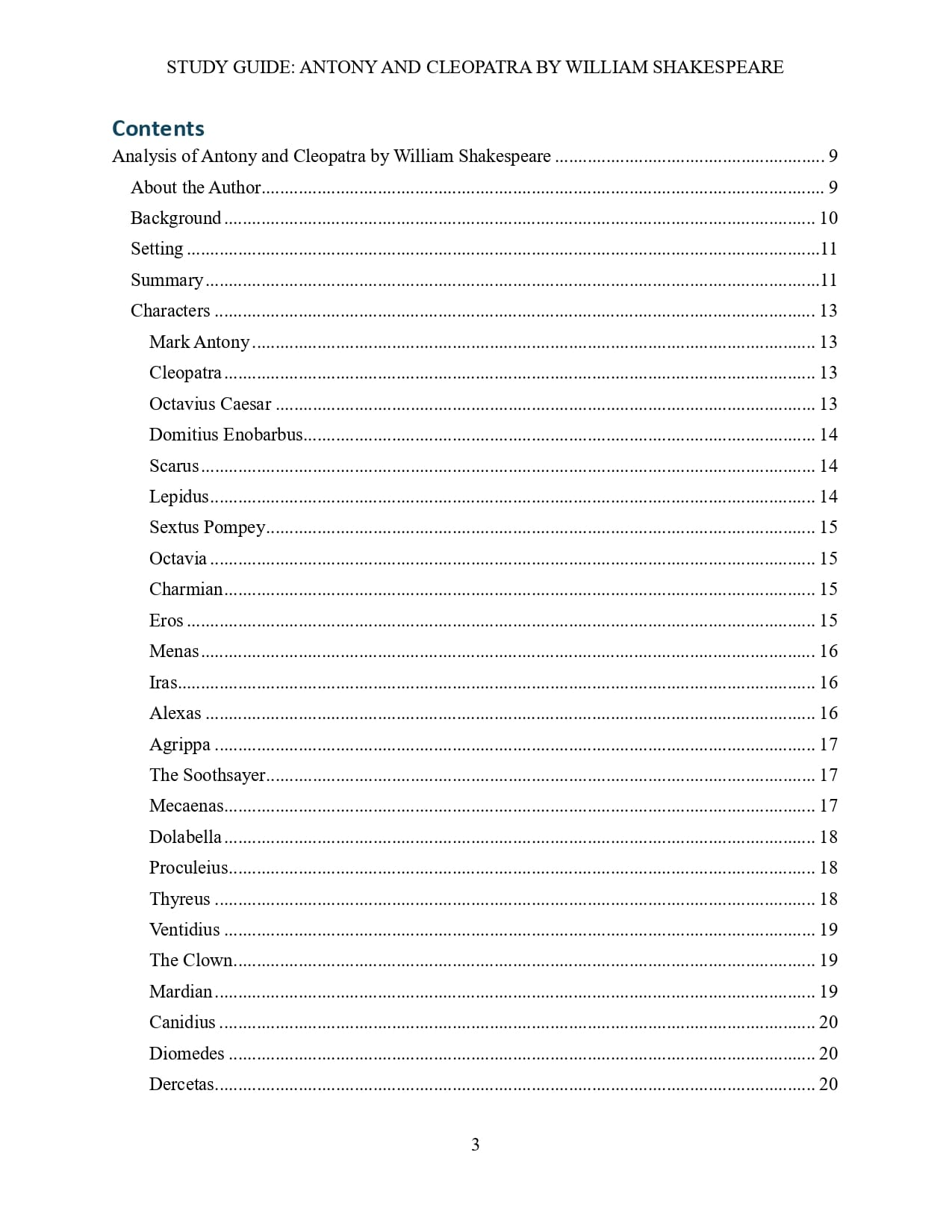
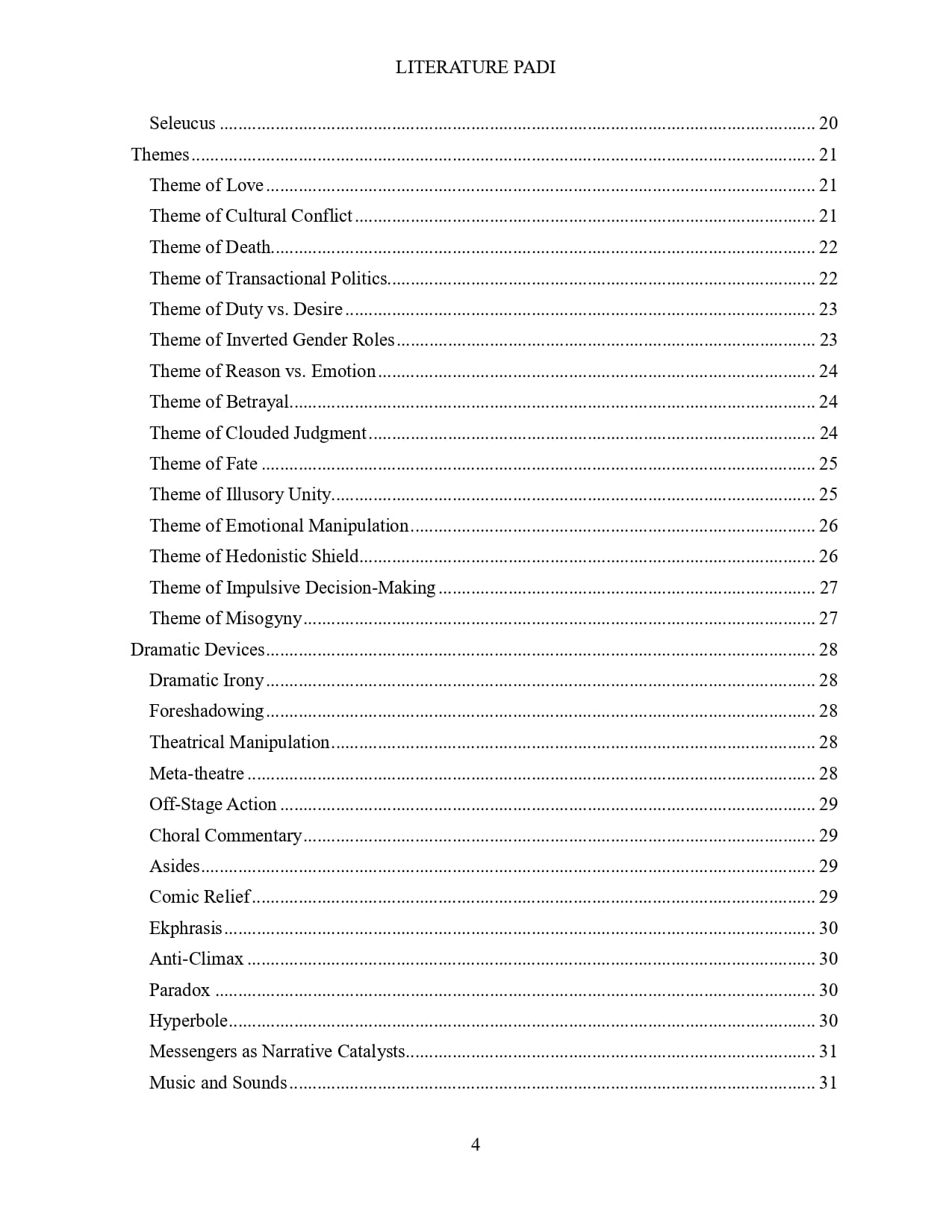
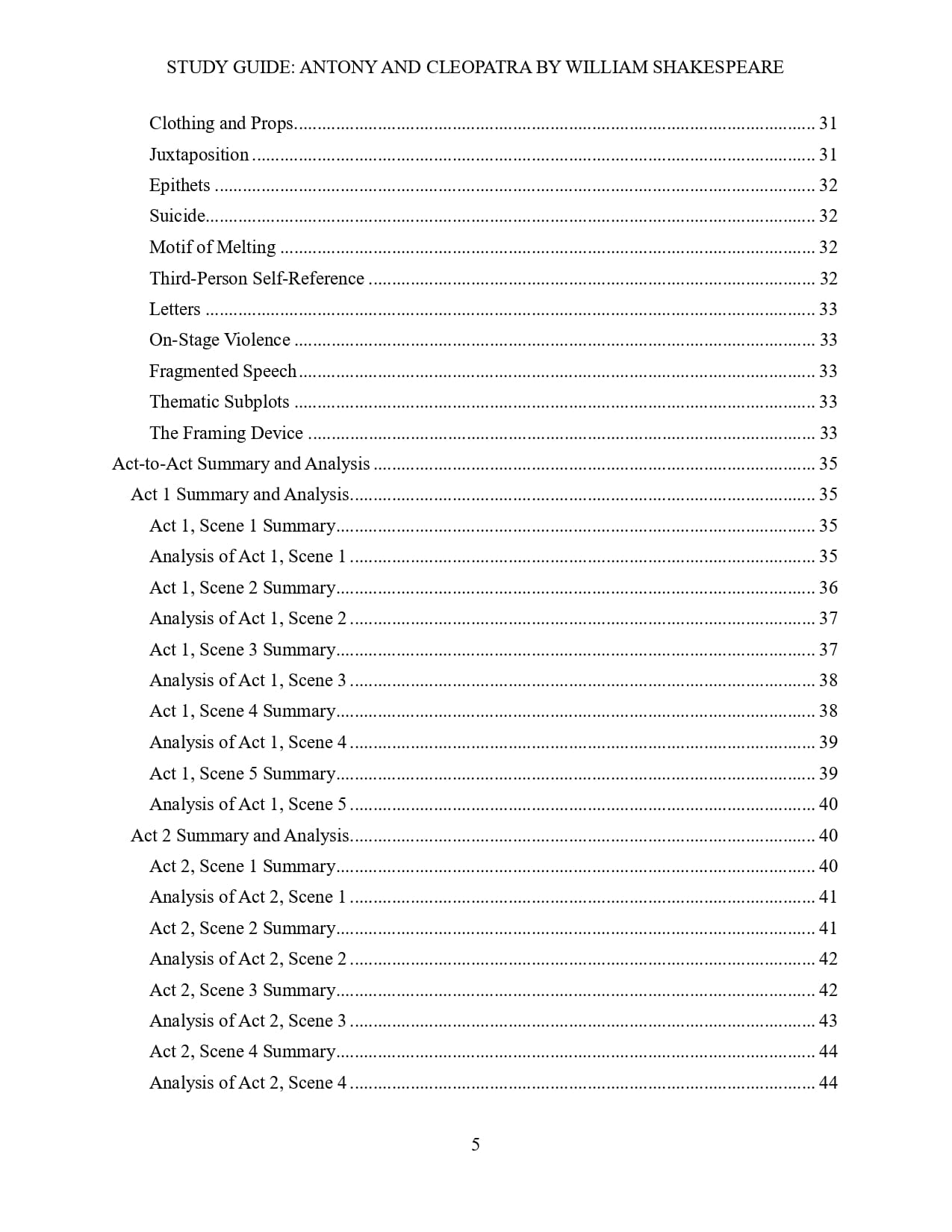
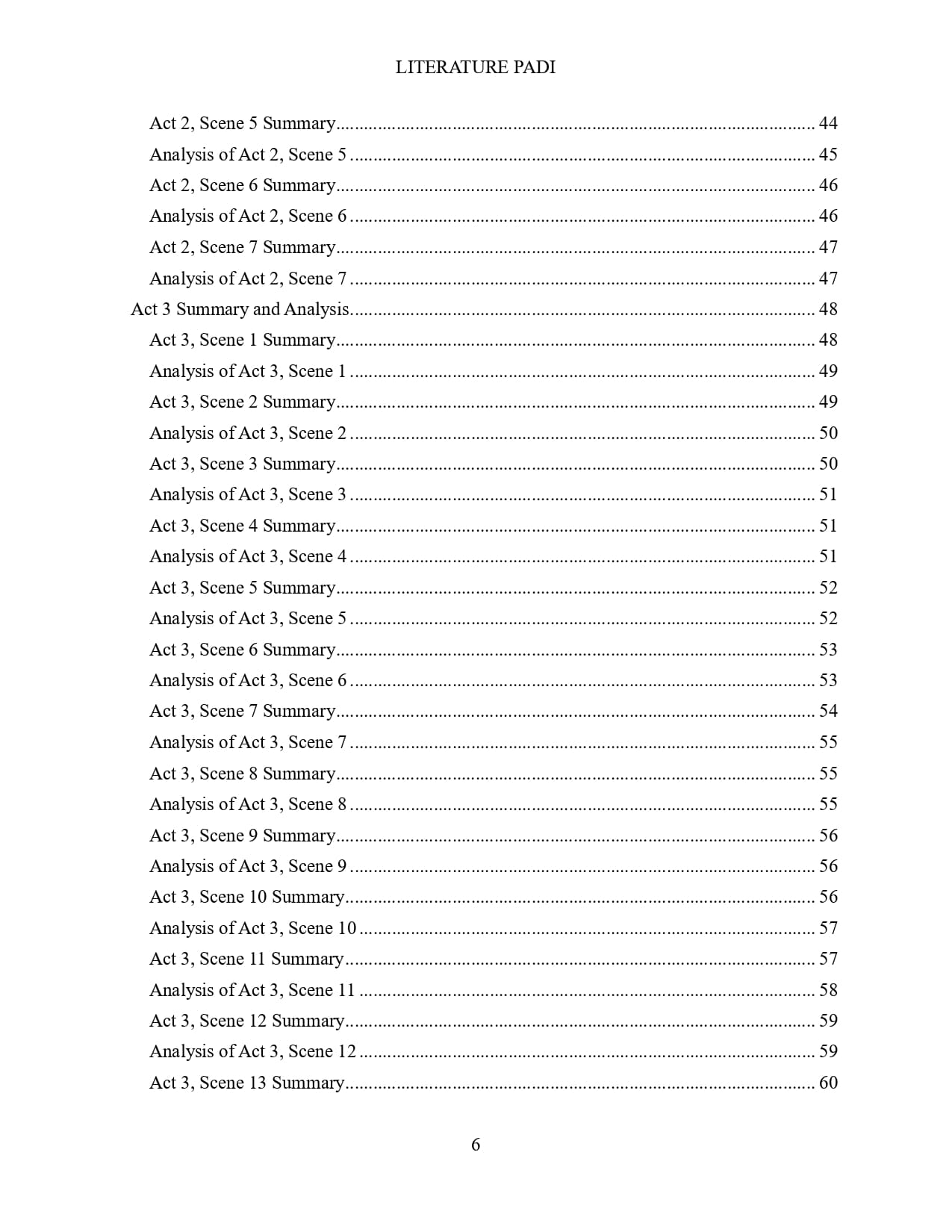
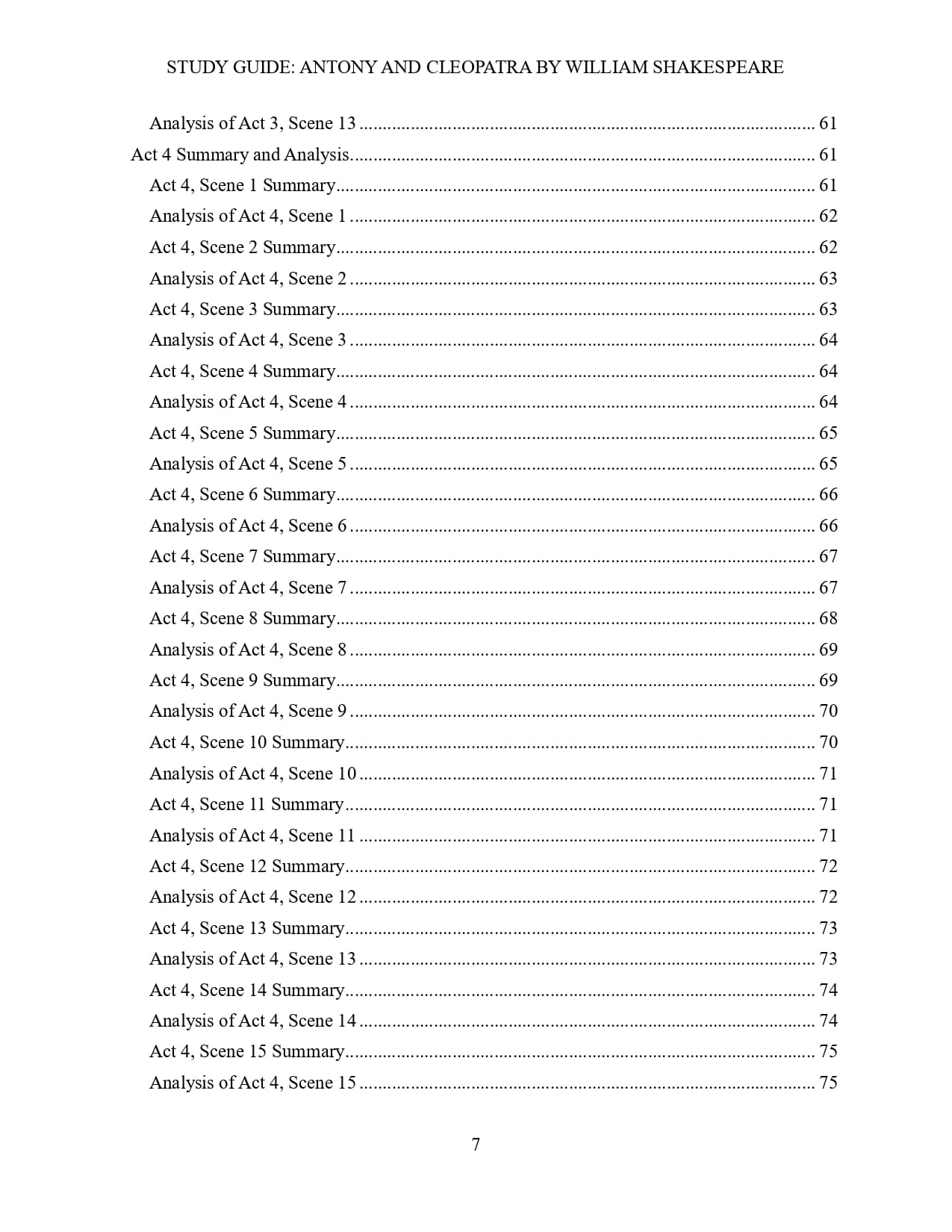
Enjoying this breakdown? What you’re reading is just part of the full experience. The premium PDF edition brings everything together in one seamless, distraction-free document that has the background, setting, plot summary, act-to-act summary and analysis, dramatic devices, characters, and themes. If you’re studying seriously, this is the version you’ll want.
Analysis of Act 2, Scene 6
This scene exposes the purely transactional nature of Roman politics. The triumvirs buy peace by appeasing Pompey with land, while Pompey trades his significant military advantage for formal recognition and comfort. Menas’s observation that Pompey has thrown away his fortune underscores how quickly ambition can be subdued by compromise and luxury.
While the generals engage in polite diplomacy and pretend they have secured lasting peace, Enobarbus once again acts as the play’s cynical, clear-eyed chorus. He sees right through the political posturing. His famous prediction that Antony will return to his “Egyptian dish” foreshadows the tragic unravelling of the play. He understands that human nature and passion cannot be restrained by political treaties.
Even during a high-stakes military summit in Italy, Egypt dominates the conversation. Pompey’s jokes about Egyptian cookery and Cleopatra’s history with Julius Caesar are a constant reminder of the East’s allure. The contrast between the “holy, cold” Octavia and the tantalising “Egyptian dish” encapsulates the core conflict tearing at Antony’s soul.
Meanwhile, the interaction between Menas and Enobarbus highlights a mutual respect among veteran soldiers that transcends the political rivalries of their masters. They happily acknowledge each other as “thieves” of land and sea. They find common ground in their blunt honesty and shared desire to drink.
Related:
- Act 2, Scene 1 Summary and Analysis of Antony and Cleopatra
- Act 2, Scene 2 Summary and Analysis of Antony and Cleopatra
- Act 2, Scene 3 Summary and Analysis of Antony and Cleopatra
- Act 2, Scene 4 Summary and Analysis of Antony and Cleopatra
- Act 2, Scene 5 Summary and Analysis of Antony and Cleopatra
- Act 2, Scene 7 Summary and Analysis of Antony and Cleopatra
Receive Literary Updates through our Social Media Channels:
- WhatsApp: Literature PADI
- Telegram: Literature PADI
- YouTube: @literaturepadi
- Facebook: Literature PADI