Download our SSCE Study Guide Bundle
Act 2, Scene 2 Summary of Antony and Cleopatra
Act 2, Scene 2 of Antony and Cleopatra takes place in Rome at the house of Lepidus. It is a pivotal scene that contrasts the cold pragmatism of Roman politics with the intoxicating allure of Egypt. The scene opens with Lepidus urging Domitius Enobarbus to ensure Antony speaks gently during the upcoming meeting, though Enobarbus insists Antony should speak “as loud as Mars.” Antony and Octavius Caesar arrive, and Lepidus begs them to discuss their differences without letting “curstness grow to the matter.”
A tense negotiation ensues. Caesar accuses Antony of being the underlying cause of the wars his wife, Fulvia, and his brother waged against Rome. Antony denies instigating the conflict. He argues that Fulvia’s impatience and “garboils” were uncurbable and entirely her own doing.
Caesar further accuses Antony of breaking his oath by refusing to send military aid. Antony admits he neglected his duties because “poison’d hours had bound me up,” and offers a calculated apology to Caesar. He stoops only as far as befits his own honour.
To permanently heal the rift, Agrippa proposes a political alliance: since Fulvia is dead, Antony should marry Caesar’s sister, the virtuous and “admired Octavia.” Both leaders eagerly agree to the match, joining hands and vowing that the “heart of brothers” will now govern their love and designs. With their bond seemingly restored, they turn their attention to the looming military threat of Sextus Pompey, who has become an “absolute master” by sea.
After the triumvirs exit to visit Octavia, Enobarbus is left alone with Agrippa and Mecaenas, who eagerly ask him about his time in Egypt. Enobarbus delivers a breathtakingly poetic description of Cleopatra’s first meeting with Antony on the river Cydnus. He paints a picture of intense sensory excess; he describes her sitting in a pavilion of “cloth-of-gold” on a barge that “Burn’d on the water” with a poop of beaten gold, purple sails, and silver oars. He notes that her actual person “beggar’d all description,” outdoing nature itself.
When Mecaenas concludes that Antony must now “leave her utterly,” Enobarbus famously and accurately predicts the exact opposite: “Never; he will not: Age cannot wither her, nor custom stale / Her infinite variety.” He explains that while other women cloy the appetites they feed, Cleopatra only makes men hungrier where she most satisfies them.
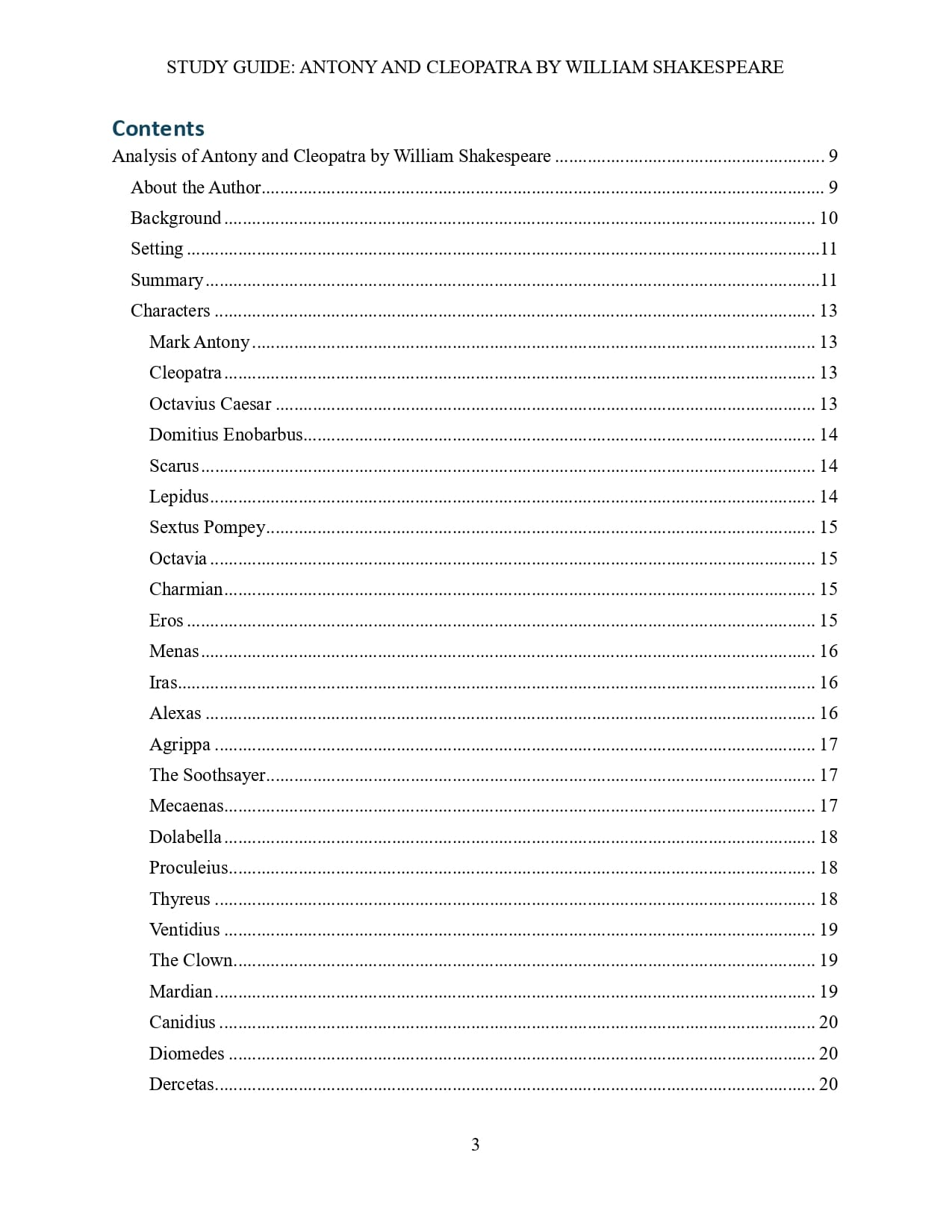
Get the Full Analysis in PDF
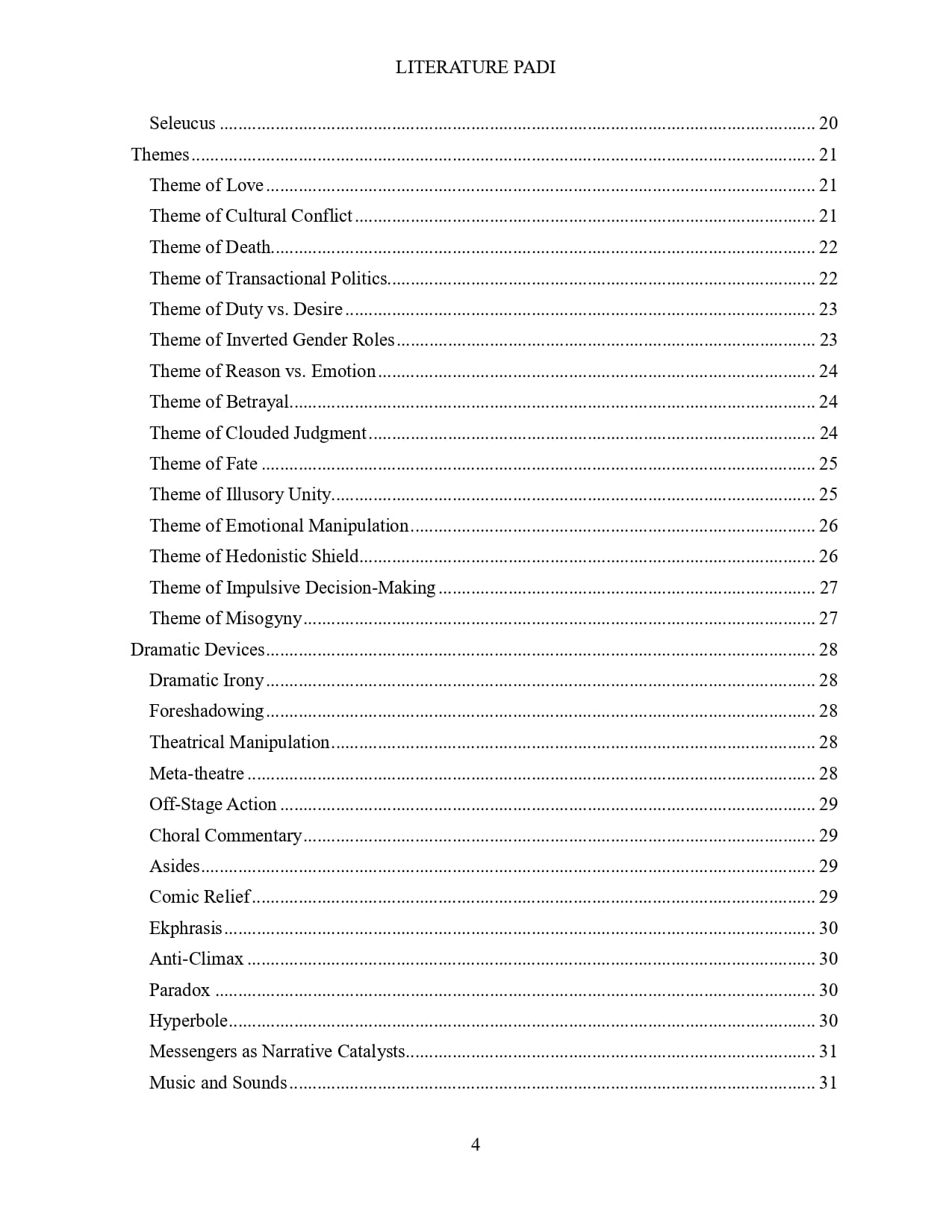
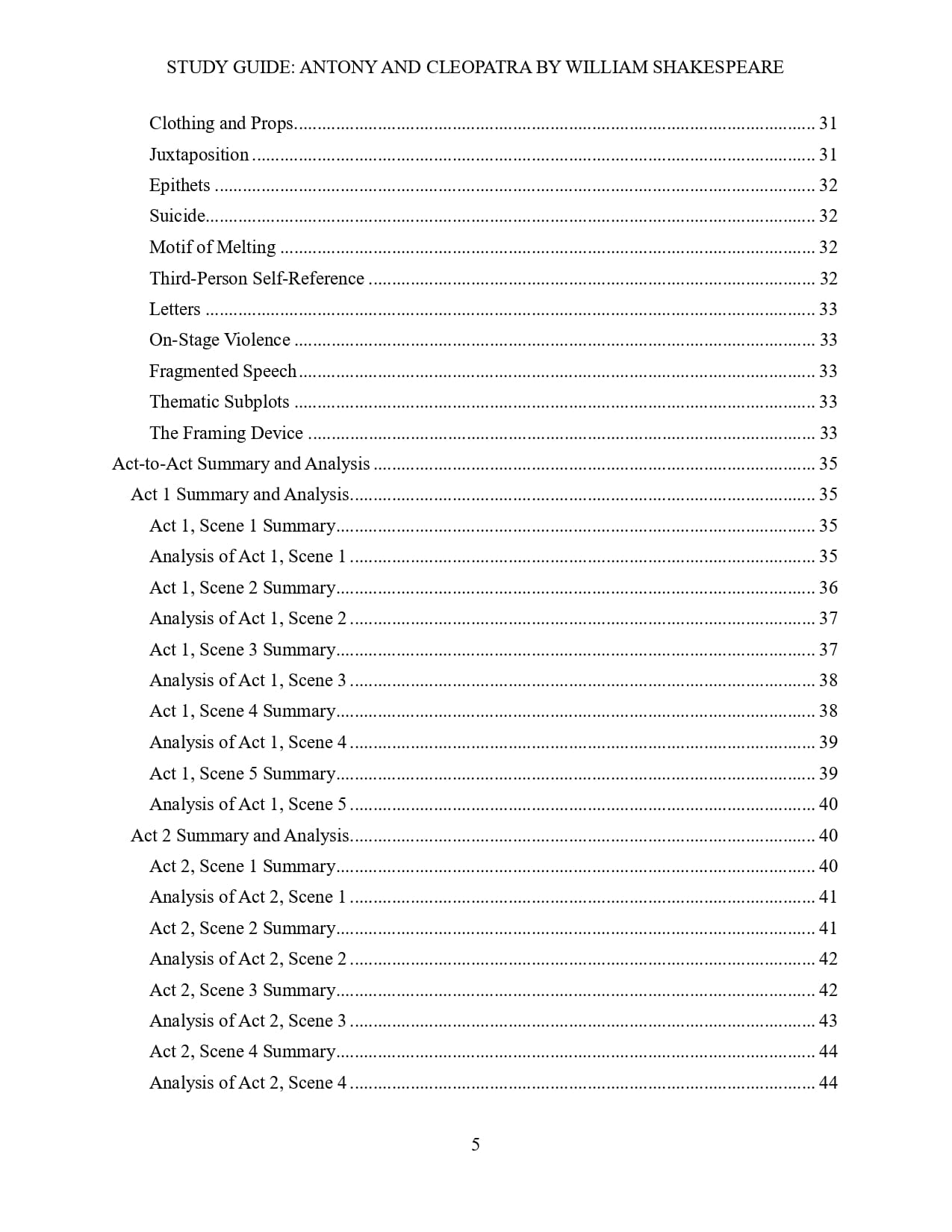
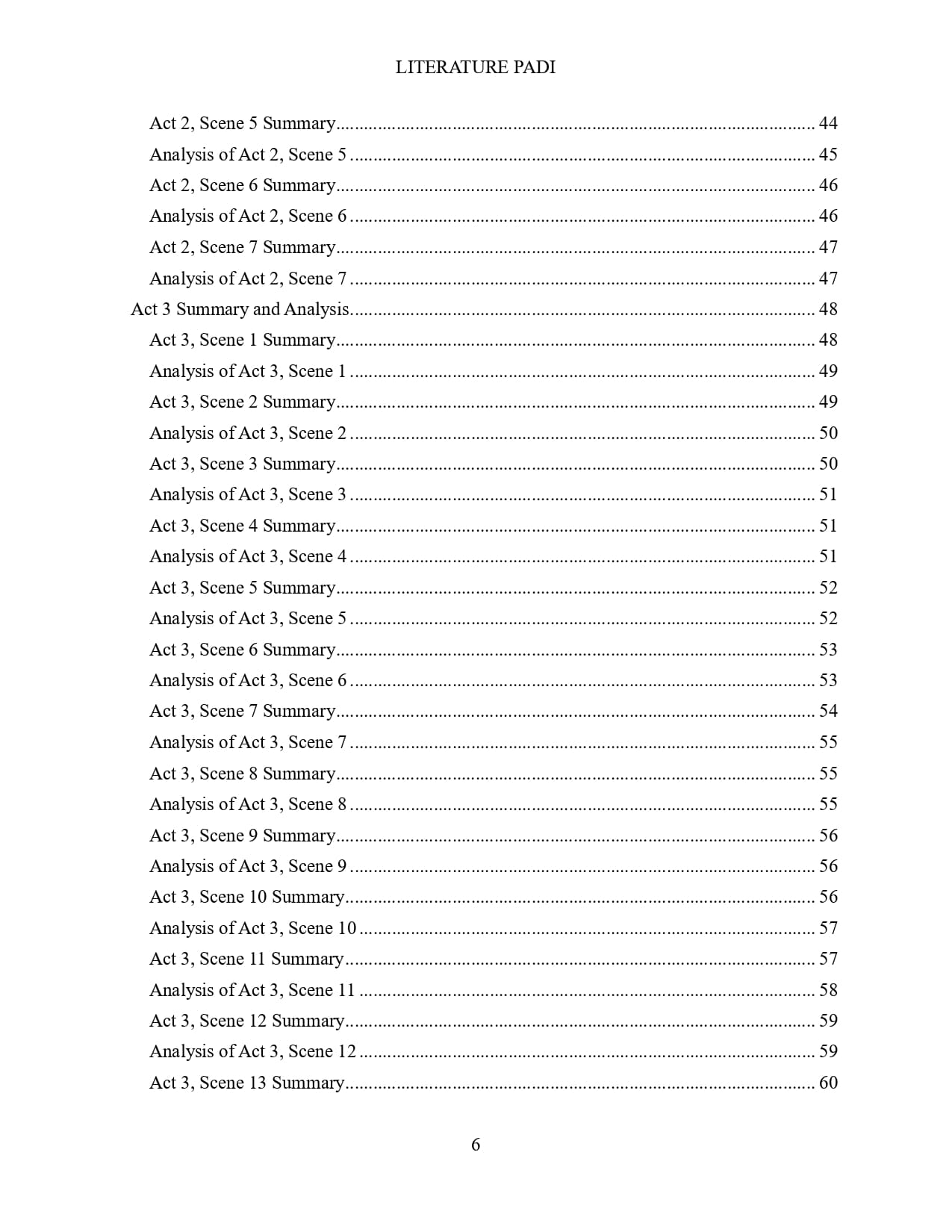
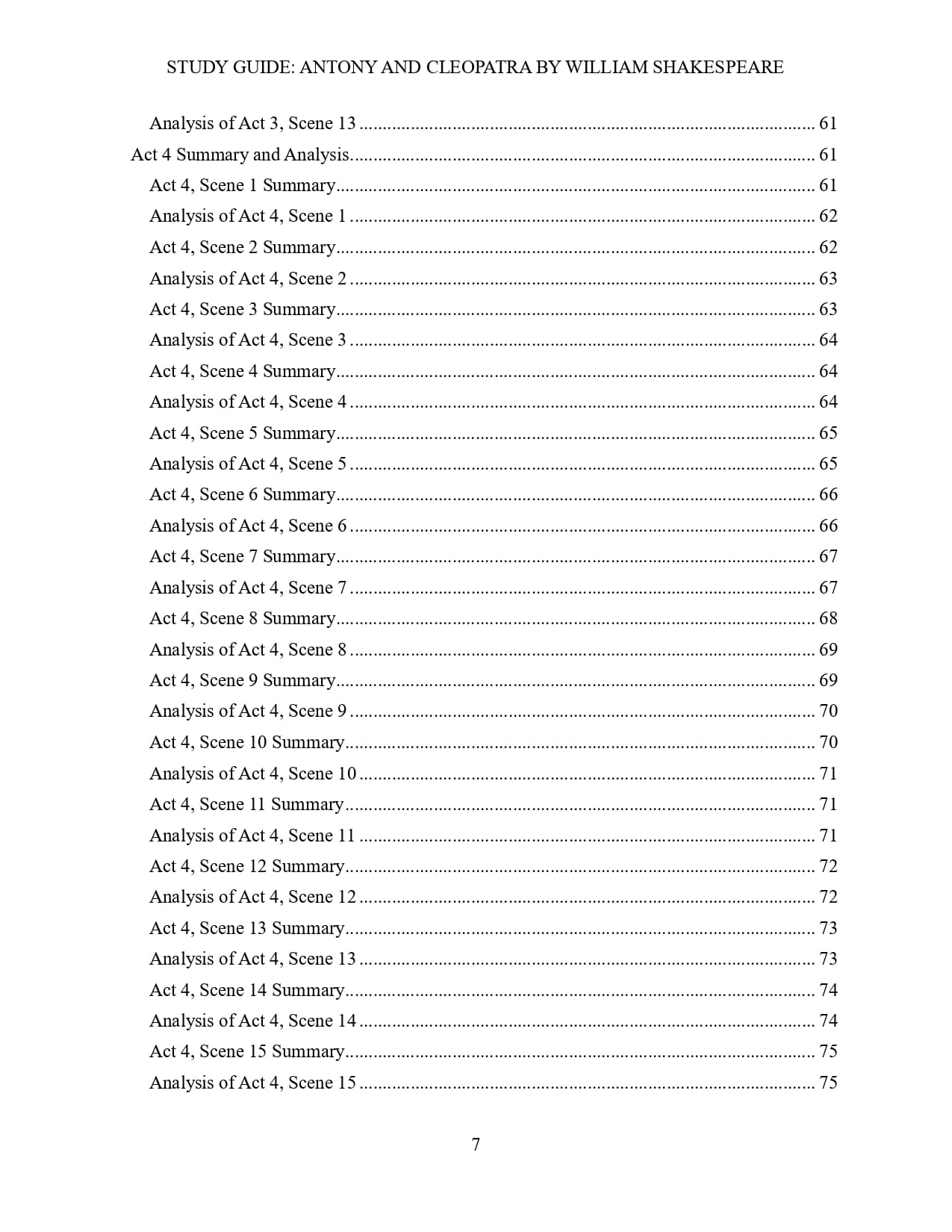
Enjoying this breakdown? What you’re reading is just part of the full experience. The premium PDF edition brings everything together in one seamless, distraction-free document that has the background, setting, plot summary, act-to-act summary and analysis, dramatic devices, characters, and themes. If you’re studying seriously, this is the version you’ll want.
Analysis of Act 2, Scene 2
The first half of the scene captures the cold, calculating nature of Roman statecraft. The marriage to Octavia is entirely transactional, proposed merely as an “unslipping knot” to hold Caesar and Antony “stanch.” Love is irrelevant here; it is a strategic manoeuvred designed to neutralise the immediate threat of Pompey and prevent civil war.
While Antony apologises to Caesar, he shifts the blame for his neglect of duty onto the “poison’d hours” of his Egyptian distraction. He manages to secure a vital peace pact without fully submitting to Caesar’s dominance. However, his swift agreement to marry Octavia underscores his desperate need to stabilise his political standing in Rome.
Also, in this scene, Enobarbus continually cuts through the polite political rhetoric with blunt honesty. When the leaders try to patch up their grievances, he cynically points out that they are only borrowing each other’s love “for the instant” and will return to wrangling once Pompey is defeated, a truth so blunt that Antony immediately silences him.
The scene’s structural brilliance lies in its transition from rigid Roman deal-making to the lush, intoxicating poetry of Egypt. Even in the heart of Rome, surrounded by pragmatic politicians, Cleopatra’s memory completely hijacks the conversation. Enobarbus’s “Age cannot wither her” speech reveals that Cleopatra is a paradox and a force of nature that defies Roman logic. By immediately following Antony’s solemn vow to marry Octavia with this overwhelming description of Cleopatra’s irresistible allure, the play heavily foreshadows that the political marriage is doomed from the start.
Related:
- Act 2, Scene 1 Summary and Analysis of Antony and Cleopatra
- Act 2, Scene 3 Summary and Analysis of Antony and Cleopatra
- Act 2, Scene 4 Summary and Analysis of Antony and Cleopatra
- Act 2, Scene 5 Summary and Analysis of Antony and Cleopatra
- Act 2, Scene 6 Summary and Analysis of Antony and Cleopatra
- Act 2, Scene 7 Summary and Analysis of Antony and Cleopatra
Receive Literary Updates through our Social Media Channels:
- WhatsApp: Literature PADI
- Telegram: Literature PADI
- YouTube: @literaturepadi
- Facebook: Literature PADI