
Download our SSCE Study Guide Bundle
Chapter 25 Summary of To Kill a Mockingbird
Chapter 25 of To Kill a Mockingbird begins in early September. Scout finds a roly-poly bug in the house and is about to mash it when Jem firmly orders her to set it outside on the back steps. When Scout asks why she couldn’t mash it, Jem replies, “Because they don’t bother you.” Scout thinks Jem is the one who is acting more like a girl every day and hopes he hurries up and gets through this new phase of extreme sensitivity.
Dill has returned to Meridian for the school year, but before he left, he told Scout the story of how Atticus informed Helen Robinson of Tom’s death. Dill and Jem were walking back from swimming at Barker’s Eddy when Atticus and Calpurnia drove by. Atticus allowed the boys to ride along but made them stay in the car when they arrived at the Robinson cabin.
Dill described how Atticus gently greeted the children before Helen walked up. When Atticus delivered the news, Helen didn’t say a word; she just fell completely apart. Dill described it as if “she just fell down in the dirt, like a giant with a big foot just came along and stepped on her.” Atticus and Calpurnia half-carried her into the cabin, stayed for a long time, and then Atticus drove away.
Maycomb’s reaction to Tom’s death is brief and deeply racist. The town talks about it for two days, dismissing Tom’s desperate escape attempt as “typical of a nigger to cut and run” and evidence that the “veneer’s mighty thin.” However, Mr. B. B. Underwood, the publisher of The Maycomb Tribune, writes a bitter editorial in the colored news section. Although he is a known racist, Mr. Underwood writes so simply that even a child can understand it. He likens Tom’s death to the “senseless slaughter of songbirds by hunters and children.” Reading this, Scout has a profound realisation: Atticus had used every legal tool available to save Tom, but in the “secret courts of men’s hearts,” Atticus never had a case; Tom was a dead man the minute Mayella Ewell opened her mouth to scream.
The chapter ends with a chilling piece of gossip. Miss Stephanie Crawford tells Aunt Alexandra that upon hearing of Tom’s death, Bob Ewell was overheard saying that it “made one down and about two more to go.” Jem tells Scout not to be afraid because Ewell is just “hot gas,” but he strictly orders her never to let Atticus know they heard about the threat.
Analysis of Chapter 25
This chapter of To Kill a Mockingbird cements the novel’s central metaphor. First, Jem prevents Scout from crushing a defenceless roly-poly bug simply because it does no harm. This echoes Atticus’s earlier rule that it is a sin to kill a mockingbird. Then, Mr. Underwood’s editorial explicitly connects the metaphor to Tom Robinson, describing his death as the “senseless slaughter of songbirds.” This proves that Tom, despite his physical strength, was as innocent and vulnerable as a songbird against the crushing weight of systemic racism.
Mr. Underwood’s editorial provides Scout with a mature awakening regarding how the world actually works. She finally understands that the trial was merely a performative “due process of law.” She realises that logic, evidence, and Atticus’s brilliant defence meant nothing against the deeply ingrained prejudice of the town. The true verdict was decided in the “secret courts of men’s hearts” long before the trial even began.
Maycomb’s reaction to Tom’s death highlights the tragic reality of their bigotry. Rather than seeing a desperate man driven to hopelessness by an unjust conviction, the white citizens view Tom’s actions as validation of their own racist stereotypes; that a Black man has no thought for the future and acts blindly. They use his death to comfort themselves and justify their prejudices.
Despite Atticus’s belief in Chapter 23 that Bob Ewell got his anger “all out of his system” by spitting in his face, Chapter 25 reveals that Ewell is not satisfied. His ominous remark—”one down and about two more to go”—is a direct threat to the safety of those who opposed him. This unresolved malice shatters the town’s return to normalcy and sets the stage for the physical danger that will pursue the Finch family in the novel’s climax.
Chapter 26 Summary of To Kill a Mockingbird
Chapter 26 of To Kill a Mockingbird begins with the start of a new school year. Jem is now in the seventh grade (the first year of high school in Maycomb) and goes out for the football team, though he is currently only heavy enough to carry the water buckets. Scout is in the third grade. As they resume their daily walks past the Radley Place, Scout notes that the house has ceased to terrify her, though it remains gloomy. Looking back on their past games, she feels a twinge of remorse for having tormented Arthur (Boo) Radley, realising what an invasion of privacy it was. Still, she fantasises about seeing him just once and having a normal, polite neighbourly conversation with him. When she expresses this wish to Atticus, he firmly tells her to stop it and reveals that he knew they were the ones trespassing on the Radley property the night Mr. Nathan fired his shotgun. His revelation surprises Scout with how much he actually knew.
The events of the summer and the Tom Robinson trial hang over the children, but the adults of Maycomb refrain from discussing it directly with Jem and Scout. Scout observes a confusing paradox in the townspeople: despite their bitter grumbling about Atticus defending Tom Robinson, they re-elect him to the state legislature without opposition.
In Scout’s third-grade class, Miss Gates institutes a weekly “Current Events” period where children present news clippings. Cecil Jacobs brings in an article about Adolf Hitler persecuting the Jews in Europe. Using this as a teaching moment, Miss Gates writes “DEMOCRACY” on the chalkboard. Scout defines it using an old campaign slogan: “Equal rights for all, special privileges for none.” Miss Gates explains that the difference between America and Germany is that America is a democracy without prejudice or persecution, whereas Germany is a dictatorship. She expresses utter bewilderment as to why Hitler would persecute the Jews, stating they are deeply religious and contribute to society.
Miss Gates’s lesson deeply confuses Scout. She remembers leaving the courthouse on the night of the trial and overhearing Miss Gates talking to Miss Stephanie Crawford. Scout clearly heard her teacher say of Maycomb’s Black community, “it’s time somebody taught ’em a lesson, they were gettin’ way above themselves, an’ the next thing they think they can do is marry us.” Scout struggles to understand how Miss Gates can fiercely hate Hitler for his prejudice against white Jews, yet be so aggressively prejudiced against the Black citizens of her own town.
Seeking an answer, Scout goes to Jem’s room to ask him about the contradiction. The moment she mentions the courthouse, Jem becomes absolutely furious. He grabs Scout by the collar, shakes her violently, and screams at her never to mention the courthouse to him again. Terrified, Scout seeks comfort from Atticus, who explains that Jem is having a very rough time processing the trial. Atticus assures her that Jem is simply trying to store the trauma away for a while, and once enough time passes for him to sort things out, he will be himself again.
Analysis of Chapter 26
Harper Lee uses Miss Gates to deliver one of the novel’s most biting critiques of white Southern society. Miss Gates is completely blind to her own bigotry. She fervently condemns Hitler’s persecution of the Jews and proudly defines America as a democracy completely devoid of prejudice. Yet, outside the classroom, she actively perpetuates the racial oppression of Maycomb’s Black citizens. She sees them as a threat to the social order. This perfectly illustrates how deeply entrenched and normalised racism is in Maycomb; the townspeople cannot even recognise their own behaviour as prejudice. They believe instead that they are simply upholding the “natural” social hierarchy.
Scout’s ability to catch Miss Gates’s hypocrisy demonstrates her growing moral awareness. Earlier in the novel, she absorbed information without much filter. Now, she is actively comparing what adults say in public with what they do in private. Her realisation highlights the core message Atticus has been trying to teach her: true equality and justice are still absent in their society.
Jem’s violent outburst reveals the deep psychological scars left by the Tom Robinson verdict. Unlike Scout, who is still young enough to question things with innocent curiosity, Jem fully understood the trial and suffered a devastating loss of faith in his community. The injustice of the verdict shattered his worldview, and his inability to reconcile the town’s casual cruelty with his own sense of right and wrong leaves him emotionally raw and volatile.
Scout’s changing attitude towards Boo Radley serves as a barometer for her coming-of-age. The “malevolent phantom” that fuelled her childhood nightmares has been replaced by a quiet sense of empathy and regret. She no longer views him as a monster to be hunted, but as a human being whose privacy was invaded by silly children. Her desire to simply say “hidy do” to him reflects her transition from childish superstition to mature compassion.
Get the Full Analysis in PDF
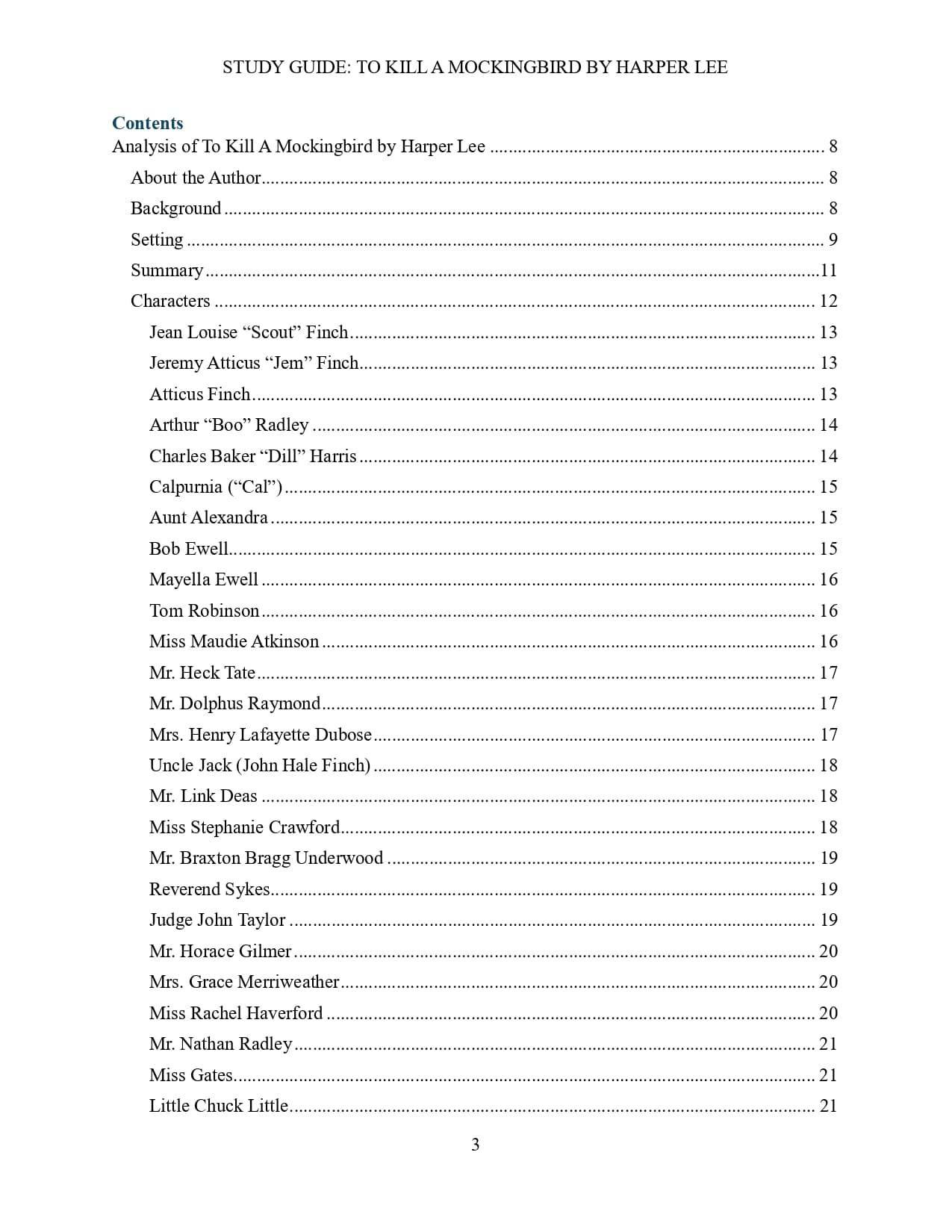
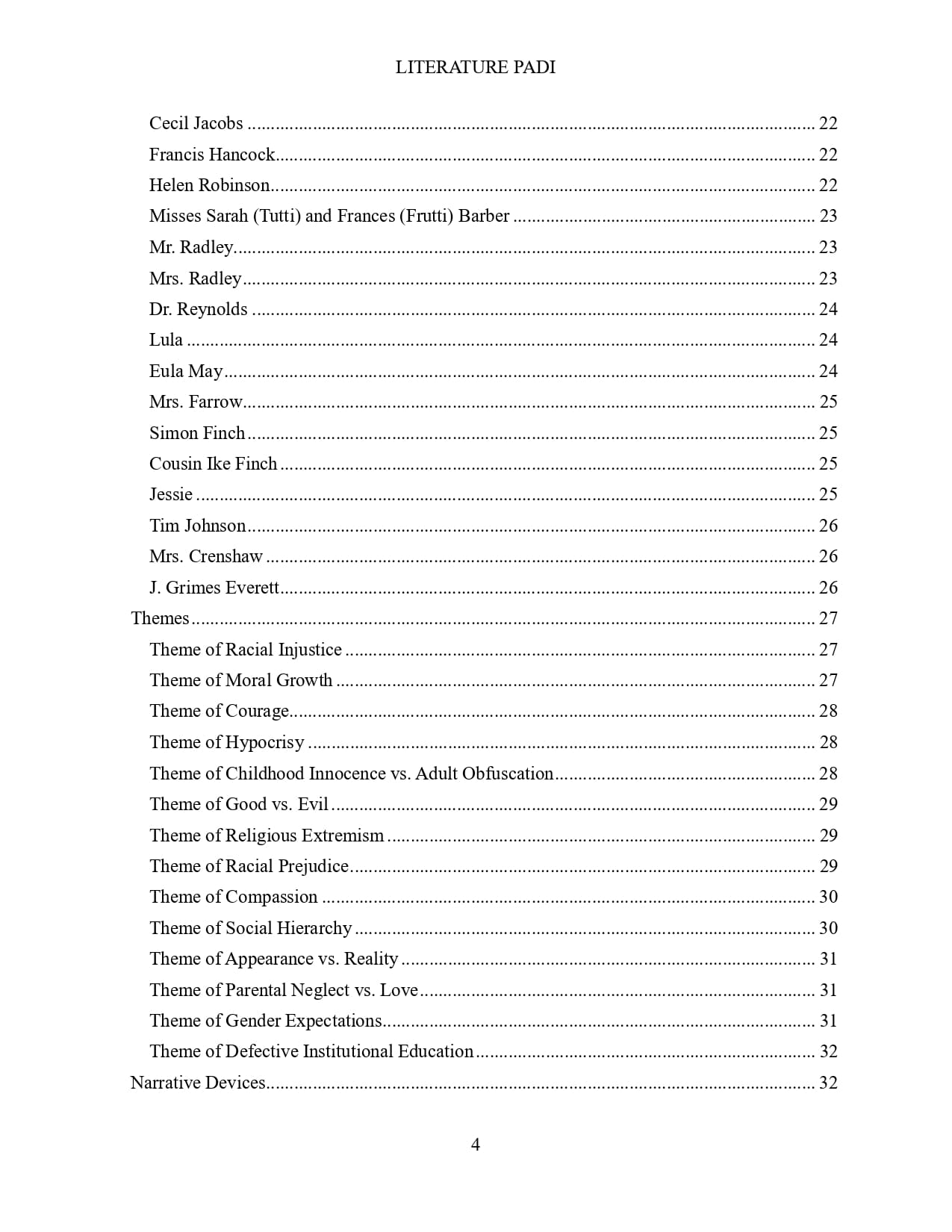
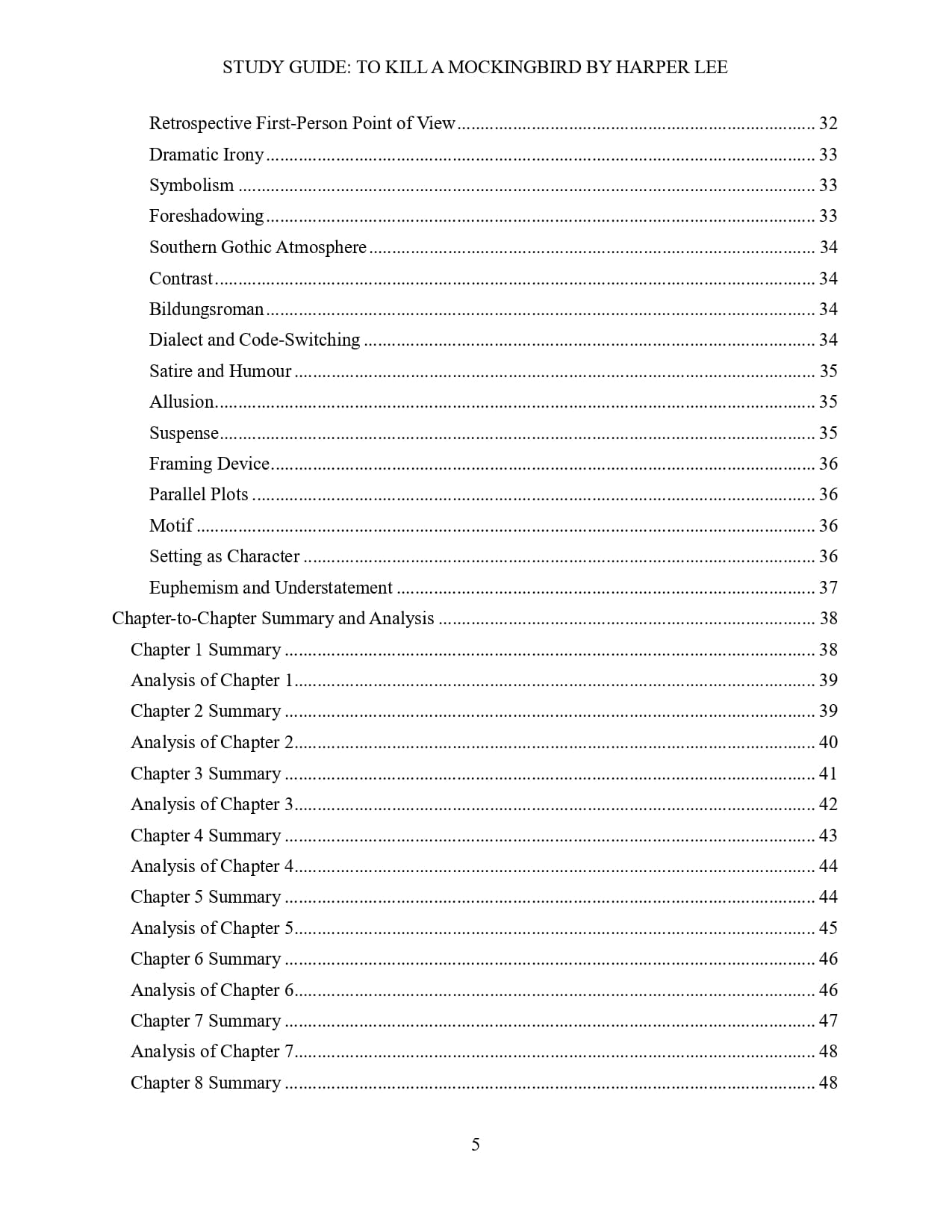
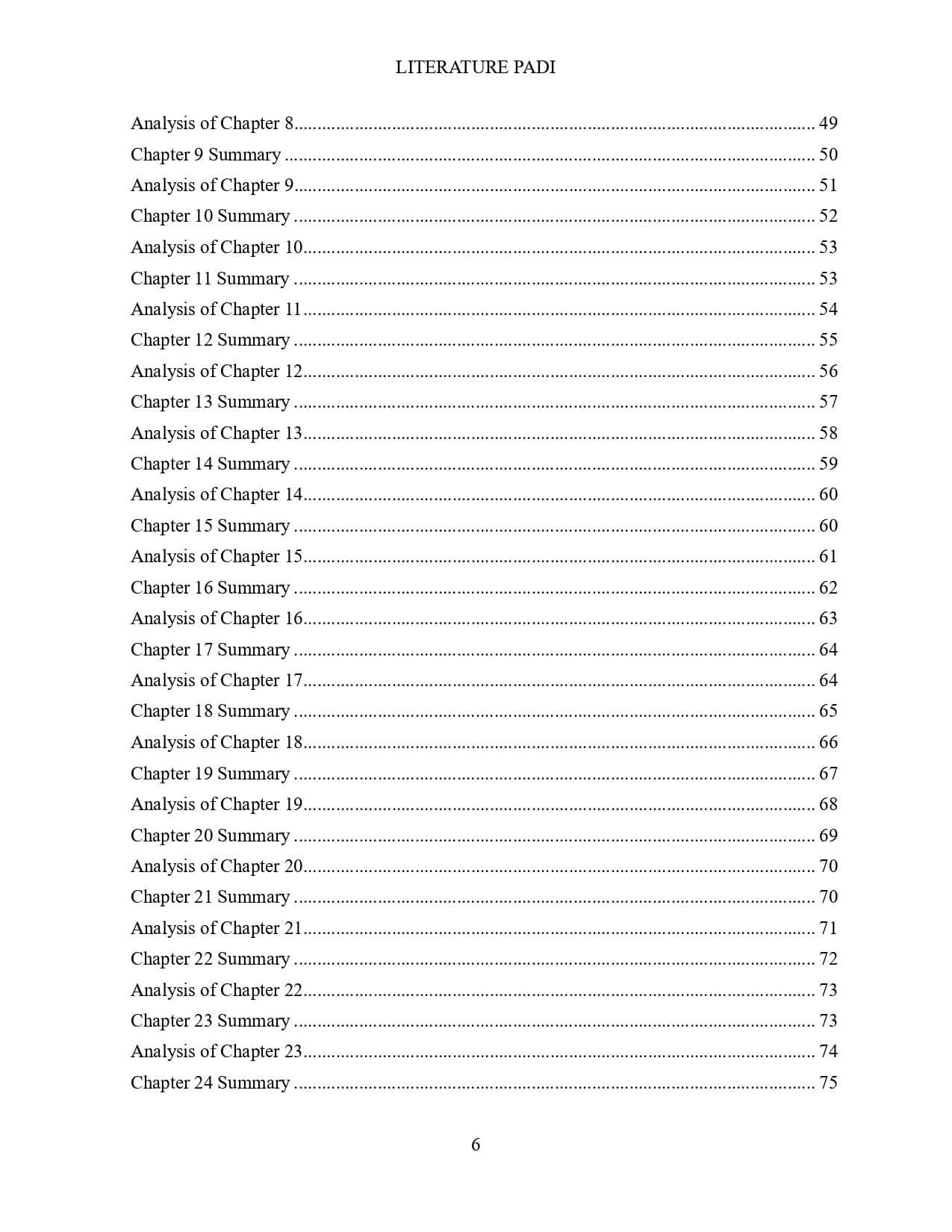
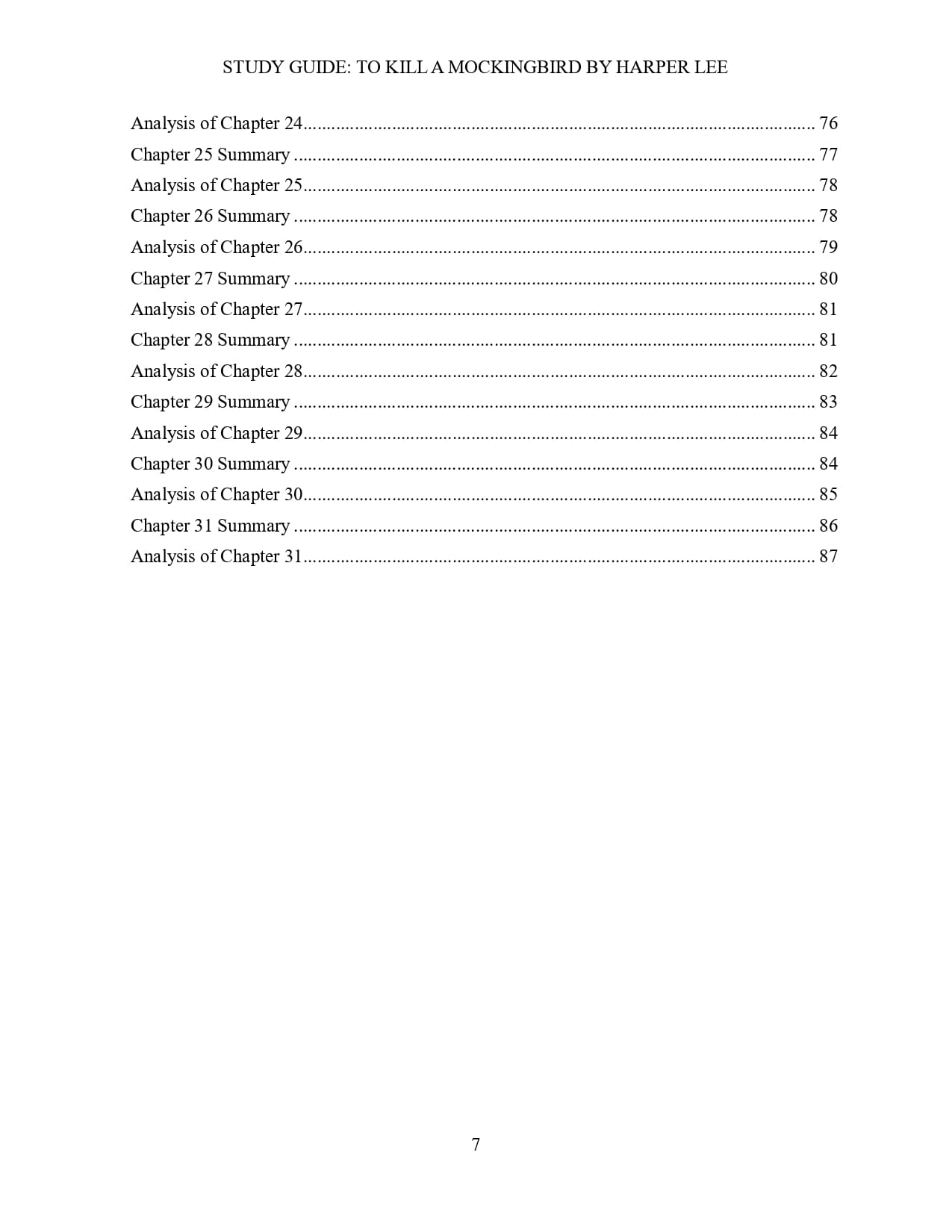
Enjoying this breakdown? What you’re reading is just part of the full experience. The premium PDF edition brings everything together in one seamless, distraction-free document that has the background, setting, plot summary, chapter-to-chapter summary and analysis, narrative devices, characters, and themes. If you’re studying seriously, this is the version you’ll want.
Chapter 27 Summary of To Kill a Mockingbird
Chapter 27 of To Kill a Mockingbird opens in October with the town seemingly settling back into its normal routine, but three out-of-the-ordinary things happen that indirectly concern the Finch family. First, Bob Ewell loses a job. He is hired by the WPA (Works Progress Administration) but makes history by being fired just days later for laziness. He goes back to collecting welfare checks and publicly complains that the “bastards who thought they ran this town” won’t let him make a living. In this regard, he specifically accuses Atticus of getting him fired.
Second, someone intrudes into Judge Taylor’s house. One Sunday night, Judge Taylor is home alone reading when he hears a scratching noise at his back door. He goes to investigate, finds the screen door swinging open, and sees a shadow creeping away. His wife returns from church to find him sitting with a shotgun across his lap.
Third, Helen Robinson is harassed. Tom Robinson’s former employer, Mr. Link Deas, creates a job for Tom’s widow, Helen, because he feels bad about how things turned out. However, Helen is forced to walk a mile out of her way to work to avoid the Ewell property, because the Ewells “chunked at her” the first time she used the public road. When Mr. Link discovers this, he walks to the Ewell house and threatens to have Bob Ewell jailed if he ever bothers Helen again. The next day, Bob Ewell stealthily follows Helen all the way to work, muttering foul words behind her. Mr. Link intercepts Ewell and threatens to have him arrested for assault under the “Ladies’ Law,” which finally stops Ewell’s harassment.
Aunt Alexandra is deeply disturbed by these three events. She points out that Bob Ewell seems to hold a permanent grudge against everyone connected to the Tom Robinson case and warns Atticus that Ewell’s kind will do “anything to pay off a grudge.” Atticus dismisses her fears. He explains that Ewell is just trying to save face; Atticus proved him a liar in court, and Judge Taylor made him look like a fool, so Ewell is lashing out to restore his shattered pride. Atticus firmly believes Ewell has had his fling and will soon settle down.
The narrative then shifts to the upcoming Halloween. The previous year, some local children played a prank on two deaf sisters, Misses Tutti and Frutti Barber, by sneaking into their house at night and hiding all their parlour furniture in the cellar. To prevent a repeat of such mischief, the Maycomb ladies organise a high school pageant and carnival for the town.
The pageant is written by Mrs. Grace Merriweather and is titled Maycomb County: Ad Astra Per Aspera. Scout is assigned the role of a ham. She is to represent one of the county’s agricultural products. Her costume is a large, cumbersome contraption made of chicken wire covered in brown cloth.
When the night of the pageant arrives, both Atticus and Aunt Alexandra are too exhausted to attend. Aunt Alexandra experiences a sudden pinprick of apprehension—stopping mid-sentence to say “somebody just walked over my grave”—but quickly dismisses the feeling. So, Jem is entrusted to escort Scout to the high school. This, of course, is their “longest journey together.”
Analysis of Chapter 27
Chapter 27 is a crucial build-up to the novel’s climax. Harper Lee systematically outlines Bob Ewell’s post-trial behaviour to establish him as a lingering, dangerous threat. The three incidents—the firing, the prowling, and the stalking—prove that Ewell’s anger was not satisfied by Tom’s conviction. Aunt Alexandra’s sudden premonition (“somebody just walked over my grave”) is a classic literary device that heavily foreshadows the impending danger the children will face on their walk home in the dark.
This chapter of To Kill a Mockingbird highlights Ewell’s vindictiveness and deep cowardice. Even though he holds a grudge against powerful men like Atticus and Judge Taylor, he chooses to target the most vulnerable person connected to the trial: Helen Robinson, a grieving Black widow. When confronted by a white man of standing—Mr. Link Deas—Ewell immediately backs down. He prefers to operate in the shadows; he slinks away from Judge Taylor’s porch rather than facing him.
Throughout the novel, Atticus’s immense empathy is his greatest strength, but this chapter reveals it as a dangerous blind spot. Because Atticus is so committed to seeing things from other people’s perspectives, he rationalises Ewell’s behaviour as a temporary symptom of wounded pride. Atticus fatally underestimates the physical threat Ewell poses to his family by projecting his own rationality onto an irrational and malicious man.
Mr. Link Deas emerges again as a figure of active, practical integrity. While others in Maycomb passively pity Tom’s family, Deas creates a job for Helen specifically to help her. Furthermore, he actively uses his privilege as a respected white man to fiercely defend a Black woman from Bob Ewell’s racial terror.
The end of the chapter subtly underscores Jem’s maturation. Because the adults are too tired to attend the pageant, Jem takes on the adult responsibility of escorting and protecting his younger sister. This transition of Jem from playmate to protector sets the stage for the life-or-death defence he will soon have to mount against Bob Ewell.
Chapter 28 Summary of To Kill a Mockingbird
Chapter 28 of To Kill a Mockingbird begins on Halloween night. The weather is unusually warm, the sky is pitch black with no moon, and a solitary mockingbird sings in the darkness. Jem and Scout begin their walk to the high school auditorium for the Halloween festival. Jem carries Scout’s bulky ham costume for her. As they cross the dark schoolyard, someone leaps out at them, shining a flashlight and screaming. It turns out to be Cecil Jacobs playing a practical joke.
At the school, the county has gathered for the festivities. Scout and Cecil spend their money at the various booths, including a “House of Horrors.” Soon, it is time for the pageant, Maycomb County: Ad Astra Per Aspera, written by Mrs. Merriweather. Scout is put into her cumbersome chicken-wire and cloth ham costume, which severely restricts her movement and vision. During Mrs. Merriweather’s thirty-minute historical drone about the county, Scout falls fast asleep backstage. She misses her cue (“Pork!”) entirely and only wakes up during the grand finale, rushing on stage late. Mrs. Merriweather is furious that Scout “ruined” her pageant, causing Scout to feel deeply mortified. To hide her shame, Scout insists on keeping her ham costume on for the walk home.
Jem and Scout wait until almost everyone else has left the school before starting their journey home. Scout realises she forgot her shoes, but the auditorium lights go out. As a result, she has to walk barefoot. As they walk in the pitch black under the large oak tree, Jem hears footsteps behind them. At first, they assume it is Cecil Jacobs trying to scare them again. However, the pursuer’s heavy footsteps—accompanied by the swish of thick cotton pants—stop when they stop, and start when they start.
Suddenly, the footsteps turn into a run. Jem screams for Scout to run, but she loses her balance in her bulky costume and falls. In the darkness, a chaotic and violent scuffle breaks out. Scout hears metal ripping, kicking, and fighting. Jem breaks free and tries to drag Scout away, but the attacker yanks him back. Scout hears a sickening crunch, and Jem screams in agony.
Scout blindly runs toward Jem’s scream but is grabbed by the attacker, who begins to squeeze the breath out of her. Suddenly, the attacker is jerked backward and thrown to the ground. The fighting stops, replaced by the sound of a man panting and coughing violently. Feeling around in the dark, Scout touches the face of a man with prickly stubble who smells of stale whiskey. She then looks down the road and sees a man carrying Jem’s unconscious body under the street light, heading towards the Finch house.
Scout follows the man and Atticus into the house. Aunt Alexandra frantically calls Dr. Reynolds, and Atticus calls Sheriff Heck Tate. Dr. Reynolds arrives and examines Jem. He informs Scout that Jem is not dead, but has a bad break in his arm and a bump on his head. Shortly after, Sheriff Heck Tate arrives. He reports that he found Scout’s ruined dress and bits of her costume in the woods. Then, he delivers a shocking revelation: Bob Ewell is lying dead under the tree with a kitchen knife stuck up under his ribs.
Analysis of Chapter 28
Chapter 28 is the narrative and physical climax of To Kill a Mockingbird. The tension that has been building since the Tom Robinson trial finally erupts. Bob Ewell makes good on his threat to Atticus (“he’d get him if it took the rest of his life”), but instead of attacking Atticus directly, he targets his most vulnerable vulnerability: his children.
Harper Lee masterfully uses Scout’s ridiculous ham costume to blend childhood innocence with life-threatening danger. The costume is a source of immense embarrassment for Scout, prompting her to wear it on the walk home just to hide her face. Yet, this cumbersome contraption serves as literal armour. Heck Tate later points out the clean line on the crushed wire where Ewell’s switchblade hit, which proves that the absurd costume actually saved Scout’s life.
The attack confirms everything Atticus and Heck Tate suspected about Bob Ewell’s character, though it exposes a fatal flaw in Atticus’s optimism. Atticus had previously rationalised that Ewell had gotten his anger out by spitting in his face. However, Ewell’s attack on Jem and Scout proves his absolute cowardice. As Heck Tate later notes, Ewell was a “low-down skunk” who needed the cover of pitch-black darkness and the liquid courage of alcohol to attack defenceless children. Ewell lacks the guts to ever face Atticus man-to-man.
The chapter marks the final transition from childhood superstitions to adult realities. At the beginning of the walk, Jem teases Scout about “haints” and “Hot Steams,” and they reflect on how those childhood fears have vanished. The real monster they encounter in the dark is not a supernatural ghost from their childhood imaginations, but a very real, hateful human being.
Jem’s behaviour throughout the chapter highlights his transition into a protective, mature young man. He is patient with Scout when she ruins the pageant. Besides, he carries her costume and offers comfort instead of teasing her. During the attack, his first instinct is to pull Scout towards the safety of the road. This way, he sacrifices himself to Ewell’s violence to try and save his little sister.
Related:
- Chapter 1 to 3 Summary and Analysis of To Kill a Mockingbird by Harper Lee
- Chapter 4 to 6 Summary and Analysis of To Kill a Mockingbird by Harper Lee
- Chapter 7 to 9 Summary and Analysis of To Kill a Mockingbird by Harper Lee
- Chapter 10 to 12 Summary and Analysis of To Kill a Mockingbird by Harper Lee
- Chapter 13 to 15 Summary and Analysis of To Kill a Mockingbird by Harper Lee
- Chapter 16 to 21 Summary and Analysis of To Kill a Mockingbird by Harper Lee
- Chapter 22 to 24 Summary and Analysis of To Kill a Mockingbird by Harper Lee
- Chapter 29 to 31 Summary and Analysis of To Kill a Mockingbird by Harper Lee
Receive Literary Updates through our Social Media Channels:
- WhatsApp: Literature PADI
- Telegram: Literature PADI
- YouTube: @literaturepadi
- Facebook: Literature PADI