Download our SSCE Study Guide Bundle
Act 1, Scene 2 Summary of Antony and Cleopatra
Act 1, Scene 2 of Antony and Cleopatra is set in another room of the Egyptian palace. The scene opens with a light-hearted and bawdy tone as Cleopatra’s attendants—Charmian, Iras, and Alexas—along with the Roman officer Domitius Enobarbus, consult a Soothsayer. The Soothsayer reads their palms, and the group engages in playful banter about marriage, cuckoldry, and drinking, with Enobarbus predicting that their fortunes that night will be to go “drunk to bed.” Cleopatra briefly enters looking for Antony; she notices that a “Roman thought hath struck him” and decides to leave before he sees her.
Antony enters, consumed by urgent business with messengers from the Roman Empire. The first messenger reports that Antony’s wife, Fulvia, and his brother Lucius initially fought against each other, but then allied to fight Octavius Caesar, who defeated them. Worse, the messenger brings “stiff news” that Labienus and his Parthian army are sweeping across Asia. Rather than shoot the messenger, Antony demands the harsh truth. He asks him to “Name Cleopatra as she is call’d in Rome” and to speak plainly of his faults.
A second messenger arrives from Sicyon bearing a letter with shocking news: Fulvia is dead. This news snaps Antony out of his Egyptian lethargy. He sends the messenger away and reflects on his deceased wife, while noting the irony of human nature: “What our contempt doth often hurl from us, / We wish it ours again.” He realises that his “idleness” in Egypt is hatching “Ten thousand harms,” and he resolves that he must “from this enchanting queen break off.”
Antony calls for Enobarbus and announces his immediate departure. Enobarbus reacts with characteristic sarcasm; he jokes that leaving will kill the women, as Cleopatra “hath such a celerity in dying” whenever Antony tries to leave. When Antony informs him of Fulvia’s death, Enobarbus continues to joke; he compares the death of an old wife to getting a “new petticoat” and saying the only tears needed for this sorrow “live in an onion.”
Antony dismisses the “light answers” and explains the dire political reality forcing his hand. Not only is his wife dead, but urgent letters from allies in Rome petition his return. Furthermore, Sextus Pompeius has taken command of the seas and is gaining dangerous popularity among the Roman people, a popularity that threatens the stability of the empire. He orders Enobarbus to immediately notify their officers of their “quick remove from hence.”
Get the Full Analysis in PDF
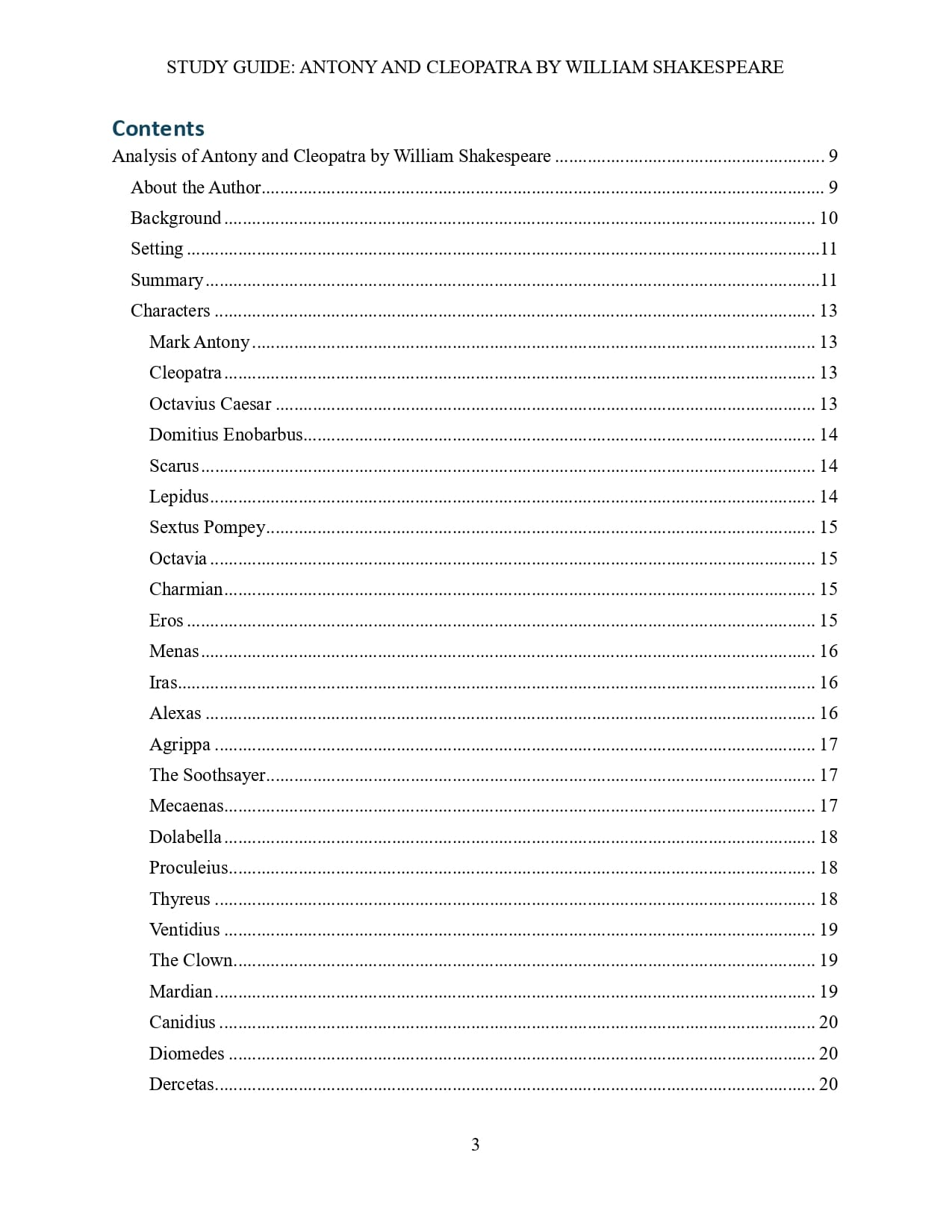
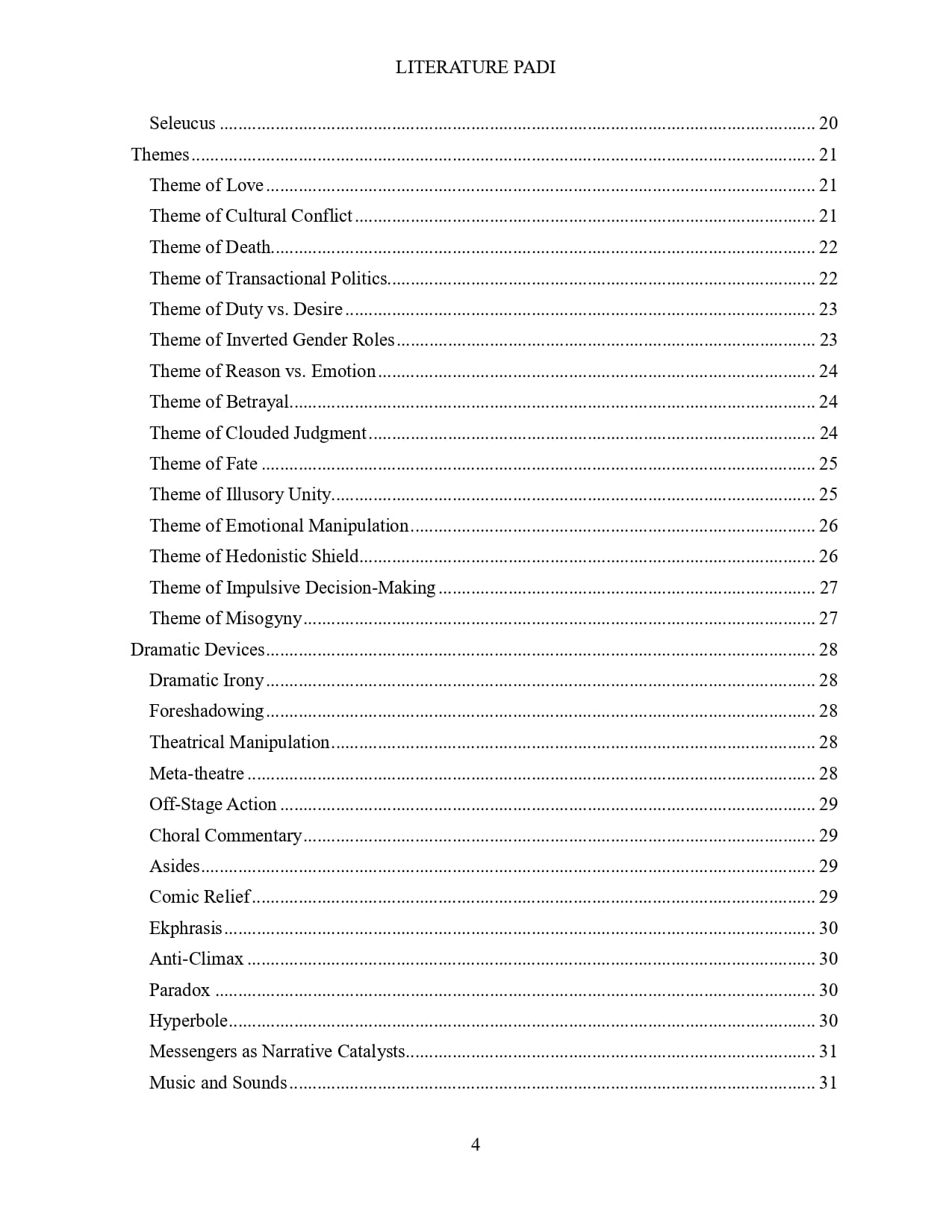
Enjoying this breakdown? What you’re reading is just part of the full experience. The premium PDF edition brings everything together in one seamless, distraction-free document that has the background, setting, plot summary, act-to-act summary and analysis, dramatic devices, characters, and themes. If you’re studying seriously, this is the version you’ll want.
Analysis of Act 1, Scene 2
The scene illustrates the stark division between Egypt and Rome. It begins in the distinctly Egyptian realm of pleasure, fate, and indulgence, represented by the servants’ gossiping and the Soothsayer’s vague prophecies of the future. This relaxed environment is abruptly shattered by the arrival of the Roman messengers, who bring the harsh, pragmatic realities of war, rebellion, and death.
Fulvia’s death acts as a catalyst that temporarily cures Antony’s “dotage.” His demand that the messenger not “mince the general tongue” shows a leader desperate to shake off his sensual paralysis and confront how far he has fallen in the eyes of his countrymen. His realisation that his “present pleasure” has become “the opposite of itself” highlights his profound internal conflict between his duty as a Roman triumvir and his desires as Cleopatra’s lover.
Enobarbus is herein portrayed as a cynical truth-teller. While Antony turns sombre and reflective, Enobarbus provides biting commentary. He mocks the extreme, theatrical nature of Cleopatra’s emotions (noting she uses them like “storms and tempests”) and approaches Fulvia’s death with blunt, inappropriate pragmatism. His humour undercuts the grand tragedy of Antony’s life.
Significantly, this scene establishes the macro-political stakes of the play. While Antony has been distracted by love, the Roman world has grown dangerously unstable. The rise of Pompey—who “commands / The empire of the sea”—and the shifting loyalties of the “slippery people” create an immediate, pressing crisis. This looming threat is what finally forces Antony to choose, at least temporarily, his political survival over his romance.
Related:
- Act 1, Scene 1 Summary and Analysis of Antony and Cleopatra
- Act 1, Scene 3 Summary and Analysis of Antony and Cleopatra
- Act 1, Scene 4 Summary and Analysis of Antony and Cleopatra
- Act 1, Scene 5 Summary and Analysis of Antony and Cleopatra
Receive Literary Updates through our Social Media Channels:
- WhatsApp: Literature PADI
- Telegram: Literature PADI
- YouTube: @literaturepadi
- Facebook: Literature PADI