

Download our SSCE Study Guide Bundle
Chapter 25 Summary of Path of Lucas
Chapter 25 of Path of Lucas opens in 1974, two years after the tragic death of Isabelle’s sister, France. Terrified of suffering the same fate as her obese sister, Isabelle joins a weight-loss programme. She works incredibly hard, and successfully reaches and maintains her goal weight for over a year. To honour her success, the programme invites her to a weekend conference in Toronto. Encouraged by Lucas, Isabelle attends the event, where she is crowned the winner among twenty-five contestants, wearing a beautiful gown and carrying red roses. She delivers a moving, passionate speech in which she dedicates her success to her late sister, France. She returns home feeling healthy, proud, and deeply appreciated.
Three months later, Lucas is offered a major promotion to a supervisory role with the cable company, which will double his salary. However, the new position requires him to live in Kemptville during the week and only return home on weekends. With Isabelle’s full encouragement to follow his dreams, Lucas accepts the job. He makes the most of his weekends, dedicating his time entirely to Isabelle and the children. He takes them on drives, to restaurants, and even on a special weekend trip to Kemptville to see where he works.
In spite of the family’s financial success and weekend joys, Isabelle begins to slip back into her emotional anguish before Lucas’s first year in Kemptville is over. She starts gaining weight again and actively hides her emotional pain from Lucas. She excuses this away as her simply being tired from work. One day, young Lucy walks into her mother’s room and catches her crying while hastily hiding something under her pillow. Lucy comforts her mother, and the next day when Isabelle is at work, Lucy checks under the pillow to find a hidden photograph of Aunt France. When she realises her mother is secretly mourning, Lucy takes on the emotional burden herself and decides not to tell her father.
One evening, an exhausted Isabelle returns from work and goes straight to bed. Shortly after, she calls out for her mother-in-law, Elizabeth, in a panic. Isabelle is experiencing severe shaking, a terrible headache, and extreme anxiety before she suddenly slips into unconsciousness. Elizabeth frantically calls an ambulance, and paramedics arrive to find Isabelle nonresponsive with a weak pulse. As the paramedics rush Isabelle to the hospital, John and Elizabeth comfort the terrified children. John drives Elizabeth to the hospital, where she eventually manages to reach Lucas by phone in Kemptville. Lucas immediately drops everything and rushes to the hospital to be by his wife’s side.
Analysis of Chapter 25
Chapter 25 of Path of Lucas illustrates that grief and trauma cannot be permanently “cured” simply through physical health or singular achievements. Isabelle experiences a massive physical and emotional victory in Toronto, seemingly conquering the demons that claimed her sister. However, her relapse less than a year later demonstrates that her unprocessed mourning still lingers beneath the surface. The hidden photograph of France under her pillow symbolises how deeply Isabelle represses her grief in an attempt to protect her family from her sadness.
For the first time in their marriage, Lucas achieves significant financial security and a role he truly enjoys. However, this success requires his physical absence during the week. The narrative subtly links Lucas’s absence to Isabelle’s decline; without her primary emotional anchor present every day, Isabelle isolates herself and falls back into destructive coping mechanisms (emotional eating and secret crying). Lucas’s weekly absence creates a dangerous blind spot, which prevents him from noticing the severity of his wife’s deterioration until it is too late.
Nine-year-old Lucy demonstrates a heartbreaking level of maturity in this chapter. When she discovers her mother weeping over the photograph of France, Lucy does not panic; instead, she actively comforts her mother and deliberately chooses to keep the secret. She withholds this information to protect her parents, and takes on an emotional weight that is far too heavy for a child.
The chapter abruptly shifts from the highest of highs (the Toronto crowning, the Kemptville promotion) to a terrifying medical emergency. Isabelle’s sudden collapse into unconsciousness is depicted as her body and brain’s total surrender to overwhelming psychological stress and anxiety. Her physical shutdown is a dramatic physical manifestation of the mental breakdown that will dominate the subsequent chapters.
Get the Full Analysis in PDF
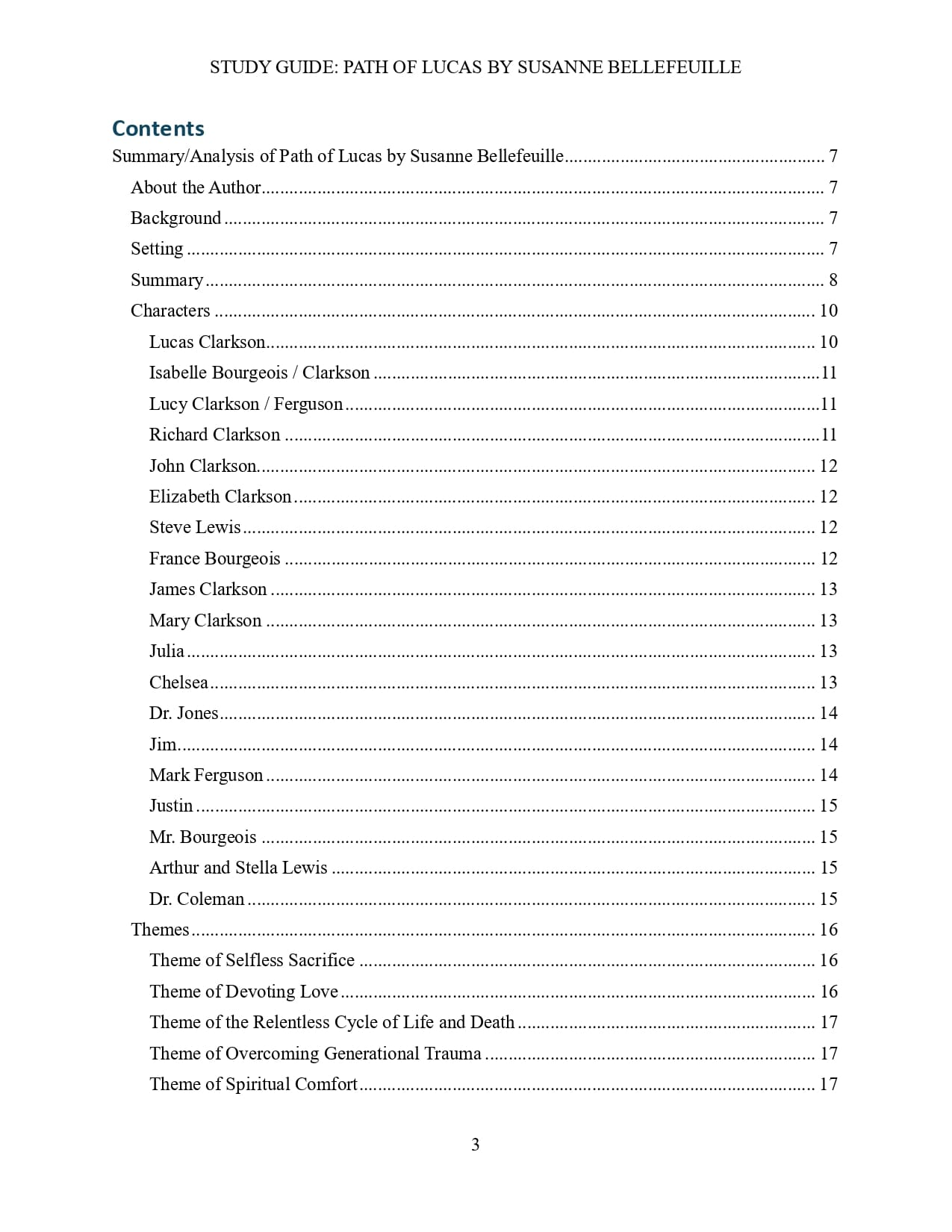
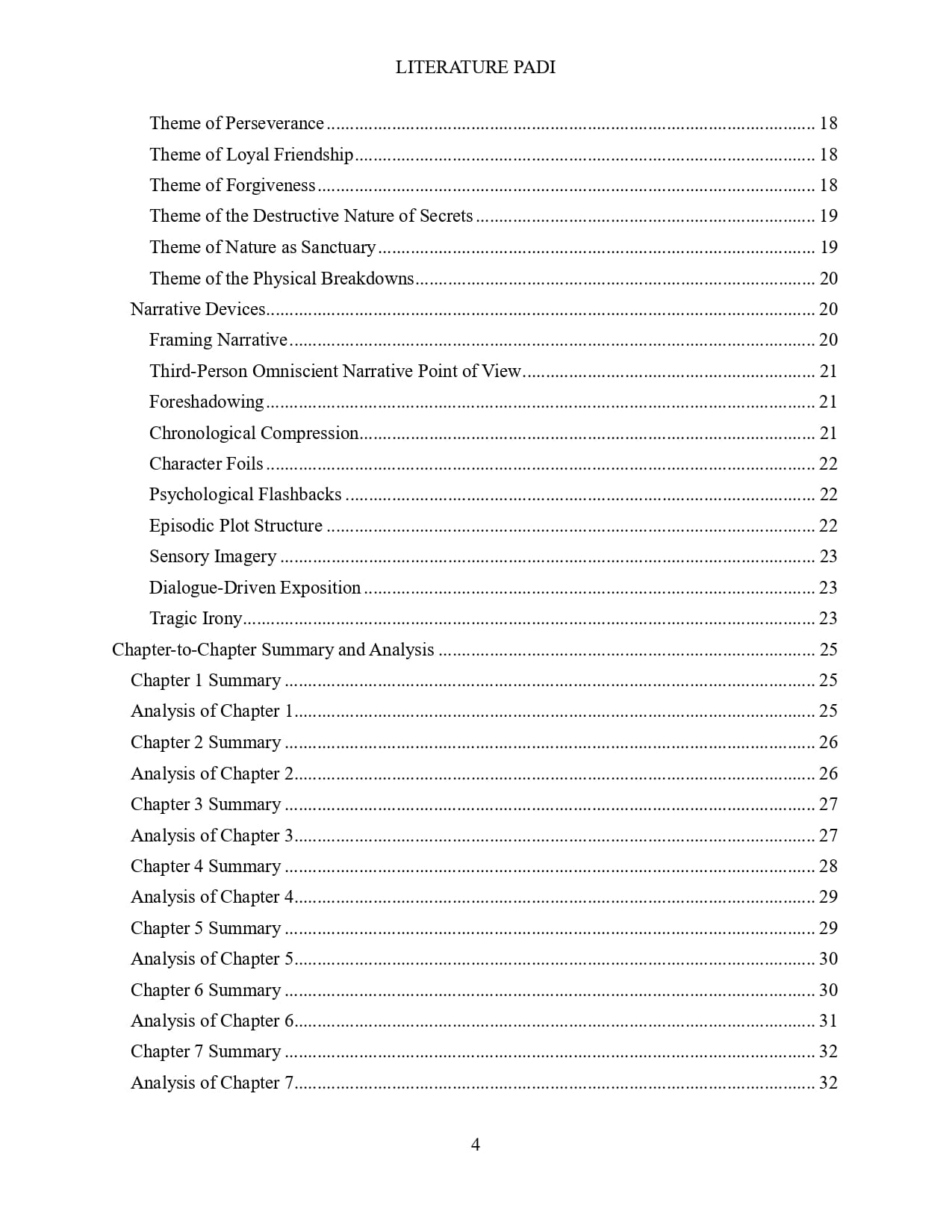
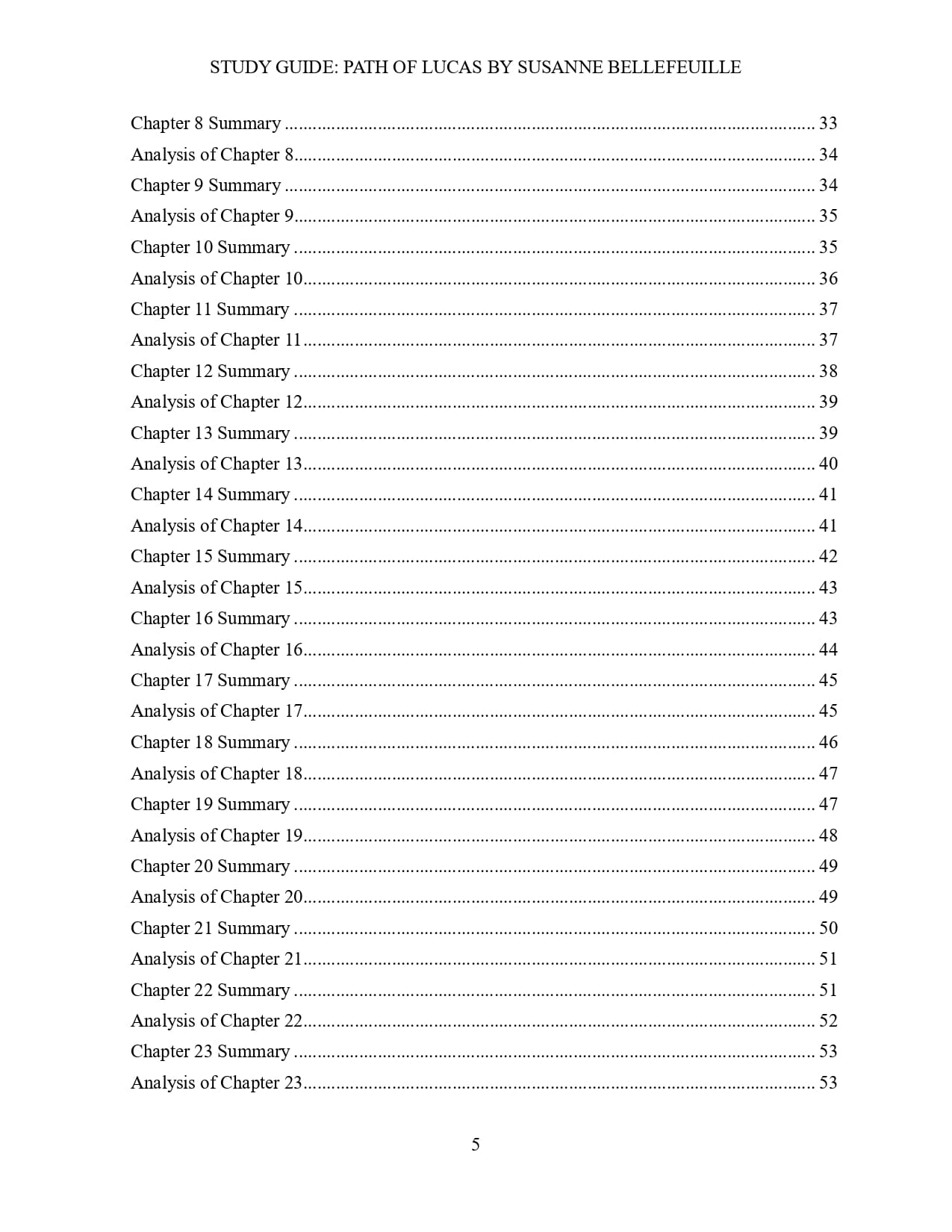
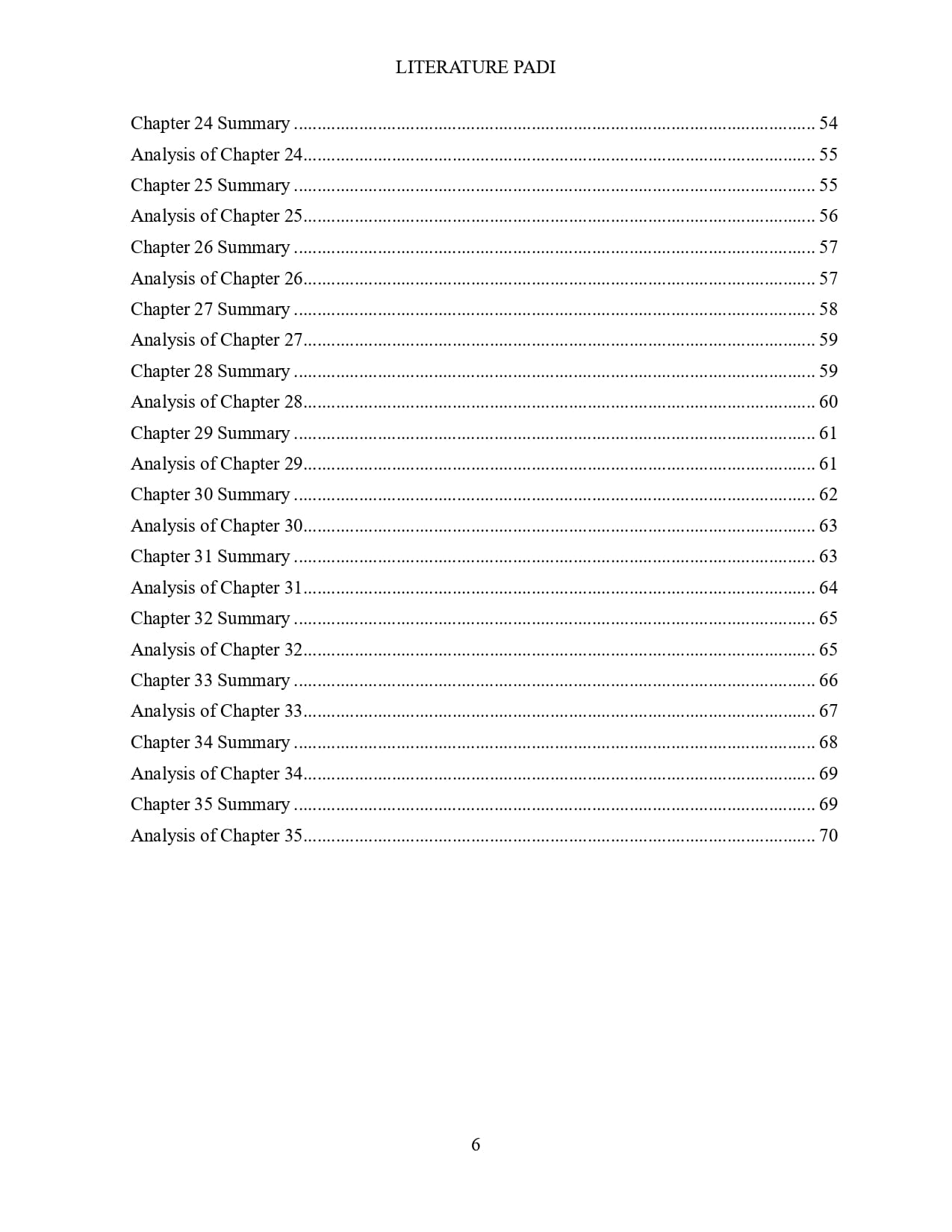
Enjoying this breakdown? What you’re reading is just part of the full experience. The premium PDF edition brings everything together in one seamless, distraction-free document that has the background, setting, plot summary, chapter-to-chapter summary and analysis, narrative devices, characters, and themes. If you’re studying seriously, this is the version you’ll want.
Chapter 26 Summary of Path of Lucas
After Lucas spends the entire night sitting by Isabelle’s side at the Glengarry Memorial Hospital, Dr. McKenzie and Nurse Jackson arrive with alarming test results. The doctor informs Lucas that Isabelle has fallen into a profound, deep depression and her body is shutting down from total exhaustion. Dr. McKenzie explains she must be transferred by ambulance to the psychiatric ward on the third floor of the General Hospital in Cornwall to be treated by specialists.
As Lucas drives to the General Hospital, he is consumed by guilt and self-blame. He questions whether taking the demanding job in Kemptville caused Isabelle’s breakdown and wonders if he failed to provide enough emotional support after the tragic death of her sister, France. Upon arriving, he fills out the necessary hospital paperwork and is escorted by Nurse Mary Sequin to meet the psychiatrist, Dr. Jones.
Dr. Jones delivers a sobering reality: Isabelle is suffering from a severe clinical depression that he suspects is specifically psychotic depression. He explains that Isabelle’s mind, unable to handle her suppressed pain, has gone into overdrive and shut down. Her broken mind has forced her into a fantasy world where she is out of touch with reality. He warns Lucas to prepare for the worst. He even goes as far as saying that Isabelle may not even remember who she is or recognise Lucas as her husband. Dr. Jones informs him that Isabelle is heavily sedated to recover from shock and will sleep for a couple of days. He outlines a treatment plan using antidepressants and antipsychotics. He tells him that recovery could take a long time, and mentions electroconvulsive therapy (ECT) as a last resort.
Nurse Sequin escorts Lucas to room 323. Unlike the chaotic confrontation that will occur in the following chapter, Isabelle is heavily sedated and sleeping peacefully, curled up on her side. Lucas sits by her bed, holds her hand, and breaks down in tears. He makes a solemn vow to stay by her side and love her until she completely recovers from the illness and can return home to their children.
After kissing his sleeping wife goodbye, Lucas heads for the elevator to go home and rest. Inside the elevator, he sees a gloomy, blank-staring woman in a wheelchair who does not acknowledge the man pushing her. This unsettling image leaves Lucas deeply frightened. He wonders if this empty state is the path he and Isabelle are about to embark on.
Analysis of Chapter 26
Throughout the novel, Lucas has been the capable patriarch. He has fixed engines, saved the family farm, and secured financial stability. However, Chapter 26 strips him of this power. Confronted with a mental illness he cannot physically “fix,” his immediate reaction is intense self-blame. He questions whether his recent career ambition (working in Kemptville) or a lack of attention on his part caused her collapse. This highlights his overwhelming sense of responsibility for his family’s well-being.
The author uses the character of Dr. Jones to explicitly educate Lucas (and the reader) on the terrifying reality of severe mental illness. The author distinguishes standard clinical depression from psychotic depression to explain that Isabelle’s mind has essentially short-circuited to protect itself from past trauma. This medical framing sets the stage for the heartbreak to come; it prepares the reader to understand that Isabelle’s upcoming delusions are symptoms of a survival mechanism.
Despite the horrifying prognosis that his wife might not even remember him, Lucas’s devotion does not waver. Sitting beside her while she sleeps, he promises, “Whatever happens, Isabelle, I will stay by your side until you completely recover.” This silent vow reinforces his core character trait: a man who will endure any amount of personal suffering to protect the people he loves.
The chapter concludes with a powerful, haunting symbol. The unresponsive, gloomy woman in the wheelchair in the elevator physically embodies Lucas’s greatest terror. She represents the “worst-case scenario” Dr. Jones warned him about: a life where Isabelle’s mind never returns. This encounter perfectly encapsulates the dread and uncertainty Lucas feels as he crosses the threshold into the darkest chapter of his marriage.
Chapter 28 Summary of Path of Lucas
Lucas dedicates his life entirely to Isabelle’s recovery. He spends day and night at the General Hospital with Dr. Jones and the nursing staff. To prioritise his wife, Lucas makes the massive sacrifice of quitting his beloved, hard-won job in Kemptville and relies entirely on his savings. He maintains a stable routine for his children. He makes sure to have breakfast with them every morning and gently reminds them that their mother is ill and that they are not to blame.
Nearly a year passes with very little improvement in Isabelle’s condition. While she has grown to trust Lucas, she still does not recognise him as her husband and has no memory of her children. Instead, she is trapped in a powerful psychotic delusion. She firmly believes she has just given birth to premature twins who are waiting for her in the hospital nursery. Because Isabelle has failed to respond to all treatments—including electroconvulsive therapy (ECT) and medications—Dr. Jones tells Lucas that he is out of options. He advises Lucas that Isabelle should be placed in an institution permanently.
Refusing to accept defeat, Lucas proposes a risky, unorthodox plan to Dr. Jones: he wants to take Isabelle out into the “real world” and use the outside environment to trigger her memories. Dr. Jones is highly resistant; he warns Lucas that exposing Isabelle to society could trigger a violent, hysterical breakdown, as she is unmedicated and highly unpredictable. However, because Isabelle has developed an unusual subconscious trust in Lucas, Dr. Jones eventually relents. He signs a release form but warns Lucas to take very small steps.
Before taking her out, Lucas visits Isabelle in her room. When she insists that she needs to stay in the hospital to care for her babies, Lucas decides it is time to forcefully break her illusion. He bluntly tells her the twins are not real. This revelation causes a terrified Isabelle to lock herself in the bathroom. Lucas firmly coaxes her out and physically walks her around the entire psychiatric floor in order to force her to look at reality. He proves to her that there is no nursery and no babies, only other patients suffering from depression.
The confrontation shatters Isabelle’s fantasy. It leaves her terrified, weeping, and deeply confused about her own mind. Lucas holds her tight, comforting her and promising to protect her before tucking an exhausted Isabelle into bed. Over the following weeks and months, Lucas’s bold method works; as he slowly reintroduces her to the outside world, she becomes calmer, stops having public flare-ups, and begins the slow process of accepting reality.
Analysis of Chapter 28
Chapter 28 of Path of Lucas mirrors Lucas’s earlier life choices. Just as he once abandoned his dream of being a mechanic to save his father’s farm, he now quits his lucrative supervisor position in Kemptville without a second thought to save his wife. For Lucas, the choice is simple: familial duty and love always supersede personal ambition or financial success.
The chapter sets up a stark contrast between clinical medicine and intuitive love. Dr. Jones represents the limits of psychiatry in the 1970s; having tried medication and shock therapy, his clinical conclusion is to give up and institutionalise Isabelle. Lucas, driven by love and desperation, refuses to accept this clinical defeat. His unorthodox, intuitive approach acts as the true catalyst for her gradual recovery. It proves that profound emotional bonds can sometimes reach where clinical medicine cannot.
The climax of the chapter is Lucas’s decision to destroy Isabelle’s delusion. Up until this point, the hospital staff has managed Isabelle’s psychosis with sedation and careful appeasement. Lucas takes a massive, potentially dangerous risk by forcing her to look at the harsh reality of the psychiatric ward. Shattering her fantasy of the “twins” is a form of tough love; it is deeply painful for Isabelle, but it destroys the protective psychological wall her mind built. It forces her to begin the arduous journey back to reality.
A crucial psychological element in this chapter is the concept of subconscious connection. Even though Isabelle’s conscious mind is completely broken and she sees Lucas as a stranger, she inherently feels safe in his arms and trusts his guidance. This lingering, foundational trust is the only reason she allows him to lead her out of the bathroom and around the ward. It demonstrates that while her mental illness wiped her explicit memories, her emotional connection to Lucas survived the psychotic break.
Chapter 29 Summary of Path of Lucas
As December approaches, Isabelle’s condition is improving, but she still lacks any memory of her husband, her children, or her past life. Determined to trigger her memory, Lucas devises a creative plan: he takes a picture cube that their youngest son, Thomas, had given Isabelle as a gift years prior, and fills it with school photos of their five children alongside a picture of the two of them together. Lucas explains to his parents that he intends to take Isabelle Christmas shopping so she can pick out a gift for each child in the photos. His father, John, encourages him, believing that “miracles happen when you believe.”
Lucas visits Isabelle at the hospital and pitches the shopping idea. Though Isabelle is initially frightened and admits she would have no idea what to buy the children in the photos, her deep trust in Lucas allows her to agree to the outing. The shopping trip is a massive success. Guided by Lucas’s descriptions of the children’s ages and characteristics, Isabelle intuitively picks out perfect gifts: a guitar for thirteen-year-old Richard, a train set for twelve-year-old Johnny, a rod hockey table for eleven-year-old Steve, a record player for nine-year-old Lucy, and a Tonka truck for six-year-old Thomas.
After returning to the hospital, Lucas leaves Isabelle alone to wrap the gifts while he goes to have supper with his family. As she wraps the presents, Isabelle suddenly experiences a series of profound flashbacks. First, she has a blurry vision of Lucas giving her a ring in a restaurant. Ten minutes later, she has a much clearer vision of herself wearing a wedding dress and holding a bouquet of roses, with Lucas standing at the front of the church as the groom. When a nurse checks on her, Isabelle explains these strange visions, and the nurse excitedly confirms that this is her memory finally breaking through the psychotic depression. Later, during supper, Isabelle experiences another flashback of herself cooking in a kitchen.
When Lucas returns to the hospital that evening alongside Dr. Jones, they find Isabelle sleeping. Lucas gently wakes her, and she immediately shares her incredible news. She details her visions of the restaurant proposal and the wedding day. She looks directly at Lucas and joyfully declares, “I am married to you, Lucas… I am your wife!” Lucas is overwhelmed with joy and tears. Although she still does not explicitly remember the children, Dr. Jones assures them that this is a massive breakthrough and the rest of her memories will soon follow. Once the doctor leaves, Lucas and Isabelle share their first passionate kiss since the onset of her severe illness, their love fully rekindled.
There are 834 words waiting beyond this point.
You’ve just read part of the summary. What follows is a further 834 words that complete this segment. If this portion has been useful so far, the continuation delivers the full chapter summary and analysis. Continue reading to unlock the remaining 834 words.
Related:
- Chapter 1 to 3 Summary and Analysis of Path of Lucas by Susanne Bellefeuille
- Chapter 4 to 6 Summary and Analysis of Path of Lucas by Susanne Bellefeuille
- Chapter 7 to 9 Summary and Analysis of Path of Lucas by Susanne Bellefeuille
- Chapter 10 to 12 Summary and Analysis of Path of Lucas by Susanne Bellefeuille
- Chapter 13 to 15 Summary and Analysis of Path of Lucas by Susanne Bellefeuille
- Chapter 16 to 21 Summary and Analysis of Path of Lucas by Susanne Bellefeuille
- Chapter 22 to 24 Summary and Analysis of Path of Lucas by Susanne Bellefeuille
- Chapter 30 to 32 Summary and Analysis of Path of Lucas by Susanne Bellefeuille
- Chapter 33 to 35 Summary and Analysis of Path of Lucas by Susanne Bellefeuille
Receive Literary Updates through our Social Media Channels:
- WhatsApp: Literature PADI or Literature-in-English with LP
- Telegram: Literature PADI
- YouTube: @literaturepadi
- Facebook: Literature PADI