
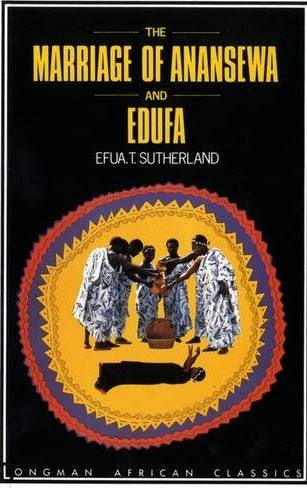
Act 4 of The Marriage of Anansewa
Setting and Opening Scene
Act 4 of The Marriage of Anansewa opens with the Players mourning Anansewa’s “death.” Their lamentation sets a somber yet ironic tone, since the audience knows she is only pretending to be dead.
The Storyteller soon enters. He announces that today is “a funeral for the Dead-and-Alive.” He reminds the audience of the moral principle that anchors the entire play:
“No-sale-no-payment obliges no one”,
meaning, no matter how much a man spends on a woman, he has no claim to her unless he pays her bride price.
This reminder prepares the audience for the moral testing of the four chiefs through their responses to Anansewa’s “death.”
Main Events
The Mines Messengers
The first visitors are messengers from the Chief of the Mines. They come to express condolences and bring gifts: silk, kente, dumas cotton cloth, drinks, and money.
However, they add that their chief was forced to send them and that, since he never completed the marriage rites, he owes her no burial.
After they leave, Ananse reflects joyfully, especially as he realises that if his daughter had married into that household, she would have been hated and mistreated by the chief’s unsympathetic advisers.
The Sapaase Messengers
Next arrive the messengers from Chief Sapaase. One of the female envoys openly says she had been looking forward to using Anansewa’s beauty and future child to spite a rival woman in the palace.
They present their gifts (silk, velvet, white kente cloth, and twenty guineas) before departing.
Again, Ananse rejoices privately. He says he now sees that had Anansewa gone there, she would have been dragged into palace rivalries and possibly harmed.
The Togbe Klu Messengers
Soon after, messengers from Chief Togbe Klu IV arrive. They reveal that their chief had genuinely loved Anansewa and even planned to make her his business partner. Her “death” has left him devastated; so much that he has become a zealous adherent of a Spiritualist Church in grief.
Ananse is sincerely touched by this gesture and praises the chief’s sincerity, though he still hopes that Chief-Who-Is-Chief will prove even more honourable.
The Chief-Who-Is-Chief Messengers
Finally, the long-awaited messengers of Chief-Who-Is-Chief appear. Their gifts far surpass those of all others: money, drinks, silk kente, velvet, brocade, dumas, white kente, and even a glass coffin.
Most moving of all, they bring a wedding ring which shows that their chief intended to marry Anansewa even in death. This act of genuine love overwhelms Ananse.
In an emotional and comic climax, Ananse falls into a mock trance. He calls on the “spirit” of Anansewa to rise. To everyone’s astonishment and joy, Anansewa rises from the dead,though it is apparent to the audience that the whole “funeral” had been a ruse.
Resolution and Closing Scene
The mood turns jubilant. The Players, Storyteller, Christie, and Ananse all celebrate together. They sing and dance. Ananse publicly thanks and embraces Miss Christie for her loyalty and help throughout his deceitful adventure.
The play ends with a love song which symbolises reconciliation, renewal, and the triumph of both wit and affection.
Themes in Act 4 of The Marriage of Anansewa
- Love and Sincerity: Chief-Who-Is-Chief’s reaction proves the depth of genuine affection.
- Greed and Redemption: Ananse’s greed leads to trickery, but he regains moral awareness through his daughter’s “resurrection.”
- Morality and Social Justice: The proverb “No-sale-no-payment obliges no one” reinforces the lesson about integrity in relationships.
- Folk Wisdom and Satire: The play ends with humour but leaves the audience reflecting on human motives and moral values.
Dramatic Techniques in Act 4 of The Marriage of Anansewa
- Irony: The “funeral for the living” is both tragic and comic.
- Chorus and Music: Songs continue to connect audience and performers in traditional storytelling style.
- Symbolism: The glass coffin and wedding ring symbolise transparent love and the blending of life and death.
- Storyteller’s Commentary: Frames the entire scene as moral instruction and maintains the play’s folk-drama roots.
Study Tip
Act 4 concludes the play’s cycle of trickery and moral awakening. Students should note how Sutherland fuses folklore, music, and satire to teach values of honesty, prudence, and emotional sincerity. The ending affirms that true love and good fortune come to those who act with wisdom, not deceit.
Questions on Act 4 of The Marriage of Anansewa
1. Act 4 opens with the players ___
A. Preparing for the wedding
B. Mourning Anansewa’s “death”
C. Celebrating Ananse’s wealth
D. Arguing about the chiefs
2. The storyteller describes the day as a funeral for the ___
A. Living-dead
B. Dead-and-alive
C. Faithful wife
D. Cunning father
3. “No-sale-no-payment obliges no one” means ___
A. A woman cannot be sold
B. A bride price seals a marriage
C. Money spent without marriage is wasted
D. Marriage is free
4. The first messengers to visit Ananse are from ___
A. Chief-Who-Is-Chief
B. Chief Sapaase
C. The Mines Chief
D. Togbe Klu
5. What realisation does Ananse have after the first messenger’s visit?
A. Marriage without love is dangerous
B. His daughter was lucky to “die”
C. Chiefs’ houses are unfriendly
D. Money can’t buy respect
6. The second messenger’s words reveal ___
A. Palace jealousy in Sapaase
B. Anansewa’s arrogance
C. Christie’s greed
D. Chief-Who-Is-Chief’s poverty
7. Togbe Klu’s messengers reveal he wanted Anansewa as a ___
A. Wife only
B. Friend
C. Maid
D. Business partner and wife
8. Chief-Who-Is-Chief’s gesture shows ___
A. He loved her most
B. He was the richest
C. He was tricked
D. He had spiritual powers
9. What item does Chief-Who-Is-Chief send that proves genuine love?
A. Money and car
B. Clothes only
C. Wedding ring and coffin
D. Food and drink
10. The “resurrection” of Anansewa symbolises ___
A. Forgiveness and renewal
B. Love’s triumph over deceit
C. Rebirth into marriage
D. All of the above
Also Read:
- Act 1 Summary of The Marriage of Anansewa by Efua Sutherland
- Act 2 Summary of The Marriage of Anansewa by Efua Sutherland
- Act 3 Summary of The Marriage of Anansewa by Efua Sutherland
Receive Literary Updates through our Social Media Channels:
- WhatsApp: Literature PADI
- Telegram: Literature PADI
- YouTube: @literaturepadi
- Facebook: Literature PADI